
 Worksheets
Inheritance & DNA Review
Total questions: 48
Worksheet time: 50mins
Name
Class
Date
1.
What is the purpose of using a pedigree?
a)
To determine the average age of a family
b)
To find out family histories and medical records
c)
To find out whether a couple can have a boy or a girl
d)
To trace the inheritance of a certain trait through generations
2.
How many PAIRS of chromosomes do humans have?
a)
23
b)
46
c)
1
d)
2
3.
I have 2 X chromosomes. What am I?
a)
Male
b)
Female
4.
If a gene is found only on the X chromosome and not the Y chromosome, it is said to be what?
a)
sex-linked trait
b)
polygenic trait
c)
codominant trait
d)
incomplete dominance trait
5.

What percentage of the offspring will have this recessive disease?
a)
0%
b)
25%
c)
50%
d)
75%
6.

What percentage of the female offspring will be a carrier for this recessive disease?
a)
0%
b)
50%
c)
100%
d)
25%
7.

Looking at this pedigree, how many female family members are carriers?
a)
1
b)
3
c)
10
d)
7
8.

Looking at this pedigree, how many family members have the disease?
a)
4
b)
7
c)
All
d)
None
9.
blood types consist of 4 different alleles.
a)
false
b)
true
10.

Mike has type O blood. Mike can receive blood from someone who has Type A or Type B.
a)
True
b)
False
11.

Someone with type A blood can receive blood from someone who is type AB.
a)
True
b)
False
12.
What is NOT a possible genotype for someone with type B blood?
a)
BB
b)
AB
c)
BO
13.
If a woman is a carrier for a sex linked recessive trait of hemophilia and her husband has hemophilia, which of the following is true? Make a punnett square!
a)
All sons will have hemophilia
b)
all daughters will have hemophilia
c)
50% of daughters and 50% of sons have hemophilia
d)
100% of sons have hemophilia and 100% of daughters are carriers
14.
Which sequence of DNA bases would pair with this partial strand
ATG TGA CAG
ATG TGA CAG
a)
ATG TGA CAG
b)
TAC ACT GTC
c)
GTA AGT GAC
d)
CAT TCA CTG
15.
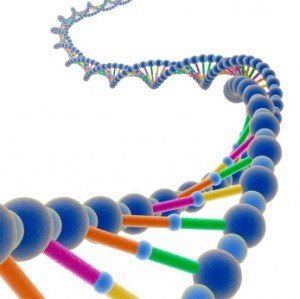
Which of the following best describes a DNA molecule?
a)
double helix
b)
contains ribose
c)
made of amino acids
d)
contains Uracil
16.
Which of the following units are repeatedly joined together to form a strand of DNA?
a)
amino acids
b)
nucleotides
c)
fatty acids
d)
polysaccharides
17.

In a molecule of double-stranded DNA, the amount of Adenine present is always equal to the amount of
a)
cytosine
b)
guanine
c)
thymine
d)
uracil
18.
Adenine bonds with ______________.
a)
Guanine
b)
Thymine
c)
Cytosine
d)
Adenine
19.
Guanine bonds with ______________.
a)
Adenine
b)
Guanine
c)
Cytosine
d)
Thymine
20.
Why is DNA important?
a)
it is very small and very complicated
b)
it's in everything
c)
it serves as the blueprint for traits of all living things
d)
because we eat it every day for energy
21.
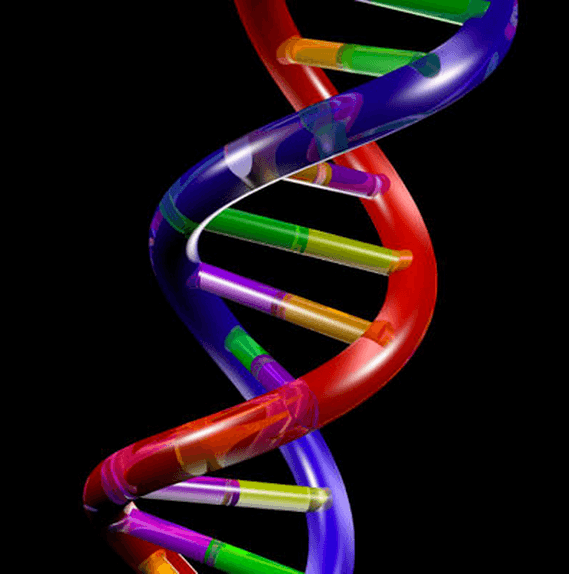
What determines the code, or information, of a DNA molecule?
a)
the shape (structure) of the nitrogen bases
b)
the order (sequence) of the nitrogen bases
c)
the color of the nitrogen bases
d)
the frequency (number) of nitrogen bases
22.
Which 2 molecules form the sides (backbone) of the DNA ladder?
a)
deoxyribose sugar and adenine
b)
deoxyribose sugar and a hydrogen bond
c)
deoxyribose sugar and the nucleus
d)
deoxyribose sugar and phosphate
23.
Which organelle is DNA usually found in?
a)
cell membrane
b)
vacuole
c)
chloroplast
d)
nucleus
24.
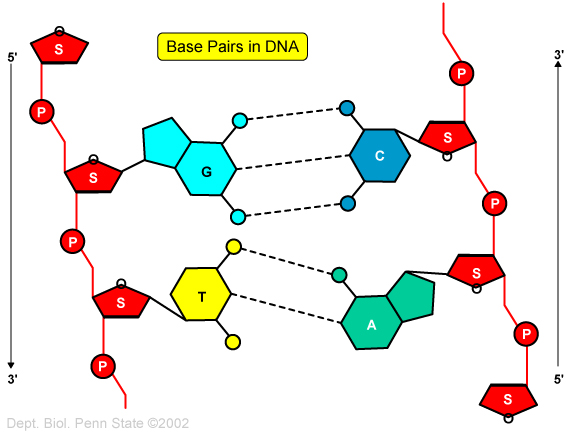
Nitrogenous bases are joined by which type of bond?
a)
polar bonds
b)
ionic bonds
c)
covalent bonds
d)
hydrogen bonds
25.

Replicate the following strand of DNA:
AATCATGGA
AATCATGGA
a)
AATCATGGA
b)
TTAGTACCT
c)
UUAGUACCU
d)
GGATAUCUA
26.
The enzyme that unzips the DNA to prepare for replication
a)
helicase
b)
replicase
c)
polymerase
d)
synthase
27.
DNA replication results in two DNA molecules,
a)
each one with two original strands
b)
each one with two new strands
c)
each one with one new strand and one original strand
d)
one with two new strands and the other with two original strands
28.
A process in which DNA has the unique ability to make an exact copy of itself.
a)
Replication
b)
Translation
c)
Transcription
29.
In what phase of the cell cycle does DNA replication take place?
a)
G1
b)
S
c)
G2
d)
M
30.
What are the three components of a nucleotide?
a)
sugar, hydrogen, nitrogen base
b)
sugar, oxygen, nitrogen base
c)
sugar, phosphate, nitrogen base
d)
sugar, phosphate, protein
31.
Which two scientists are accredited with correctly deducing the double helix model of DNA?
a)
Watson and Crick
b)
Wilkins and Franklin
c)
Wilkins and Crick
d)
Watson and Franklin
32.
The enzyme that adds more nucleotides (monomers into a polymer) is called
a)
helicase
b)
primase
c)
polymerase III
d)
polymerase I
33.
The two strands of DNA run in opposite directions. They are said to be:
a)
Antiparallel
b)
Complementary
c)
Anti-directional
d)
Weird
34.

This image shows that DNA Replication is _______.
a)
Conservative
b)
Semiconservative
c)
Dispersive
d)
Spontaneous
35.
What are the following rules called?
1 - The amount of A, T, G, and C varies from species to species.
2 - In each species, the amount of A = T and G = C.
1 - The amount of A, T, G, and C varies from species to species.
2 - In each species, the amount of A = T and G = C.
a)
Rosalind's Rules
b)
Watson's Rules
c)
Crick's Rules
d)
Chargaff's Rules
36.
If a sample of DNA has 20% ADENINE, how much GUANINE will it have?
a)
30%
b)
20%
c)
80%
d)
60%
37.
From his work with mice and pneumonia-causing bacteria, Frederick Griffin discovered ________.
a)
Replication
b)
Transcription
c)
Transformation
d)
Translation
38.
By using radioactive isotopes, Hershey and Chase were able to conclude that __ is/are the carrier(s) of genetic information.
a)
DNA
b)
Proteins
c)
Carbohydrates
d)
Lipids
39.
The work of Erwin Chargaff allowed Watson and Crick to determine the rules of...
a)
protein synthesis
b)
transcription
c)
hydrogen bonding
d)
nitrogen base pairing
40.
Rosalind Franklin's "Photo 51" allowed Watson and Crick to determine the ___ of DNA.
a)
Shape
b)
Backbone
c)
Nitrogen bases
d)
Hydrogen bonds
41.
Replication takes place in many locations of the lagging strand of DNA. This creates ___ which are pieced together by DNA ligase.
a)
RNA Sections
b)
DNA Polymerase
c)
Okazaki Fragments
d)
Replication Forks
42.
DNA molecule segment is : TTACGCAAG
The mutated DNA segment is TTACGCAAC. This is an example of ___ mutation.
The mutated DNA segment is TTACGCAAC. This is an example of ___ mutation.
a)
Substitution
b)
Insertion
c)
Inversion
d)
Translocation
43.
Are all mutations bad?
a)
Yes
b)
No
44.
Original: ATC CAT
Mutation: ATC GCAT
What mutation occurred?
Mutation: ATC GCAT
What mutation occurred?
a)
deletion
b)
insertion
c)
silent
d)
transverse
45.
Cell mutations are....?
a)
Unnatural and harmful
b)
Unnatural and always affect the organism
c)
Natural and produces genetic diversity
d)
Natural and always affect the organism
46.
What happens in Translocation?
a)
They all live normaly
b)
They all repeat each other
c)
Different chromosomes cross-over with each other
d)
Something happens
47.
What causes mutations?
a)
Mistakes in replication or environmental substances
b)
The amino acids
c)
Passed down by genetics
d)
It's how your born
48.
What is the central dogma of biology?
a)
Proteins are made from RNA that assembles amino acids through DNA ribosomes.
b)
RNA copies all information for an organism onto DNA which assembles ribosomes, and creates amino acids from proteins
c)
DNA is the blueprint for an organism. RNA copies specific sections that need to be built and transfers that information to a ribosome which assembles proteins out of amino acids.
d)
RNA is the blueprint for an organism. It copies its information onto DNA, which takes amino acids (like lego building blocks) and assembles those acids into proteins.
100 %

