
 Worksheets
Environmental Midterm Review
Total questions: 115
Worksheet time: 2hrs 54mins
Name
Class
Date
1.

Which of the following is a producer in the food web shown above?
a)
grass
b)
ant
c)
snake
d)
sunlight
2.

The diagram is an example of a ________.
a)
food pyramid
b)
food web
c)
food chain
d)
food diagram
3.

Which of the following is a secondary consumer in the food chain shown above?
a)
Skunk
b)
Sunlight
c)
Rose
d)
Honeybee
4.
Which of the choices below gives a true example of how a natural resource can be renewed?
a)
When the wind is calm, electric fans can be turned on to make the windmills move.
b)
When forests have been cut down, new native trees can be planted.
c)
When an area's natural gas has been used up, oxygen can replace the gas.
d)
When all of the coal is gone from a mine, new coal can be grown in its place.
5.

Look at the energy pyramid shown. If a pesticide is released into the environment that kills most of the grasshoppers, which of the following is most likely to occur?
a)
a decrease in the amount of grass
b)
a decrease in the number of snakes
c)
an increase in the number of hawks
d)
an increase in population for all organisms
6.
The environment contains:
a)
living things (biotic) only
b)
Nonliving things (abiotic) only
c)
Both living and nonliving things
d)
only artificial things
7.
Choose which of the following is NOT an example of a natural resource.
a)
coal
b)
sunlight
c)
timber (trees)
d)
plastic
8.
At the start of the Industrial Revolution, about 10,000 years ago, humans __
a)
began planting crops and domesticating animals.
b)
changed animal power to machines that ran on fossil fuels
c)
started living in villages
d)
started to use resources sustainably and were very concerned about the environment
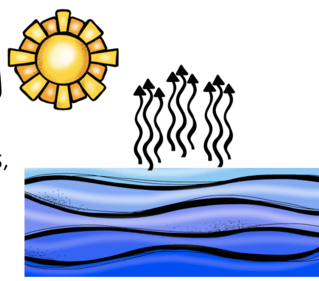
9.
Choose the best definition for sustainability
a)
using as many resources as you want, whenever you want
b)
only using renewable resources and not using many nonrenewable resources
c)
only using nonrenewable resources and not using many renewable resources
d)
using only just enough resources for survival
10.
In order to use a resource sustainably you should
a)
use it a a rate where it can be replenished
b)
use as much as you want, the people in 3rd world countries do not need it
c)
use it before someone else does and there is none left for you
d)
don't use any at all
11.
We have been through an agricultural revolution, and an industrial revolution. Which one is when we exchanged animal power to machines that run on fossil fuels?
a)
agricultural revolution
b)
industrial revolution
12.

We have been through an agricultural revolution, and an industrial revolution. Which one is when we domesticated animals and used animal power. For example we used oxen to pull wagons.
a)
agricultural revolution
b)
industrial revolution
13.
Sunlight, wind and water are __ resources
a)
renewable
b)
nonrenewable
c)
semirenewable
d)
unrenewable
14.
Coal, gasoline and oil are ___ resources
a)
renewable
b)
nonrenewable
c)
semirenewable
d)
unrenewable
15.
All living things are ____ factors
a)
biotic
b)
abiotic
16.
All nonliving things are ____ factors
a)
biotic
b)
abiotic
17.

All of the organisms living in an area together with their physical environment.
a)
community
b)
ecosystem
c)
habitat
d)
population
18.

The nonliving parts of the ecosystem.
a)
biotic
b)
abiotic
c)
habitat
d)
niche
19.

The living and once living parts of the ecosystem.
a)
biotic
b)
abiotic
c)
habitat
d)
niche
20.

An individual living thing.
a)
niche
b)
habitat
c)
species
d)
organism
21.

A group of organisms that can mate to produce fertile offspring.
a)
organism
b)
species
c)
habitat
d)
niche
22.

All the members of the same species that live in the same place at the same time.
a)
organism
b)
community
c)
population
d)
habitat
23.

A group of various species that live in the same place and interact with each other.
a)
niche
b)
habitat
c)
species
d)
community
24.

The place an organism lives.
a)
habitat
b)
niche
c)
population
d)
species
25.

The role and position a species has in its environment; how it meets its needs for food and shelter, how it survives, and how it reproduces
a)
habitat
b)
population
c)
niche
d)
organism
26.

The process whereby organisms better adapted to their environment tend to survive and produce more offspring. The theory of its action was first fully expounded by Charles Darwin and is now believed to be the main process that brings about evolution.
a)
evolution
b)
artificial selection
c)
natural selection
d)
resistance
27.

A process that results in heritable changes in a population spread over many generations.
a)
natural selection
b)
evolution
c)
artificial selection
d)
habitat
28.

The natural or genetic ability of an organism to tolerate a chemical or disease-causing agent.
a)
resistance
b)
evolution
c)
species
d)
community
29.
Which of the following types of organisms perform photosynthesis?
a)
herbivore
b)
Primary producer
c)
carnivore
d)
detritvore
30.
Which of the following is an interaction in which one organism benefits and the other is harmed? (+/-)
a)
Parasitism
b)
Competition
c)
Mutualism
d)
Commensalism
31.
A caterpillar eats the grass. A bird eats a caterpillar. A fox eats a bird. Which of the following food chains represent this series of feeding relationships?
a)
Bird > fox > caterpillar > grass
b)
Fox> bird > caterpillar > grass
c)
Caterpillar > grass > bird > fox
d)
Grass > caterpillar > bird > fox
32.
Almost all autotrophs get their energy from?
a)
decaying matter
b)
hydrothermal vents
c)
producers
d)
sunlight
33.
What do herbivores eat?
a)
plants and animals
b)
plants
c)
meat from other animals
d)
trash
34.
What do omnivores eat?
a)
plants and animals
b)
plants
c)
meat from other animals
d)
trash
35.
Which relationship involves two or more species benefiting from each other?
a)
parasitism
b)
commensalism
c)
mutualism
d)
predation
36.
What is an adaptation?
a)
a nonnative organism that spreads widely in a community
b)
the process of selection conducted under human direction
c)
a heritable trait that increases the likelihood of an individual's survival and reproduction
d)
how reproductively successful an organism is in its environment
37.
What do carnivores eat?
a)
plants and animals
b)
plants
c)
meat from other animals
d)
trash
38.
What is an example of a decomposer?
a)
mushroom
b)
flower
c)
vulture
d)
garbageman
39.
Which relationship involves one organism depending on the other for nourishment, harming the host?
a)
parasitism
b)
commensalism
c)
mutualism
d)
predation
40.
Competition happens when organisms seek the same ______________________ ________________________.
a)
habitat destruction
b)
invasive species
c)
limited resources
d)
artificial selection
41.
What is predation?
a)
the process by which a fungi breaks down a dying or dead organism through decomposition reactions
b)
the process by two species develop from geographic distance
c)
the process by which an organism acts as a parasite and extracts nutrients from its host species
d)
the process by which an individual of one species hunts, captures, kills, and consumes an individual of another species
42.
What is the measure of the average number of babies a woman will have over her lifetime?
a)
Rate of Natural Increase
b)
Total Fertility Rate
c)
Crude Birth Rate
d)
Infant Mortality Rate
43.
The total number of deaths in a year among children under one year of age for every 1,000 live births in a society.
a)
census
b)
infant mortality rate
c)
population density
d)
birth rate
44.
The ____ of an area might be expressed as 26.8 people per square mile.
a)
population pyramid
b)
population density
c)
infrastructure
d)
GNP
45.
If a country has a death rate of 30 and a birth rate of 45 the natural rate of increase would show the population is ______.
a)
Increasing
b)
Decreasing
c)
Staying the same
d)
Fluctuating too much
46.
If a population grows larger than its environmental carrying capacity, then
a)
death rate may rise.
b)
death rate may fall significantly.
c)
birth rate may rise significantly.
d)
immigration rate may increase.
47.
Demographic transition represent the transition from high birth and death rates to low birth and death rates as a country develops from a pre-industrial to an industrialized economic system. A demographic transition involves four stages. What is the second stage?
a)
Birth and death rates are high and in balance.
b)
Death rates drop rapidly due to better food supply and sanitation.
c)
Birth rates fall due the increase in the status and education of women.
d)
Birth rates and death rates are both low which leads to a shrinking population.
48.
Demographic transition represent the transition from high birth and death rates to low birth and death rates as a country develops from a pre-industrial to an industrialized economic system. A demographic transition involves four stages. What is the fourth stage?
a)
Birth and death rates are high and in balance.
b)
Death rates drop rapidly due to better food supply and sanitation.
c)
Birth rates and death rates are both low which leads to a shrinking population.
d)
Birth rates fall due the increase in the status and education of women.
49.
Demographic transition represent the transition from high birth and death rates to low birth and death rates as a country develops from a pre-industrial to an industrialized economic system. A demographic transition involves four stages.. What is the third stage?
a)
Birth rates and death rates are both low which leads to a shrinking population.
b)
Birth and death rates are high and in balance.
c)
Death rates drop rapidly due to better food supply and sanitation.
d)
Birth rates fall due the increase in the status and education of women.
50.
What does the term carrying capacity describe?
a)
The maximum number of birth rates for a population.
b)
The ability of a population to accept new immigrants.
c)
The ratio of birth rates to death rates in a population.
d)
The population size that the environment can sustain.
51.
Which correctly describes the term demographic transition?
a)
The transition from low birth rates and death rates to high birth rates and death rates as a country develops.
b)
The transition from high birth rates and death rates to low birth rates and death rates as a country develops.
c)
The transition from high birth rates to low death rates as a country develops.
d)
The transition from low birth rates to high death rates as a country develops.
52.
Demographic transition is the transition from high birth and death rates to low birth and death rates as a country develops from a pre-industrial to an industrialized economic system. A demographic transition involves four stages. What is the first stage?
a)
Birth and death rates are high and in balance.
b)
Death rates drop rapidly due to better food supply and sanitation.
c)
Birth rates fall due the increase in the status and education of women.
d)
Birth rates and death rates are both low which leads to a shrinking population.
53.

What is the approximate population of men age 65-69 in the US in 2014? (see pyramid)
a)
7.5 million
b)
10.5 million
c)
5 million
d)
12 million
54.

What is one characteristic evident in this population pyramid of Vietnam in 2014?
a)
The population of youth under age 20 is growing.
b)
There are more females aged 0-4 than males.
c)
Vietnam is in Stage 2 of the Demographic Transition Model.
d)
There are more women aged 65-99 than men.
55.
Countries with high birth rates, and a large % of young people would be considered:
a)
More Developed
b)
Core Countries
c)
Wealthy Countries
d)
Developing Countries
56.

Which of Earth spheres contains mountains, valleys, and other landscapes?
a)
atmosphere
b)
biosphere
c)
geosphere
d)
hydrosphere
57.

The interior of the Earth is part of which sphere?
a)
geosphere
b)
hydrosphere
c)
atmosphere
d)
biosphere
58.
Which of Earth's spheres is composed of a mixture of gases?
a)
geosphere
b)
hydrosphere
c)
atmosphere
d)
biosphere
59.
Biotic Factors would be most correctly considered part of the
a)
atmosphere
b)
biosphere
c)
hydrosphere
d)
lithosphere
60.
What is the lowest main layer of Earth's atmosphere?
a)
Thermosphere
b)
Troposphere
c)
Stratosphere
d)
Mesosphere
61.
What is the outer most main layer of Earth's atmosphere?
a)
Thermosphere
b)
Troposphere
c)
Stratosphere
d)
Mesosphere
62.
What is the second lowest main layer of Earth's atmosphere?
a)
Thermosphere
b)
Troposphere
c)
Stratosphere
d)
Mesosphere
63.
This layer is where weather occurs.
a)
troposphere
b)
thermosphere
c)
exosphere
d)
stratosphere
64.
Which of the following is the correct order of the atmosphere layers from Earth to space?
a)
troposphere, stratosphere, mesosphere, thermosphere, exosphere
b)
troposphere, mesosphere, thermosphere, exosphere, stratosphere
c)
thermosphere, stratosphere, mesosphere, troposphere, exosphere
d)
troposphere, stratosphere, mesosphere, exosphere, thermosphere
65.
The part of the earth that includes the crust and the upper mantle and is split into tectonic plates is the
a)
lithosphere
b)
crust
c)
asthenosphere
d)
mantle
66.
The process for new oceanic lithosphere forming at mid ocean ridges
a)
Continental Drift
b)
Seafloor Spreading
c)
Plate Tectonics
d)
Pangaea
67.
The theory that states that the Earth is divided into plates that float and move in slow, constant motion.
a)
Continental Drift
b)
Seafloor Spreading
c)
Plate Tectonics
d)
Tectonic Plates
68.
Is a layer of weak soft mantle that is made of rock that flows slowly. Tectonic plates move on top of this layer.
a)
Inner Core
b)
Asthensophere
c)
Lithosphere
d)
Outer Core
69.
This is the outermost, rigid layer of the Earth, made up of two parts, is divided into pieces call tectonic plates.
a)
Inner Core
b)
Asthensophere
c)
Lithosphere
d)
Outer Core
70.
The solid, dense center of our planet that extends from the bottom of the outer core to the center of the Earth..
a)
mantle
b)
outer core
c)
inner core
d)
crust
71.

Identify the letter in the diagram. Identify letter A
a)
Lithosphere
b)
Asthenosphere
c)
Mantle
d)
Outer Core
72.
Identify the letter in the diagram. Identify letter E
a)
Lithosphere
b)
Asthenosphere
c)
Mantle
d)
Outer Core
73.
Identify the letter in the diagram. Identify letter F
a)
Lithosphere
b)
Asthenosphere
c)
Mantle
d)
Outer Core
74.
Identify the letter in the diagram. Identify letter B
a)
Crust
b)
Convection Current
c)
Inner Core
d)
Outer Core
75.
Identify the letter in the diagram. Identify letter D
a)
Lithosphere
b)
Asthenosphere
c)
Mantle
d)
Outer Core
76.
Identify the letter in the diagram. Identify letter C
a)
Lithosphere
b)
Asthenosphere
c)
Mantle
d)
Inner Core
77.
Where do most earthquakes and volcanoes occur?
a)
in the ocean
b)
along the coast
c)
along fault lines
d)
in the Arctic
78.

a)
Divergent
b)
Convergent
c)
Transform
d)
Intraplate
79.

a)
Divergent
b)
Convergent
c)
Transform
d)
Intraplate
80.

a)
Divergent
b)
Convergent
c)
Transform
d)
Intraplate
81.

a)
Divergent
b)
Convergent
c)
Transform
d)
Intraplate
82.

a)
Divergent
b)
Convergent
c)
Transform
d)
Intraplate
83.
In which type of boundary do the plates move away from each other?
a)
convergent
b)
normal
c)
divergent
d)
transform
84.
The area where two or more plates meet is called a __________________.
a)
fault
b)
plate boundary
c)
plate edge
d)
ring of fire
85.
Plates slide past one another at ____________ boundaries.
a)
divergent
b)
convergent
c)
transform
d)
submergent
86.
Plates move towards one another at ______________ boundaries.
a)
divergent
b)
convergent
c)
transform
d)
detergent
87.

What part of the water cycle does this picture show?
a)
condensation
b)
precipitation
c)
evaporation
88.
Which of these is an example of precipitation?
a)
snow
b)
air
c)
clouds
d)
vapor
89.
Snow, sleet, hail, and rain are all examples of ________________.
a)
evaporation
b)
condensation
c)
accumulation
d)
precipitation
90.
What follows evaporation during the water cycle? How does this occur?
a)
Water evaporates into water vapor
b)
Water vapor condenses and forms a cloud
c)
Water precipitates to the ground
d)
Water runs down into the hydrosphere
91.

What is it called when plants give off water vapor as a waste product?
a)
condensation
b)
evaporation
c)
sublimation
d)
transpiration
92.
Evaporation happens when the sun ___________ water and turns it into vapor.
a)
cools
b)
heats up
c)
freezes
d)
lights up
93.
When water condenses, the liquid water forms ______________.
a)
water vapor
b)
steam
c)
air
d)
clouds
94.
What is the energy source for the water cycle?
a)
the sun
b)
the earth
c)
water
d)
the moon
95.
What cycle is transpiration a part of?
a)
The water cycle
b)
The life cycle
c)
The bicycle
96.
Transpiration is a type of ______.
a)
Liquidation
b)
Condensation
c)
Evaporation
97.
This zone is located near the shore where rooted plants grow; sunlight reaches all the way to the bottom; has high biodiversity; most productive area for food and oxygen production
a)
Littoral zone
b)
Limnetic zone
c)
Profundal zone
d)
Benthic zone
98.
This is the bottom on the lake and organisms consists of decomposers and detritus feeders
a)
Littoral zone
b)
Limnetic zone
c)
Profundal zone
d)
Benthic zone
99.

What is an estuary?
a)
A little body of water.
b)
water in a gaseous form.
c)
Places where fresh water and streams flow into the ocean.
d)
the presence of an unwated msterial in a given place.
100.
A tapeworm and a cat have this type of relationship.
a)
mutualism
b)
parasitism
c)
commensalism
d)
competition
101.
A frog eats a fly. The frog and fly are demonstrating ________.
a)
mutualism
b)
competition
c)
predator/prey
d)
parasitism
102.
A tick and a dog have this type of relationship.
a)
mutualism
b)
commensalism
c)
neutralism
d)
parasitism
103.
A relationship between two organisms in which one organism benefits and the other is unharmed
a)
Mutualism
b)
Competition
c)
Parasitsm
d)
Commensalism
104.
Barnacles create home sites by attaching themselves to whales. This neither harms nor benefits the whales. What kind of relationship is this?
a)
Mutualism
b)
Parasitism
c)
Commensalism
105.

A relationship in which two species live closely together.
a)
resource
b)
mutualism
c)
succession
d)
symbiosis
106.
What type of symbiosis is this?
*Hermit crabs find shells left by snails that have died and move in.
* Snails die and leave behind their shells.
*Hermit crabs find shells left by snails that have died and move in.
* Snails die and leave behind their shells.
a)
commensalism
b)
mutualism
c)
parasitism
d)
predation
107.

In this picture, the ZEBRA is the __________________
a)
predator
b)
prey
108.

In this picture, the lion is the __________________
a)
predator
b)
prey
109.

The crocodile and bird have a _______________ relationship. The crocodile benefits by having its teeth cleaned. The bird benefits by gaining food and protection. Both animals benefit from this relationship.
a)
parasitism
b)
predator and prey
c)
mutualism
d)
commensalism
110.
a relationship between two organisms in which one organism benefits and the other is unaffected
a)
camouflage
b)
parasite
c)
host
d)
commensalism
111.
a relationship between two species in which one species, the parasite, benefits from the other species, the host, which is harmed
a)
parasitism
b)
symbiosis
c)
predation
d)
hunting
112.
a relationship between two species in which both species benefit
a)
mutualism
b)
commensalism
c)
symbiosis
d)
camouflage
113.
A relationship between two species where one benefits while the other is harmed.
a)
Mutualism
b)
Commensalism
c)
Parasitism
d)
Naturalism
114.
______ is the average pattern for weather over a long period of time.
a)
climate
b)
weather
c)
forecast
d)
sunlight
115.
Atmospheric conditions, along with short-term changes, of a particular place at a particular time
a)
weather
b)
climate
c)
air pressure
d)
precipitation
100 %

