
 Worksheets
Planets
Total questions: 28
Worksheet time: 20mins
Name
Class
Date
1.

Which planet is Mercury?
a)
1
b)
2
c)
3
d)
4
2.
Almost Earth’s twin in size and mass, this planet has very thick atmosphere.
a)
Venus
b)
Mars
c)
Mercury
d)
Neptune
3.
This is the largest planet in the solar system.
a)
Saturn
b)
Jupiter
c)
Uranus
d)
Venus
4.
This is the smallest planet in the solar system
a)
Mercury
b)
Venus
c)
Earth
d)
Mars
5.
Only planet known to have life
a)
Earth
b)
Mars
c)
Venus
d)
Mercury
6.
Scientists have been able to find no atmosphere around this planet because it has little gravity and is closest to the sun.
a)
Mars
b)
Venus
c)
Mercury
d)
Earth
7.
This gas giant has a large storm in its atmosphere known as The Red Spot
a)
Jupiter
b)
Saturn
c)
Uranus
d)
Neptune
8.
Most likely due to a massive collision, this planet rotates from top to bottom.
a)
Saturn
b)
Venus
c)
Neptune
d)
Uranus
9.
The order of the planets is:
a)
Mars,Venus,Earth,
Mercury,Saturn
Jupiter, Uranus, Neptune
Mercury,Saturn
Jupiter, Uranus, Neptune
b)
Earth,Venus,Mars
Jupiter, Neptune,
Mercury,Saturn,
Uranus
Jupiter, Neptune,
Mercury,Saturn,
Uranus
c)
Mercury,Venus,Earth
Mars,Jupiter,
Saturn,Uranus
Neptune
Mars,Jupiter,
Saturn,Uranus
Neptune
10.
Which planet is seventh from the sun?
a)
Saturn
b)
Earth
c)
Venus
d)
Uranus
11.
Day and night is caused by the _____________ of earth on its axis.
a)
revolution
b)
orbit
c)
rotation
12.
The earth orbits around...
a)
the sun.
b)
the moon
c)
other planets
d)
the Milky Way
13.

Which planet has the biggest rings?
a)
Jupiter
b)
Saturn
c)
Uranus
d)
Neptune
14.

Which planet has a Great Dark Spot?
a)
Jupiter
b)
Saturn
c)
Uranus
d)
Neptune
15.

What force keeps the planets orbiting the sun?
a)
Gravity
b)
Magnetism
c)
Electricity
d)
Friction
16.
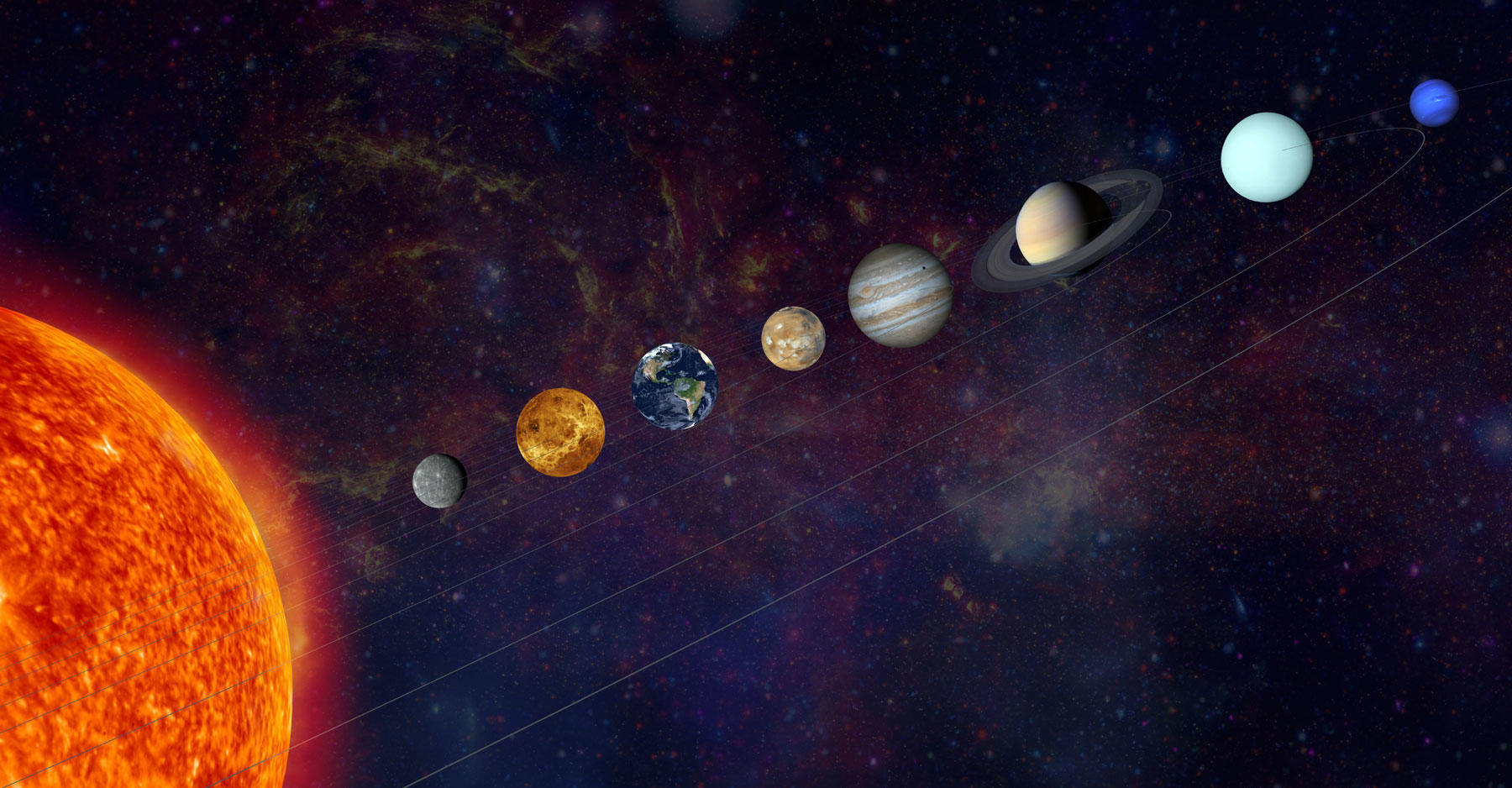
True or False
The planets are all equally distanced from each other.
The planets are all equally distanced from each other.
a)
True
b)
False
17.

What is a common characteristic of the inner planets?
a)
Large
b)
Gaseous
c)
Rings
d)
Rocky Surface
18.

What is NOT a common characteristic of the outer planets?
a)
Gaseous
b)
Giant
c)
Rings
d)
Smaller than Earth
19.
What planets are Mercury, Venus, Earth, & Mars considered?
a)
inner
b)
outer
c)
dwarf
20.
Which of the following orbits the sun?
a)
asteroids
b)
comets
c)
planets
d)
all of the above
21.
What type of planets are Jupiter, Saturn, Uranus, & Neptune considered?
a)
inner
b)
outer
c)
dwarf
22.
What is found in a belt between the orbits of Mars and Jupiter?
a)
asteroid
b)
comet
c)
meteor
23.
The outermost planets have what type of physical composition?
a)
gaseous
b)
terrestrial
c)
liquid
24.
What divides the inner planets from the outer planets?
a)
Kuiper Belt
b)
Oort Cloud
c)
Asteroid Belt
25.
Where does the Asteroid Belt fall in the picture?
a)
between venus and earth
b)
between earth and mars
c)
between mars and jupiter
d)
between jupiter and saturn
26.
Zachary made a drawing to model how the Sun, Earth, and the Moon move in orbits. What would be the MOST difficult part to model this way?
a)
position
b)
relative size
c)
direction of motion
d)
rate of motion
27.
What would be most similar about the parts of a model of the Sun, Earth, and the Moon?
a)
The size of the parts
b)
The shape of the parts
c)
The orbit of the parts
d)
The color of the parts
28.

Based on the distance from the sun, which planet has the longest year?
a)
Earth
b)
Mercury
c)
Neptune
d)
Saturn
100 %

