
 Worksheets
Ch. 4 Reproduction
Total questions: 43
Worksheet time: 50mins
Name
Class
Date
1.
This is when uniform offspring grow from a part of a parent plant. Parent plants sends out runners. Where the runner touches the ground, roots can grow. A new plant is produced even if the runner is broken apart Each new plant is uniform and identical to the parent.
a)
Vegetative propagation
b)
Regeneration
c)
Budding
d)
Fission
2.
This is when a new organism grows by mitosis and cell division on the body of its parent. The bud, or offspring is identical to the parent. The bud, when large enough, can break off of the parent and live on its own.
Examples of this include yeast, hydra and cactus
Examples of this include yeast, hydra and cactus
a)
Regeneration
b)
Vegetative propagation
c)
Fission
d)
Budding
3.
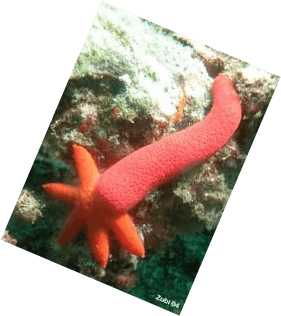
What type of asexual reproduction is taking place?
Fishermen work hard to catch and remove all the starfish that get into their favorite shell fishing beds and the “underwater farms” where they raise clams and oysters. In the past, they put the starfish into their boats, cut them up with knives, and then throw the pieces of starfish overboard. They thought this would kill the starfish. What they did not know was that each piece of starfish will grow into a whole new animal.
Fishermen work hard to catch and remove all the starfish that get into their favorite shell fishing beds and the “underwater farms” where they raise clams and oysters. In the past, they put the starfish into their boats, cut them up with knives, and then throw the pieces of starfish overboard. They thought this would kill the starfish. What they did not know was that each piece of starfish will grow into a whole new animal.
a)
Regeneration
b)
Vegetative propagation
c)
Budding
d)
Fission
4.

Which process increases the variability of genetic information?
a)
Mitosis
b)
Meiosis
c)
cloning
d)
asexual reproduction
5.
_____________________ is a process that produces cells with half the chromosomes.
a)
Budding
b)
Fragementation
c)
Regeneration
d)
Meiosis
6.
A haploid cell has
a)
one-half of a set of chromosomes
b)
one set of chromosomes
c)
two sets of chromosomes
d)
four sets of chromosomes
7.
The result of meiosis is:
a)
two diploid cells
b)
two haploid cells
c)
four diploid cells
d)
four haploid cells
8.
Human eggs and sperm are _____, and each has ____ chromosomes.
a)
diploid, 23
b)
diploid, 46
c)
haploid, 23
d)
haploid, 46
9.
Which of the following cell types is formed by meiosis?
a)
muscle cells
b)
skin cells
c)
sperm cells
d)
blood cells
10.
A male shark has 40 chromosomes in each of its sex cells. How many would be present in its body cells?
a)
20
b)
40
c)
80
d)
160
11.
What is it called when the gametes meet?
a)
meiosis
b)
fertilization
c)
cell division
d)
mitosis
12.

Which cellular process is shown?
a)
meiosis
b)
endocytosis
c)
mitosis
d)
phagocytosis
13.
How does a zygote form?
a)
When a sperm is fertalized
b)
When a chromosome is fertilized
c)
When an egg is fertilized
d)
When an embryo is fertilized
14.
how many of each chromosome is is a diploid cell
a)
1
b)
2
15.

Structure A refers to the _____.
a)
chromatid
b)
chromosome
c)
centromere
16.

Structure B is pointing to the _____.
a)
chromosome
b)
centromere
c)
DNA
d)
chromatid
17.

Meiosis makes sperm and egg cells. In humans, sperm and egg cells each have _____ chromosomes. Therefore a fertilized human egg cell (sperm and egg cell combined) would create a cell with _____ chromosomes.
a)
23, 46
b)
46, 23
c)
2, 4
d)
50, 100
18.
All Offspring of Asexual reproduction are identical
a)
True
b)
False
19.
If the environment changes for an Asexual offspring it will?
a)
Explode
b)
Create another offspring
c)
Fall in love
d)
Die
20.
How many parent(s)are needed for asexual?
a)
4
b)
1
c)
9
d)
100
21.
Which process is considered to be faster?
a)
Asexual
b)
Sexual
22.
How are genetic traits passed down from generation to generation?
a)
Chromosomes
b)
Reproduction
c)
DNA
d)
Genes
23.
A human has 46 chromosomes in their body cells. What is the haploid number?
a)
46
b)
92
c)
23
d)
12
24.
Mitosis produces cells with haploid or diploid number of chromosomes?
a)
Haploid
b)
Diploid
25.
Meiosis produces cells with a haploid or diploid number of chromosomes?
a)
Haploid
b)
Diploid
26.
Body cells have diploid or haploid number of chromosomes?
a)
Haploid
b)
Diploid
27.
Gametes have haploid or diploid number of chromosomes?
a)
Haploid
b)
Diploid
28.
How many cells are produced in Mitosis?
a)
1
b)
2
c)
3
d)
4
29.
How many cells are produced in meiosis?
a)
1
b)
2
c)
3
d)
4
30.

What happens in Meiosis that causes the cells produced to be unique?
a)
Metaphase 2
b)
Interphase
c)
Splitting of Cytoplasm
d)
Crossing Over
31.
Requires two parents
a)
sexual
b)
asexual
32.
Requires only one parent
a)
sexual
b)
asexual
33.
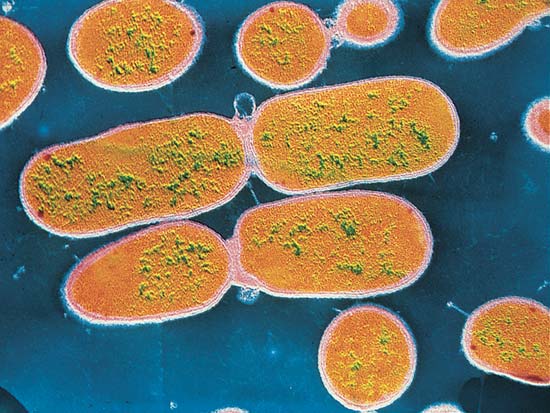
The offspring from asexually reproduced organisms are?
a)
Different than their parents
b)
Identical to parents
c)
Like a combination from both parents
d)
A different species
34.

Prokaryotes (bacteria) reproduce asexually via -
a)
spore formation
b)
bud creation
c)
vegetative propagation
d)
binary fission
35.
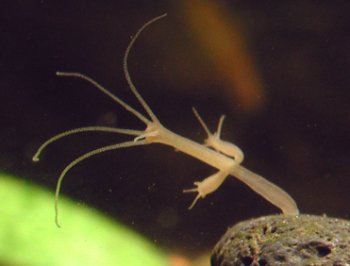
This is when a new organism grows by cell division on the body of its parent. The bud, or offspring is identical to the parent. The bud, when large enough, can break off of the parent and live on its own. Examples of this include yeast, hydra and potatoes.
a)
Regeneration
b)
Vegetative propagation
c)
Fission
d)
Budding
36.
What part of our cells holds our DNA?
a)
cytoplasm
b)
cell membrane
c)
nucleus
d)
ribosomes
37.

Why is DNA important?
a)
it is very small and very complicated
b)
it's in everything
c)
it serves as the blueprint for traits of all living things
d)
because we eat it every day for energy
38.
Which of the following is NOT an advantage of asexual reproduction?
a)
More efficient.
b)
All organisms can reproduce
c)
No wasted effort finding a mate.
d)
Population has variety to survive in a changing environment.
39.
Are the cells in Mitosis identical or unique?
a)
Identical
b)
Unique
40.
Are the cells produced in meiosis identical or unique?
a)
Identical
b)
Unique
41.
How many times does a cell divide during mitosis?
a)
0
b)
1
c)
2
d)
3
42.
How many times does a cell divide during meiosis?
a)
0
b)
1
c)
2
d)
3
43.
A Goat has 60 chromosomes in its body cells. What is the haploid number?
a)
60
b)
30
c)
100
d)
120
100 %

