
 Worksheets
Chemical Reactions and Changes
Total questions: 47
Worksheet time: 31mins


Which of the following IS a physical change?
Changing state of matter
Rusty metal
sour milk
making slime


In the phenol red and calcium chloride experiment, how do you know a chemical change occurred?
The bag inflated to show a gas was produced.
It was exothermic.
A color change occurred.
All of these were indicators.
In the cold pack experiment when the aluminum chloride and water combined, how do you know a chemical change occurred?
The bag inflated to show a gas was produced.
It was exothermic.
It was endothermic.
It changed color.
In the copper chloride and tin foil experiment when you added water to the blue crystals in the tin foil, how do you know a chemical change occurred?
It was endothermic.
It was exothermic.
In the making slime experiment, how do you know a chemical change occurred?
A solid precipitate was formed.
It was exothermic.
Gas was produced.
You know that a chemical reaction has occurred if
there is a precipitate (new solid)
there is a color change.
there is a temperature change.
All of these answers are evidence.
heat or light is produced
A chemical change is different than a physical change because in a chemical change
chemicals are used
molecules do not physically touch
a new substance is formed and in a physical no new substance is formed
the change can be seen but in a physical change it cannot
All atoms are most stable with (or would "prefer") how many electrons in their valence shell?
1
8
18
Why are the noble gases NOT very reactive?
Their outer shells are full and they don't need any more so are stable.
Their outer shells are NOT full and they need more so are NOT stable.
Why are halogens in group 7 so reactive?
They want to get rid of their only valance electron
They only need one more electron
They are non reactive, they have a full shell

UP and DOWN columns on the periodic table are
groups
periods
The group number tells you the number of
protons
valence electrons
energy levels
The period number tells you the number of
protons
energy levels (electron shells)
valence electrons

How many protons does Lithium have?
3
4
7
Which elements have 4 valence electrons?
group 3
group 5 or 15
group 14 or 4
Groups on the periodic table tell you...
the number of energy levels (rings)
the number of protons
the elements identity
the number of valence electrons

What are valence electrons?
electrons on the first shell
nucleus
the electrons on the outermost shell (energy level)

What is the number of protons that this element contain?
14
7
15
18

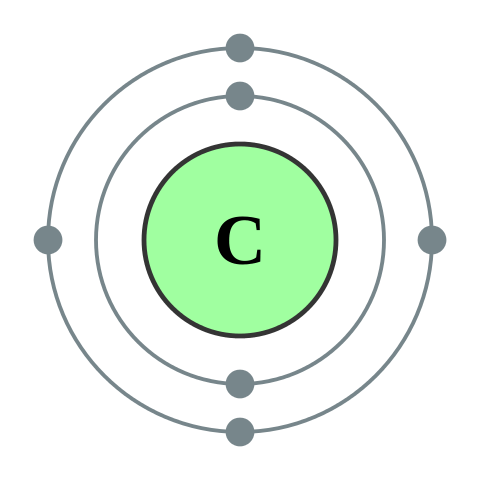
How many valence electrons does carbon have?
4
5
6
7
How many atoms are in a glucose
molecule? C6H12O6
23
6
24
12
How many atoms are in a molecule of CO2
1
2
3
0

