
NEW
Font size
S
M
L
XL
 Worksheets
1/17/18 Snow Day Earth Science SOL Review
Total questions: 60
Worksheet time: 1hrs 1mins
Name
Class
Date
1.

What is an example of a renewable resource?
a)
hydroelectric
b)
oil
c)
coal
d)
fossil fuel
2.
Which best describes the Gulf Stream?
a)
an ocean current which originates in the Gulf of Mexico and causes warm water to travel up the east coast of the United States
b)
an ocean current which originates in the Gulf of Mexico and causes cool water to travel up the east coast of the United States
c)
an ocean current which originates in the Gulf of Mexico and causes warm water to travel down the east coast of Mexico
d)
an ocean current which originates in the Gulf of Mexico and causes cool water to travel down the east coast of Mexico
3.
To express the distance between the Milky Way galaxy and the Andromeda galaxy, the most appropriate unit of measure is the -
a)
meter
b)
kilometer
c)
light year
d)
astronomical unit
4.

What landform can you see in the picture?
a)
Floodplain
b)
Delta
c)
Waterfall
d)
Oxbow lake
5.
The sea surface temperatures in the Pacific _______________ which causes an El Niño event.
a)
are higher than average
b)
are lower than average
c)
shift further North
d)
move South
6.
Which layer of the atmosphere contains the greatest amount of water vapor?
a)
Thermosphere
b)
Troposphere
c)
Mesosphere
d)
Stratosphere
7.
What type of sedimentary rock forms when the remains of plants or animals are deposited in thick layers?
a)
Clastic
b)
Organic
c)
Chemical
8.
The first country to land humans on the Moon and return them safely to Earth was
a)
Germany
b)
Russia
c)
U.S.A.
d)
China
9.

Coarse or Fine?
a)
coarse
b)
fine
10.
Choose the best definition for subduction
a)
Where 2 plates meet each other.
b)
A plate interaction that creates volcanoes.
c)
Where a plate sinks into the mantle under another plate.
d)
Where plates grind against each other and form mountains.
11.
Which of the following is a metamorphic rock?
a)
conglomerate
b)
pumice
c)
obsidian
d)
marble
12.

Base your answer to the following question on the diagram, which represents samples of soil and bedrock at Earth’s surface. The arrows represent possible infiltration of rainwater Which sample probably has the greatest porosity?
a)
Granite bedrock
b)
Pebble-and-sand soil
c)
Pebble soil
d)
Conglomerate bedrock
13.

Which region is labeled with a "2"?
a)
Appalachian Plateau
b)
Valley and Ridge
c)
Coastal Plain
d)
Blue Ridge Mountains
14.

If one-fourth of the carbon-14 is remaining then how many half-lives have passed?
a)
1
b)
2
c)
3
d)
4
15.

The currently accepted hypothesis for the driving mechanism of plate tectonics is based on _________.
a)
density differences between oceanic and continental crust
b)
the distribution of earthquakes and volcanoes
c)
thermal convection cells in the asthenosphere and mantle
d)
gravimetric and magnetic anomalies
16.

What is the green arrow pointing too?
a)
Ocean basin
b)
Seamounts
c)
Volcanoes
d)
Abyssal Plain
17.
When excess nutrients make their way into the waterways,
a)
fish populations increase
b)
algal blooms increase
c)
frog population increases
d)
people get more vitamins in their water
18.
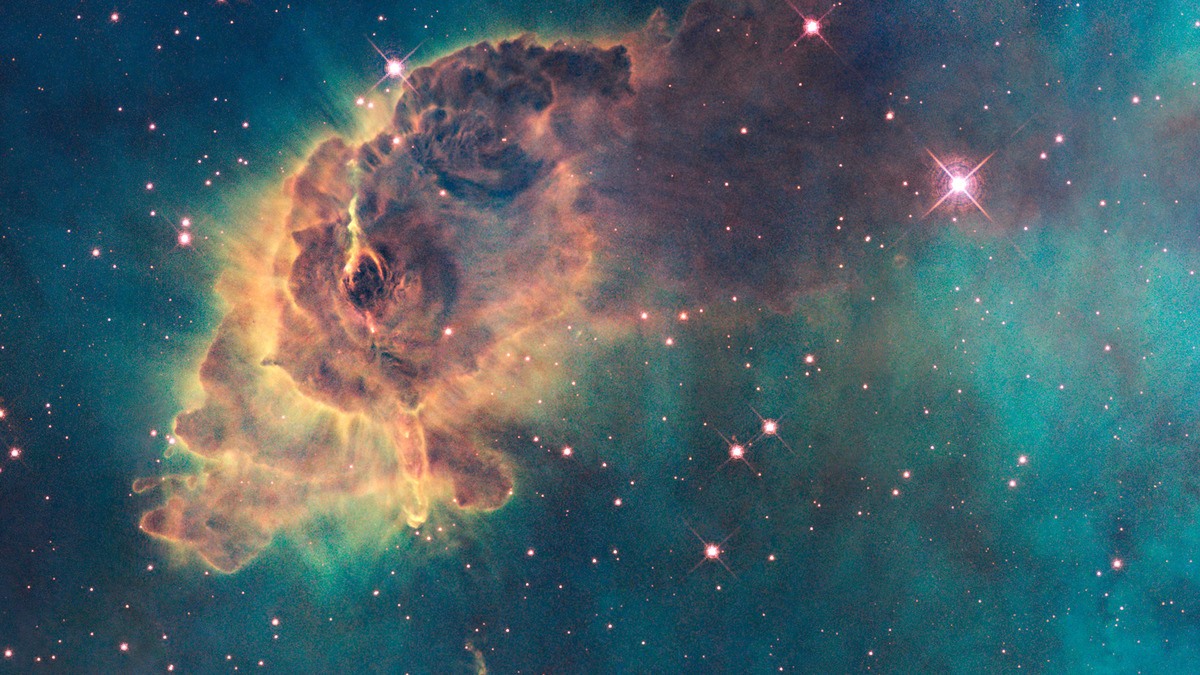
What is the name of the gas/dust clouds that form stars?
a)
Nebulas
b)
Protostars
c)
Supernova
d)
Neutron Star
19.

One full orbit of an object around another object is called a ________.
a)
axis
b)
rotation
c)
revolution
d)
satellite
20.
Identify the gas giant planets.
a)
Neptune, Mars, Venus, Jupiter
b)
Venus, Mercury, Mars, Earth
c)
Mars, Saturn, Sun, Earth
d)
Jupiter, Saturn, Uranus, Neptune
21.
How was coal produced?
a)
Lava
b)
Earthquakes
c)
Volcanos
d)
Energy stored from plants millions of years ago
22.

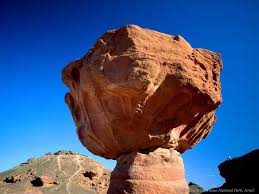
Which type of weathering best describes this?
a)
Exfoliation
b)
Ice Wedging
c)
Root Pry
d)
Oxidation
23.
The process that breaks down rocks and other materials on Earth's surface is called
a)
Weathering
b)
Erosion
c)
Deposition
d)
Decomposition
24.
What provides the energy for hurricanes to be sustained?
a)
warm water
b)
cold air masses
c)
wind from Austrailia
d)
cold water
25.
The epicenter of an earthquake is
a)
The point below the surface where rock begins to break and the first motion occurs
b)
The seismic station closest to the earthquake
c)
The place where the greatest damage occurs
d)
The point on the surface directly above the focus
26.

Which letter represents the movement created by the P Wave?
a)
A
b)
B
c)
C
27.

What is the elevation of the peak of the small island on the left side?
a)
About 20 meters
b)
About 40 meters
c)
About 60 meters
d)
About 200 meters
28.

In this rock layer diagram there are two unconformities, a fault at E and an intrusion at D. Which unconformity occurred first? How do you know?
a)
Intrusion D occurred first because the instrusion has been moved by the fault.
b)
The fault occurred first because it has moved the intrusion D.
c)
Intrusion D occurred first because it can be seen in all of the rock layers.
d)
Fault E occurred first because it is a normal fault.
29.

Which star is the coldest?
a)
Yellow Star
b)
Red Star
c)
Orange Star
d)
Blue Star
30.
How long does it take for the earth to make 1 rotation?
a)
One year
b)
One hour
c)
24 hours
d)
One leap year
31.
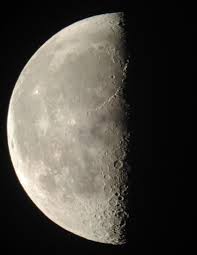
Name the moon phase
a)
First Quarter
b)
Last Quarter
c)
New Moon
d)
Full Moon
32.

Name the boundary
a)
Divergent
b)
Convergent
c)
Transform
33.
What is the approximate percentage of the Earth that is illuminated by the Sun at any given time?
a)
90%
b)
10%
c)
25%
d)
50%
34.
The sky darkens at midday and the Sun seems to disappear. Minutes later, the Sun reappears and the daylight returns. The best explanation for this is...
a)
a partial solar eclipse is occurring
b)
the Moon has created a lunar eclipse
c)
the Sun has created a lunar eclipse
d)
the Moon has created a solar eclipse
35.
The first man-made satellite launched from Earth to complete a successful orbit was
a)
Sputnik
b)
Apollo 11
c)
Voyager
d)
Explorer 1
36.
How light reflects off of a mineral is called the mineral's
a)
luster
b)
streak
c)
cleavage
d)
fracture
37.

When determining the color of a minerals powder, what tool would you need?
a)
streak plate
b)
hand lens
c)
microscope
d)
triple-beam balance
38.

Which layer of Earth is located above the outer core?
a)
crust
b)
inner core
c)
mantle
d)
lithosphere
39.

Sea floor spreading happens at what type of boundary
a)
Divergent
b)
Convergent
c)
Transform
d)
Mountainous
40.
The Mesozoic Era was known as...
a)
the age of reptiles
b)
the age of mammals
c)
the age of plants
d)
the age of birds
41.
Which soil horizon contains lots of clay?
a)
Horizon A - Topsoil
b)
Horizon B - Subsoil
c)
Horizon C - Weathered parent material
d)
Bedrock
42.
Which human activity would preserve nonrenewable resources?
a)
deforestation
b)
removing
carnivores from a forest
c)
recycling
d)
heating homes with fossil fuels
43.

Which stage does the #3 show in the diagram?
a)
condensation
b)
evaporation
c)
precipitation
d)
run off
44.

What is it called when plants give off water vapor as a waste product?
a)
condensation
b)
evaporation
c)
sublimation
d)
transpiration
45.

A ___________________ is the area of land that collects runoff and channels it into a main river.
a)
rill
b)
gully
c)
stream channel
d)
watershed
46.
What landforms are formed by ice erosion?
a)
beaches, sand dunes, deltas
b)
plateaus, mesas, arches
c)
moraines, u-shaped valleys, fiords
d)
hills, mountains, slopes
47.

Which texture best describes the rock above?
a)
extrusive
b)
nonfoliated
c)
foliated
d)
clastic
48.

This rock is made of large bits of gravel cemented together. What type of sedimentary rock is it?
a)
Clastic
b)
Chemical
c)
Biochemical
d)
Igneous
49.
What is the correct order of processes to build a sedimentary rock?
a)
erosion, weathering, sedimentation, cementation, deposition
b)
weathering, deposition, erosion, sedimentation, cementation
c)
weathering, erosion, deposition, sedimentation, cementation
50.
Where do intrusive igneous rock form?
a)
near a body of water
b)
under the surface, in the crust
c)
above, near a volcano
d)
in the inner core
51.
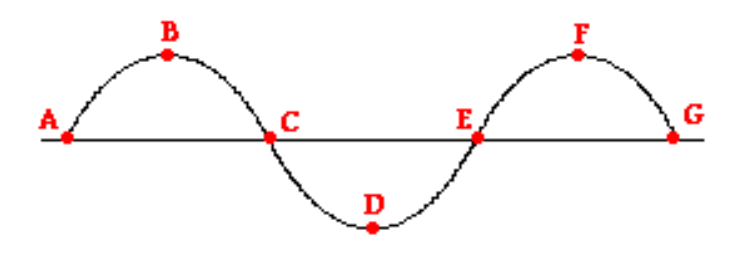
Which letter(s) represent the crest of the wave?
a)
A
b)
B & D
c)
B & F
d)
F
52.

Calculate the density of the cube.
a)
2 g/cm3
b)
4 g/cm3
c)
6 g/cm3
d)
8 g/cm3
53.

What is the dew point at this station?
a)
75 degrees
b)
61 degrees
c)
987 degrees
d)
11 degrees
54.
What is the name of the steady winds that flow from west to east between latitudes 30*N and 60*N and 30*S and 60*S?
a)
trade winds
b)
land breeze
c)
westerlies
d)
jet stream
55.

What type of cloud is this?
a)
Cumulus
b)
Cirrus
c)
Nimbus
d)
Stratus
56.
Which province is known for its karst topography?
a)
Piedmont
b)
Coastal Plain
c)
Valley & Ridge
d)
Blue Ridge
57.
What is the weather conditions in an area over a long period of time?
a)
climate
b)
temperature
c)
elevation
d)
precipitation
58.

Which season is taking place in the Southern Hemisphere in Position 1?
a)
Winter
b)
Spring
c)
Summer
d)
Fall
59.
A[n] ______________ tide occurs when the sun is at right angles to the line between Earth and the moon.
a)
high
b)
neap
c)
low
d)
spring
60.

As part of a classifying elements lab Joe was finding the density of different samples. One sample had a mass of 26.4 and a volume of 12 grams. What element is it?
a)
Sulfur
b)
Carbon
c)
Boron
d)
Krypton
Reset

