wayground logo

Free Printable Worksheets

Font size

S
M
L
XL
Worksheets

Reproduction Test Review

Total questions: 123

Worksheet time: 1hrs 5mins

Name
Class
Date
1.
Which is NOT a part of the Cell Theory?
a)
All living things are composed of cells
b)
All cells have organelles
c)
Cells carry out the functions to support life
d)
Cells come from other cells
2.
An organelle is a small, specialized structure inside of a cell.
a)
True
b)
False
3.
Which organelle is the control center of the cell?
a)
Cell Membrane
b)
Cytoplasm
c)
Nucleus
d)
Chloroplast
4.
The cell membrane allows materials to go in and out of the cell.
a)
True
b)
False
5.
What is the gel like liquid inside of a cell called?
a)
Cytoplasm
b)
Cell Membrane
c)
Vacuole
d)
Chloroplast
6.
What do we call a cell that has a nucleus?
a)
Prokaryote
b)
Eukaryote
c)
Plant
d)
Animal
7.
Which is NOT one of the special structures that only plants have inside their cells?
a)
Chloroplast
b)
Vacuole
c)
Cytoplasm
d)
Cell Wall
8.
A piece of a starfish becomes a new starfish through what type of asexual reproduction?
a)
Binary Fission
b)
Regeneration
c)
Vegetative Propogation
d)
Budding
9.
Fertilization is the joining of the male and female sex cell.
a)
True
b)
False
10.
The transfer of pollen from the anther of one flower to the stigma of another is called what?
a)
Fertilization
b)
Reproduction
c)
Pollination
d)
Natural Selection
11.
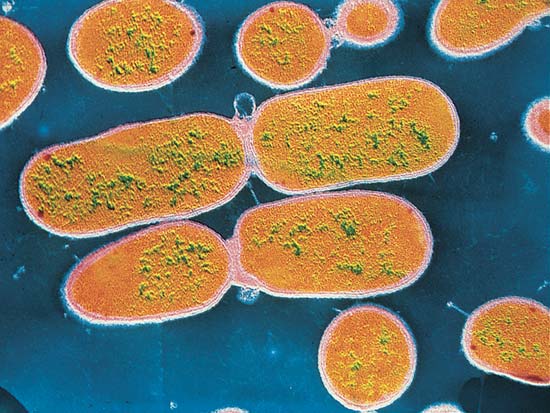
What type of asexual reproduction do bacteria use?
a)
Binary Fission
b)
Regeneration
c)
Vegetative Propogation
d)
Budding
12.
Which is an advantage of sexual reproduction?
a)
Slow
b)
Requires a mate
c)
Requires a lot of energy
d)
Variation in offspring
13.
Which organelle allows plants to undergo photosynthesis?
a)
Vacuole
b)
Chloroplast
c)
Cell Wall
d)
Nucleus
14.
Which type of reproduction requires 2 parents?
a)
Asexual
b)
Sexual
c)
Binary Fission
d)
Regeneration
15.
What form of asexual reproduction do most plants use?
a)
Binary Fission
b)
Regeneration
c)
Vegetative Propogation
d)
Budding
16.
Which is NOT something all living things need?
a)

Living space

b)

Energy

c)

Alot of Water

d)

Materials

17.
An organism that is made of one cell is multicellular.
a)
True
b)
False
18.
How many types of cells are there?
a)
0
b)
1
c)
2
d)
3
19.
The cell membrane is like a skeleton for a plant and helps it stand up.
a)
True 
b)
False
20.
In sexual reproduction, the offspring receives 75% of DNA from mom and 25% from dad.
a)
True
b)
False
21.
Which is a disadvantage of asexual reproduction?
a)
Fast
b)
Lots of offspring
c)
No variation in offspring
d)
Don't need a mate
22.
Which type of asexual reproduction occurs in prokaryotes where a cell splits into 2 identical cells?
a)
Binary Fission
b)
Regeneration
c)
Vegetative Propogation
d)
Budding
23.
Which type of asexual reproduction occurs when the offspring grows on the body of its parent?
a)
Binary Fission
b)
Regeneration
c)
Vegetative Propogation
d)
Budding
24.
In plants, the male sex cell is called what?
a)
Sperm
b)
Egg
c)
Pollen
d)
Ovule
25.
In animals, the female sex cell is called what?
a)
Sperm
b)
Egg
c)
Pollen
d)
Ovule
26.
Which type of cell has DNA floating around in the cytoplasm?
a)
Prokaryote
b)
Eukaryote
27.
For reproduction all organisms need
a)
Energy
b)
Life
c)
A purpose
d)
Fertilization
28.
Plants reproduce
a)
Sexually
b)
Asexually
c)
Both ways
d)
Neither way
29.
How many cells types are there?
a)
1
b)
2
c)
3
d)
4
30.
Successful Sexual reproduction requires a large amount of time and energy to produce an offspring.  Which is NOT a characteristic
a)
Fertilization has to take place 
b)
Requires 2 organisms
c)
Requires the need to find a mate
d)
Development of the organism is very fast
31.
Due to genetic variation, individuals within a population have 
a)
similar genetic information
b)
Slight differences
c)
no visible differences
d)
developed mutations
32.
Which is NOT a characteristic of iving things
a)
Reroduction
b)
Growth and Development
c)
Fertilization
d)
Require energy
33.
Which is NOT a characteristic of living things?
a)
Develop and grow
b)
Respond to environment
c)
Are composed of cells
d)
Reproduce asexually
34.
How many cell types are there?
a)
1
b)
2
c)
3
d)
4
35.
How many animal cell types are there?
a)
1
b)
2
c)
3
d)
4
36.
Which type of cell are you composed of?
a)
Plant
b)
Eukaryotic
c)
Prokayotic
37.
All living things have characteristics.  Which is NOT a characteristic?
a)
Reproduce
b)
Living space
c)
Composed of cells
d)
Grow and Develop
38.
Why is "cell theory" a theory?
a)
Because scientists cannot identify where the first cell came from
b)
Because scientists are not sure if all living things are composed of cells
c)
Because scientists know not all cells carry out the functions of life
39.
The smallest building block of life is
a)
DNA
b)
Amino Acids
c)
Cell
d)
Proteins
40.
Bacteria is an example of what type of cell?
a)
Plant
b)
Prokayote
c)
Eukayote
41.
The part of the cell that is similar to our skin is called
a)
Nucleus
b)
Cytoplasm
c)
Cell Membrane
d)
DNA
42.
The part of the cell that is similar to our brain is called
a)
Nucleus
b)
Cytoplasm
c)
Cell Membrane
d)
DNA
43.
The part of the cell that is similar to jello called
a)
Nucleus
b)
Cytoplasm
c)
Cell Membrane
d)
DNA
44.
The part of the cell that is holds all your genetic information is called
a)
Nucleus
b)
Cytoplasm
c)
Cell Membrane
d)
DNA
45.
The part of the cell that holds food, water and waste is called
a)
Cell Wall
b)
Cytoplasm
c)
Vacuole
d)
Chloroplast
46.
The part of the cell that allows for photosynthesis is called
a)
Cell Wall
b)
Cytoplasm
c)
Vacuole
d)
Chloroplast
47.
Cells have no internal skeleton, so the cell part that provides rigidity and support is called the 
a)
Cell Wall
b)
Cytoplasm
c)
Vacuole
d)
Chloroplast
48.
What does the shape of DNA look like?
a)
A ladder
b)
A twisted circle
c)
A twisted ladder
d)
An upside down ladder
49.
Which is NOT a characteristic of sexual reproduction?
a)
It requires a large amount of energy
b)
It is fast
c)
It provides genetic variation
d)
Need to find a mate
50.
Asexual reproduction involves how many parents?
a)
1
b)
2
51.
Binary Fission involves
a)
An organism splitting in two
b)
A new organism growing off the parent
c)
A cut limb regrowing a new organism
d)
A plant sending out a part of itself 
52.
Budding involves
a)
An organism splitting in two
b)
A new organism growing off the parent
c)
A cut limb regrowing a new organism
d)
A plant sending out a part of itself 
53.
Regeneration involves
a)
An organism splitting in two
b)
A new organism growing off the parent
c)
A cut limb regrowing a new organism
d)
A plant sending out a part of itself 
54.
Potatoes, strawberries reproduce by which method
a)
Binary Fission
b)
Regeneration
c)
Budding
d)
Vegetative Propagation
55.
Bacteria reproduce by which method
a)
Binary Fission
b)
Regeneration
c)
Budding
d)
Vegetative Propagation
56.
Starfish and tapeworms reproduce by which method
a)
Binary Fission
b)
Regeneration
c)
Budding
d)
Vegetative Propagation
57.
Which is NOT a characteristic of asexual reproduction
a)
requires fertilization
b)
it is fast
c)
produces no genetic variation
d)
common in microscopic organisms
58.
Due to genetic variation, individuals within a population have 
a)
similar genetic information
b)
slight differences
c)
no visible genetic differences
d)
developed mutations
59.

Genes are inherited. What does that mean

a)

passed along to the parents from the offspring

b)

passed along from the parents to the offspring

c)

created by the offspring

d)

created by the parents and not passed along

60.

Too much water or sunlight is ALWAYS good for a plant.

a)

True

b)

False

61.

The ability for an organism to change to fit into its environment is called

a)

survival

b)

adaptation

c)

fitting in

d)

migration

62.

Which of the following is NOT a material organisms need.

a)

Air

b)

Food

c)

Place to live

d)

Water

63.

A piece of a branch becomes a plant

a)

Binary Fission

b)

Regeneration

c)

Vegetative Propagation

d)

Budding

64.

Which is the correct order for requirements for successful reproduction?

a)

Find a mate, create an offspring, fertilization

b)

Fertilization, find a mate, create an offspring

c)

Find a mate, fertilization, create an offspring

d)

Create an offspring, fertilization, find a mate

65.

An increase in predators, would cause a rabbit population to

a)

increase

b)

decrease

c)

stay the same

66.

Asexual reproduction requires the parent to spend alot of energy on the offspring

a)

True

b)

False

67.

Cell Theory is a theory because

a)

Scientists can prove it

b)

Scientists cannot prove it or disprove it

c)

Scientists have made a guess about it

d)

Scientists can disprove it

68.

What is the purpose of the item identified in the picture?

a)

Hold the organelles in place

b)

The control center of the cell

c)

The powerhouse of the cell

d)

To make proteins

69.

Why must a species reproduce?

a)

The species has no choice

b)

The species will become extinct if it doesn't

c)

The species doesn't really have to

70.

When is the Test?

a)

Monday

b)

Tuesday

c)

Wednesday

d)

Thursday

71.

If pizza is round, why is the box square?

a)

Because scientifically, scientists say that is best, and scientists don't lie

b)

Because the laws of physics state that a round object needs to go in a square box

c)

Because a square box uses more material to make, therefore increasing profit for the box company.

d)

Because, actually I have no idea.

72.

Which is a great study method? (Check all that apply)

a)

Notecards (Flashcards)

b)

Reading aloud to yourself

c)

Rereading the notes

d)

Filling in a study guide

73.
All Offspring of Asexual reproduction are identical
a)
True
b)
False
74.
If the environment changes for an Asexual offspring it will?
a)
Explode
b)
Create another offspring
c)
Fall in love
d)
Die
75.
How many parent(s)are needed for asexual?
a)
4
b)
1
c)
9
d)
100
76.
How are genetic traits passed down from generation to generation?
a)
Chromosomes
b)
Reproduction
c)
DNA
d)
Genes
77.
What are some of the facts about asexual reproduction?
a)
Takes only one mate to reproduce and takes a longer time to reproduce
b)
Takes a shorter amount of time to reproduce and it takes two mates to reproduce
c)
Reproduces diverse offspring and takes a longer time to reproduce
d)
Takes only one mate to reproduce and takes a shorter time to reproduce
78.
What is one disadvantage for asexual reproduction?
a)
Happens very quickly
b)
Only needs one parent
c)
Lack of genetic diversity
d)
All offspring are exact copies of parent
79.
The offspring from asexually reproduced organisms are?
a)
Different than their parents
b)
Genetically identical to parent
c)
Like a combination from both parents
d)
A different species
80.
_____________________ carries information for inherited traits.
a)
DNA
b)
FBI
c)
RNA
d)
CBS
81.
____________________ is to make copies of DNA
a)
replicate
b)
recycle
c)
reuse
d)
rejoice
82.
Adenine bonds with ______________.
a)
Guanine
b)
Thymine
c)
Cytosine
d)
Adenine
83.
Guanine bonds with ______________.
a)
Adenine
b)
Guanine
c)
Cytosine
d)
Thymine
84.

What types of living organisms have no genetic material at all?

a)

Insects

b)

Bacteria

c)

Plants

d)

All living organisms have genetic material

85.

Mutations are SOMETIMES helpful to the organism.

a)

true

b)

false

86.
Why are your chromosomes arranged in pairs?
a)
Scientists have no idea
b)
Because you get one from your mom and one from your dad
c)
Because pairs can divide easier
d)
Because DNA is awesome
87.
All Offspring of Asexual reproduction are identical
a)
True
b)
False
88.

Bacteria reproduce asexually by a process called

a)

replication

b)

meiosis

c)

mitosis

d)

binary fission

89.
a)
budding
b)
sporulation
c)
vegetative propagation
d)
binary fission
90.

Which is a type of Asexual Reproduction

a)

Sexual

b)

Binary fission

c)

Cells

d)

organism

91.

A certain strain of bacteria doubles every 20 minutes. If 2 bacterial cells are placed in a beaker with food. How many bacterial cells would you expect in 60 minutes?

a)

8

b)

16

c)

32

d)

64

92.

A certain strain of bacteria doubles every 20 minutes. If 2 bacterial cells are placed in a beaker with food. How many bacterial cells would you expect in 40 minutes?

a)

4

b)

6

c)

8

d)

10

93.
What are adaptations?
a)
traits that help an organism to survive and reproduce
b)
traits that help an organism hide
c)
traits that help an organism to seek protection
d)
traits that help an organism to see.
94.
What is a reason why people want to engage in selective breeding?
a)
To generate desired traits in the organism's offspring
b)
To generate wealth and freedom
c)
To generate freedom only
d)
To generate more offspring for themselves
95.
Which is NOT a part of the Cell Theory?
a)
All living things are composed of cells
b)
All cells have organelles
c)
Cells carry out the functions to support life
d)
Cells come from other cells
96.
An organelle is a small, specialized structure inside of a cell.
a)
True
b)
False
97.
Which organelle is the control center of the cell?
a)
Cell Membrane
b)
Cytoplasm
c)
Nucleus
d)
Chloroplast
98.
The cell membrane allows materials to go in and out of the cell.
a)
True
b)
False
99.
What is the gel like liquid inside of a cell called?
a)
Cytoplasm
b)
Cell Membrane
c)
Vacuole
d)
Chloroplast
100.
A piece of a starfish becomes a new starfish through what type of asexual reproduction?
a)
Binary Fission
b)
Regeneration
c)
Vegetative Propogation
d)
Budding
101.
Fertilization is the joining of the male and female sex cell.
a)
True
b)
False
102.
What type of asexual reproduction do bacteria use?
a)
Binary Fission
b)
Regeneration
c)
Vegetative Propogation
d)
Budding
103.
How many cell types are there?
a)
1
b)
2
c)
3
d)
4
104.
How many animal cell types are there?
a)
1
b)
2
c)
3
d)
4
105.
Which type of cell are you composed of?
a)
Plant
b)
Eukaryotic
c)
Prokayotic
106.
All living things have characteristics.  Which is NOT a characteristic?
a)
Reproduce
b)
Living space
c)
Composed of cells
d)
Grow and Develop
107.
The smallest building block of life is
a)
DNA
b)
Amino Acids
c)
Cell
d)
Proteins
108.

What does the structure of DNA resemble?

a)

an airplane propeller

b)

a twisted ladder

c)

a twisted Christmas tree

d)

a hippo in a tutu

109.

What is DNA

a)

donuts need algea

b)

did no algebra

c)

do not answer

d)

deoxyribonucleic acid

110.

What base pairs with adenine?

a)

phosphate

b)

guanine

c)

cytosine

d)

thymine

111.

What type of asexual reproduction is it?

a)

vegetative propagation

b)

sporulation

c)

budding

d)

binary fission

112.

What type of asexual reproduction is it?

a)

vegetative propagation

b)

sporulation

c)

budding

d)

binary fission

113.

What type of asexual reproduction is it?

a)

vegetative propagation

b)

sporulation

c)

budding

d)

binary fission

114.
How do organisms survive in an environment?
a)
with a trait that is passed on to them from their parent
b)
with a hobby that they learn to do
c)
by getting a job and paying bills
d)
by hiding in the environment
115.
What are adaptations?
a)
traits that help an organism to survive and reproduce
b)
traits that help an organism hide
c)
traits that help an organism to seek protection
d)
traits that help an organism to see.
116.
Replicate the following strand of DNA: 
AATCATGGA
a)
AATCATGGA
b)
TTAGTACCT
c)
UUAGUACCU
d)
GGATAUCUA
117.

Mutations can be

a)

Major or minor

b)

Major or have no effect

c)

Major, minor or have no effect

d)

Major, minor or have an effect

118.

Too much food and sunlight for organisms is always a good thing

a)

True

b)

False

119.

Horns, Antlers, dancing are all examples of

a)

Displays

b)

Shows

c)

Attraction

d)

Mates

120.

Creation of light by a living things is also known as

a)

Biolumin

b)

Bioluminescence

c)

Bioluminescenca

d)

Bioluminescention

121.

Organisms use what to find others that are a long distance away

a)

Display

b)

Dances

c)

Scent

d)

Bioluminescence

122.

For successful reproduction, what is the order

a)

Find a mate and reproduce

b)

Find a mate, fertilization of the egg and creation of

c)

Find a mate, fertilization and creation of the offspring

d)

Find a mate. reproduce, create the offspring

123.

Selective breeding is used to create organisms with

a)

One desirable trait

b)

Multiple desirable traits

c)

Many desirable traits

d)

Two desirable traits