
 Worksheets
Portriats and elements of art
Total questions: 78
Worksheet time: 37mins
Name
Class
Date
1.

Name the Artist
a)
Frida Kahlo
b)
Mary Cassatt
c)
Georgia O'Keefe
d)
Grandma Moses
2.

a)
Michaelangelo
b)
Vincent Van Gogh
c)
Norman Rockwell
d)
Andy Warhol
3.

a)
Andy Warhol
b)
Norman Rockwell
c)
Diego Rivera
d)
Picasso
4.

a)
Picasso
b)
Norman Rockwell
c)
Dali
d)
Van Gogh
5.
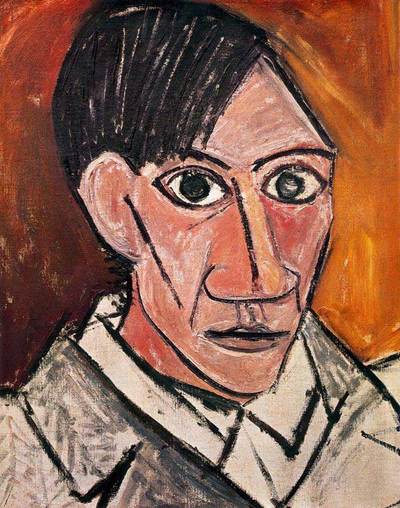
a)
Norman Rockwell
b)
Diego Rivera
c)
Pablo Picasso
d)
Dali
6.

a)
Rockwall
b)
Rivera
c)
Picasso
d)
Dali
7.

a)
Dali
b)
rockwell
c)
Picasso
d)
Cassett
8.

a)
Dali
b)
Rivera
c)
Picasso
d)
Pollock
9.

a)
O'Keefe
b)
Kahlo
c)
Cassatt
d)
Moses
10.

a)
Moses
b)
O'Keefe
c)
Rembrandt
d)
Kahlo
11.
A Self-Portrait is a picture of
a)
You
b)
Your friend
c)
Your mom
d)
A person
12.
Your identity makes up
a)
your family
b)
who you are not
c)
who you are
d)
who you wish you could be
13.
Features are
a)
dreams
b)
bad ideas
c)
what you don't want to look like
d)
what you look like (freckles, glasses, hair style)
14.
Symmetry or balance on your face means
a)
everything is messy
b)
nothing is equal
c)
everything lines up evenly on both sides
d)
nothing is located in the right place
15.
Which of these is not correct: A self-portrait is fun to create because
a)
you get to creative
b)
you get to "fix" details you might not like
c)
you can show people who you really are
d)
it's boring
16.
What are the subjects of a portrait?
a)
Animals
b)
Humans
c)
Insects
d)
Places
17.
Portraits can be made of:
a)
Paint
b)
Clay
c)
Bubble Gum
d)
All of the Above
18.
"Inner Essence" means the likeness or inner beauty of a person.
a)
True
b)
False
19.
Commission means self-appreciation.
a)
True
b)
False
20.
Portraits are created for:
a)
Family Heirlooms
b)
Humor
c)
Wealth Royalty
d)
All of the Above
21.
We know who the subject of the Mona Lisa is.
a)
True
b)
False
22.
When giving a constructive critique, you should avoid,
a)
being detailed.
b)
being judgemental.
c)
pointing out areas of improvement.
d)
providing suggestions.
23.
Using a variety of thin and thick lines is called:
a)
interest
b)
line variation
c)
line definition
d)
value
24.

What is the subject of this artwork?
a)
interior
b)
still life
c)
portrait
d)
landscape
25.

This image shows an example of:
a)
visual texture
b)
actual texture
c)
slippery texture
d)
soft texture
26.
A three-dimensional object is called:
a)
a square
b)
a mold
c)
a form
d)
a circle
27.

This image shows an example of:
a)
Light values
b)
Expensive values
c)
Darn good values
d)
Dark values
28.

This image shows an example of what?
a)
light values
b)
dark values
c)
immoral values
d)
righteous values
29.
The elements of art are:
a)
the way art is arranged
b)
pure chemical substances used in art
c)
the building blocks of art
d)
pens, pencils, paint, ect...
30.
A line is a mark with
a)
length and direction
b)
width and height
c)
dots and squiggles
d)
ink or pencil
31.
What you see when you look at an artwork is called the:
a)
theme
b)
subject
c)
background
d)
picture
32.
The relative lightness or darkness of an object is:
a)
texture
b)
color
c)
contrast
d)
value
33.
The main idea of an artwork is called the
a)
frame
b)
theme
c)
subject
d)
purpose
34.
The two categories of texture are:
a)
sharp and soft
b)
fluffy and rough
c)
visual and actual
d)
bumpy and smooth
35.

What kind of space does this image show?
a)
shallow space
b)
outer space
c)
deep space
d)
inter space
36.
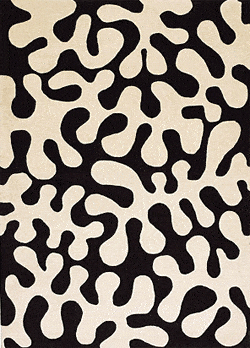
What phrase best describes this image?
a)
geometric forms
b)
geometric shapes
c)
organic shapes
d)
organic forms
37.
The area around, above or inside an object is called:
a)
form
b)
perspective
c)
contrast
d)
space
38.
Shapes are
a)
the form of an object
b)
two-dimensional
c)
three-dimensional
d)
open spaces
39.

This image shows an example of:
a)
shallow space
b)
outer space
c)
inter space
d)
deep space
40.
Lines that follow the outer edges of an object are:
a)
Crispy Lines
b)
Cross-hatching
c)
Contour Lines
d)
Carbon Lines
41.
When you create a blind contour drawing you don't:
a)
look at the paper
b)
look at anything
c)
use your imagination
d)
draw any lines
42.

This image shows an example of:
a)
line variation
b)
contour lines
c)
low contrast
d)
high contrast
43.
A small difference between values is called:
a)
value scale
b)
low contrast
c)
dark values
d)
high contrast
44.
An element of art that refers to the lightness and darkness of a color.
a)
hue
b)
value
c)
movement
d)
contrast
45.
A mark with length and direction, created by a point that moves across a surface.
a)
line
b)
value
c)
contrast
d)
form
46.
The empty or open area between, around, above below and within objects.
a)
form
b)
balance
c)
color
d)
space
47.
Any three dimensional object that can be measured by height, width and depth.
a)
emphasis
b)
space
c)
form
d)
shape
48.
The element of art that refers to the surface quality of an object or the way something feels such as rough-smooth
a)
shape
b)
texture
c)
color
d)
line
49.
A flat figure created when actual or implied lines surround a space-can be geometric or organic
a)
line
b)
form
c)
shape
d)
space
50.
Element of art produced when a wavelength of light strikes an object and reflects back to the eyes.
a)
primary
b)
secondary
c)
teriary
d)
color
51.
"Texture is only relevant to 3-dimensional art."
a)
True
b)
False
52.
"The Elements of Art help us organize our ideas."
a)
True
b)
False
53.
"The Elements of Art form the basis for the Principles of Design."
a)
True
b)
False
54.
The way a work of art "feels."
a)
Form
b)
Texture
c)
Value
d)
Organic
55.
Also known as "hue" (or "I don't really know how to define this without just saying the word").
a)
Value
b)
Movement
c)
Texture
d)
Color
56.
Positive is what is there, negative is where there isn't anything.
a)
Space
b)
Shape
c)
Line
d)
Form
57.
A continuous feature your eye tends to follow.
a)
Movement
b)
Form
c)
Line
d)
Geometric
58.
Shapes reflecting those found in nature.
a)
Geometric
b)
Organic
c)
Symmetry
d)
Biological
59.
Clearly-defined shapes, often using many straight lines, that feel man-made or "unnatural."
a)
Geometric
b)
Form
c)
Texture
d)
Organic
60.
_______ tends to be 2-dimensional, while _______ refers to how an object takes up 3-dimensional space.
a)
Line, Movement
b)
Movement, Line
c)
Form, Shape
d)
Shape, Form
61.
Which two Elements are commonly confused for each other?
a)
Space and Shape
b)
Space and Form
c)
Line and Movement
d)
Shape and Form
62.

What is the word that means the lightness or darkness of shades or colors?
a)
Space
b)
Accuracy
c)
Value
d)
Form
63.
What is the lightest value tone?
a)
White
b)
Light Pink
c)
Grey
d)
Black
64.

What three colors are called "Primary" colors?
a)
Red, orange, yellow
b)
Blue, Green, Purple
c)
Red, red-orange, red-yellow
d)
Red, blue, yellow
65.

What three colors are the Secondary Colors?
a)
Red, Yellow, Blue
b)
Blue, Green, Violet
c)
Orange, Green, Violet
d)
Red, Orange, Yellow
66.

Which of the following colors are "cool colors?"
a)
Black, grey, white
b)
Green, blue, violet
c)
Red, yellow, orange
d)
Green, orange, violet
67.

What term is used to describe a shape that is 3 dimensional or appears to be 3 dimensional?
a)
Shape
b)
Form
c)
Line
d)
Value
68.

When drawing correct human facial proportions, where are the eyes located?
a)
One inch from the top of the head.
b)
Halfway down the head.
c)
One half inch above the nose.
d)
Right below the hairline.
69.

When drawing facial proportions, how far should the eyes be?
a)
One inch.
b)
One nose.
c)
One eye.
d)
One half inch.
70.

When drawing facial proportions, how many eyes wide is the face?
a)
5 eyes
b)
4 eyes
c)
3 eyes
d)
10 eyes
71.

What element of art is dominant in this picture?
a)
Value
b)
Color
c)
Line
d)
Form
72.

What element of art is most prominent in this picture?
a)
Line
b)
Value
c)
Color
d)
Form
73.

What element of art is most prominent in this artwork?
a)
Line
b)
Color
c)
Value
d)
Form
74.
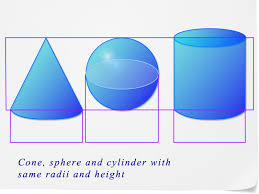
What art term describes these objects?
a)
Shapes
b)
Forms
75.
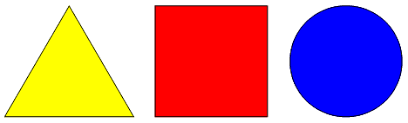
What art term is used to describe these objects?
a)
Shapes
b)
Forms
76.

What element of art is best represented in this picture?
a)
Shape
b)
Line
c)
Texture
d)
Color
77.

What is the primary element(s) of art used in this painting by Kandinsky?
a)
Shape
b)
Shape and Space
c)
Space and Color
d)
Line and space
78.

What element of art is best represented in this picture?
a)
Line
b)
Form
c)
Value
100 %

