
 Worksheets
Quarter 2/4 benchmark review 7th
Total questions: 63
Worksheet time: 1hrs 11mins
Name
Class
Date
1.
Requires two parents
a)
sexual
b)
asexual
2.
Requires only one parent
a)
sexual
b)
asexual
3.
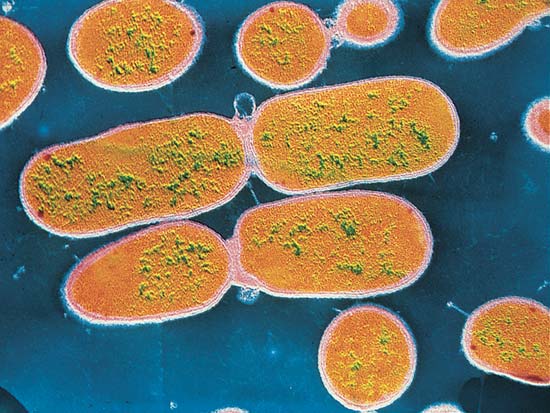
The offspring from asexually reproduced organisms are?
a)
Different than their parents
b)
Identical to parents
c)
Like a combination from both parents
d)
A different species
4.
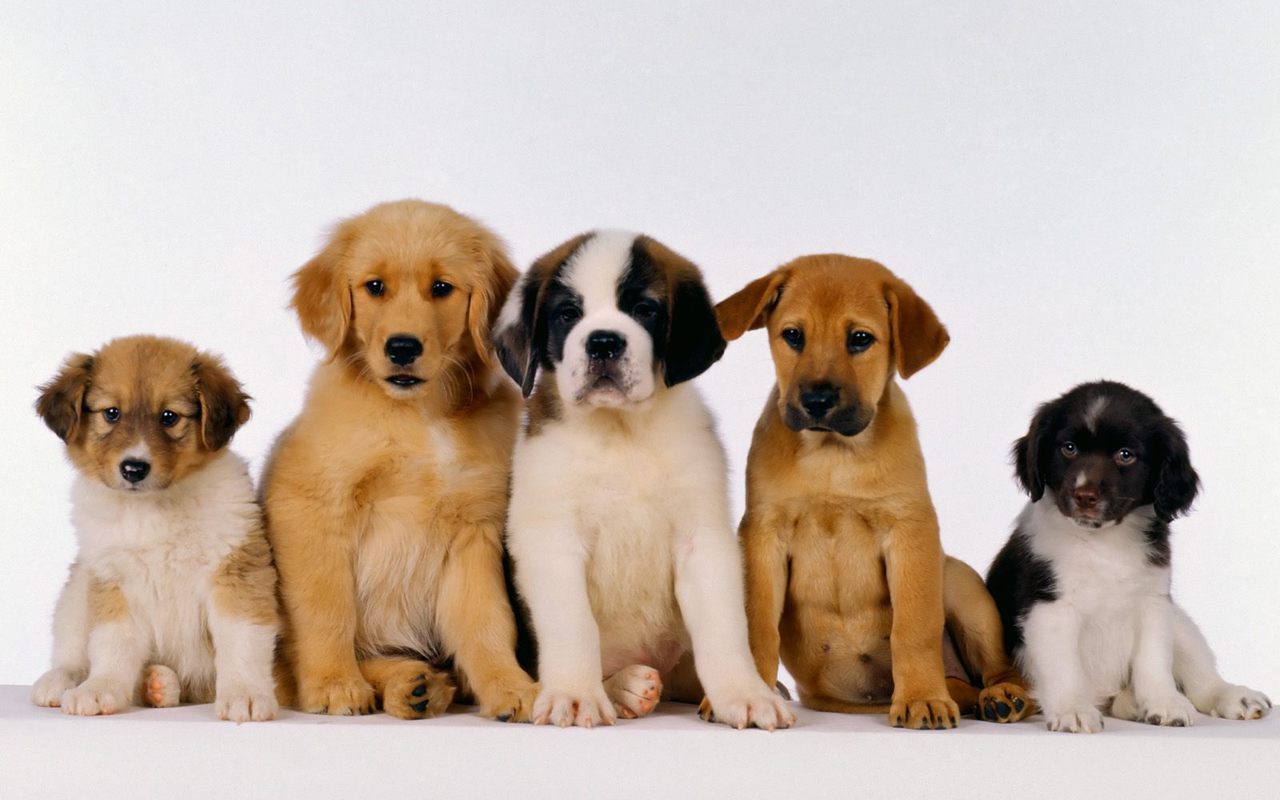
If two organisms reproduce sexually, then their offspring will exhibit a genetic makeup that is -
a)
identical to only one parent
b)
identical to all of its siblings
c)
a unique combination of traits
d)
the recessive traits of each parent
5.

All of the offspring of an organism have the same genetic material, which is identical to the parent organism. From this, we can conclude that this organism -
a)
makes its own food
b)
is unicellular
c)
live in a marine habitat
d)
reproduces asexually
6.
In asexual reproduction, all of the offspring are:
a)
Physically Identical
b)
Genetically Identical
c)
Physically and Genetically Identical
d)
Not Identical
7.
How many parent(s)are needed for asexual?
a)
4
b)
1
c)
9
d)
100
8.
What percentage of chromosomes are handed down by a parent cell in asexual reproduction?
a)
75%
b)
25%
c)
50%
d)
100%
9.
Sexual reproduction requires _____ parents and asexual reproduction requires ___ parents
a)
1,1
b)
2,2
c)
2,1
d)
1,2
10.
Which process creates genetically DIFFERENT offspring?
a)
sexual
b)
asexual
11.
Requires two parents
a)
sexual
b)
asexual
12.

Which process increases the variability of genetic information?
a)
Mitosis
b)
Meiosis
c)
cloning
d)
asexual reproduction
13.
Which type(s) of reproduction includes chromosomes being passed to offspring?
a)
asexual
b)
sexual
c)
both
14.
Which type(s) of reproduction involves NO genetic diversity?
a)
asexual
b)
sexual
c)
both
15.
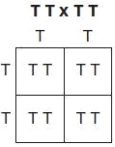
What ratio of the offspring from the cross shown will be homozygous recessive for the trait of tallness?
a)
0 in 4
b)
1 in 4
c)
2 in 4
d)
4 in 4
16.
Which of the following genotypes is homozygous dominant?
a)
A
b)
Aa
c)
AA
d)
aa
17.
Which of the following genotypes is heterozygous?
a)
Bb
b)
BB
c)
bb
d)
B
18.
In a flowering plant species, red flower color (R) is dominant over white flower color (r). What is the genotype of any red-flowering plant resulting from this species?
a)
rr
b)
R
c)
RR
d)
RR or Rr
19.
In a heterozygous genotype, the ___________ allele takes over in the phenotype.
a)
recessive
b)
dominant
c)
lower case letter
d)
both
20.
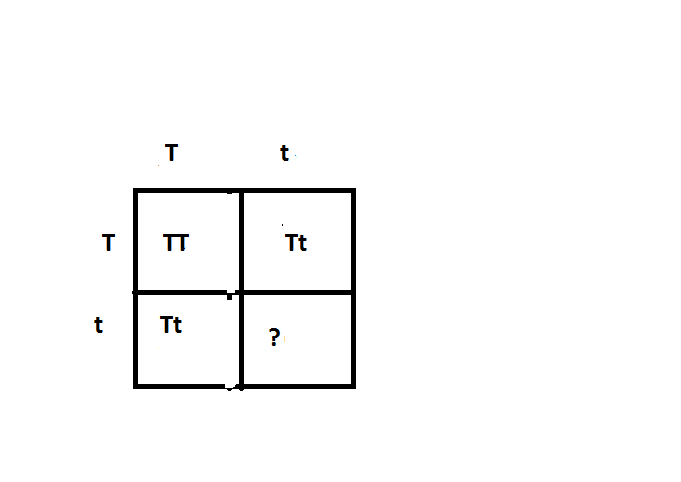
T - tall and t = short
In the punnett square below, what belongs in the missing square
In the punnett square below, what belongs in the missing square
a)
tt
b)
Tt
c)
Bb
d)
TT
21.
Which of the following is homozygous recessive?
a)
Tt
b)
tt
c)
TT
d)
T
22.
Which of the following is homozygous dominant?
a)
Yy
b)
Y
c)
yy
d)
YY
23.

B = brown fur b = white fur
In the punnett square, what is the probability for white fur?
In the punnett square, what is the probability for white fur?
a)
0%
b)
25%
c)
50%
d)
75%
24.
What ratio of the offspring from the cross shown will be homozygous recessive for the trait of tallness?
a)
0 in 4
b)
1 in 4
c)
2 in 4
d)
4 in 4
25.
Two heterozygous red flower (white flowers are recessive) are crossed. What is the phenotype?
a)
75% red and 25% white
b)
25% red and 75% white
c)
100 White
d)
50% red 50% red
26.
Are all mutations bad?
a)
Yes
b)
No
27.
Any change in the sequence of DNA is...
a)
transgenic shift
b)
Single Genotype
c)
Monohybrid Trait
d)
Mutation
28.
Would a mutation in the DNA of a skin cell be passed on to an organism's offspring?
a)
Yes, because any change to the DNA is passed on to the offspring
b)
Maybe. Sex cells only use half of the body's genetic code. It might get the copy of a gene that wasn't mutated.
c)
No. Only mutations that occur in the gametes (sex cells) are passed on to the offspring
d)
Without knowing the animal, it would be hard to tell whether or not the mutation would be passed on.
29.
What causes mutations?
a)
Mistakes in replication or environmental substances
b)
The amino acids
c)
Passed down by genetics
d)
It's how your born
30.
Enviromentals changes leads to
a)
variations
b)
pollution
c)
predation
d)
artificial selection
31.
Natural selection is when ____________ decides who survives and who doesn't
a)
nature
b)
humans
c)
animals
d)
years
32.
Behavioral changes of individuals of a species that allow for better survival. (Acquired traits)
a)
Variation
b)
Adaptation
c)
Behavior
d)
Environment
33.
When every organism of a species has died.
a)
Evolution
b)
Natural Selection
c)
Extinction
d)
Artificial Selection
34.
Where the better adapted organisms survive to pass traits along to offspring.
a)
Evolution
b)
Natural Selection
c)
Extinction
d)
Artifical Selection
35.
Why are advantageous traits more likely to be passed onto offspring?
a)
Because they are more likely to survive and reproduce.
b)
Because they come from dominant alleles.
c)
Because they come from recessive alleles.
d)
Because the trait is an acquired phenotype.
36.
Genetic differences between organisms of the same species
a)
Variation
b)
Adaptation
c)
Behavior
d)
Environment
37.
Which statement best describes the process of evolution?
a)
Populations can survive in different locations on earth
b)
Environmental conditions limit the number of species on Earth
c)
Populations grow when resources are abundant
d)
The traits of a species can change over time
38.
Modern whales developed their traits through natural selection. What occurs during the process of natural selection?
a)
Organisms choose mates from other species to create new species
b)
Breeders selectively cross organisms with desired traits
c)
Only the fittest organisms can survive and reproduce
d)
Organisms remain exactly the same over time.
39.
Mutations that improve am individual's ability to survive and reproduce are
a)
harmful
b)
neutral
c)
beneficial
d)
chromosomal
40.
What is a characteristic, or feature of a plant or animal called?
a)
trait
b)
survive
c)
adaptation
d)
reproduce
41.
Why would a population with a large amount of genetic variation be more likely to survive a severe climate change in its environment?
a)
Individuals will only create offspring well-suited to the climate change
b)
The individuals would produce more offspring
c)
Individuals better suited to the new climate will help less-suited individuals survive
d)
Some individuals will posses traits better suited to the new climate and be more likely to pass them on
42.
Inherited variation means...
a)
an animal produces a large number of offspring.
b)
some individuals die from starvation, competition, disease or predation.
c)
individuals have different traits.
d)
individuals best adapted to the environment have many offspring.
43.
a slight change in a rabbit's ability to hear its predators better and help it survive is
a)
an adaptation.
b)
a vestigial structure
c)
an acquired trait
d)
an isolation
44.
Why do frogs and other organism reproduce so many eggs or offspring?
a)
so that their babies can have friends to play with
b)
the more offspring the more likely the offspring will survive
c)
the more offspring the less likely offspring will survive
d)
the more offspring the less competition
45.
Sources of variations include _______ and ______?
a)
sexual reproduction, mutations
b)
asexual reproduction, mutations
c)
biological evolution, genetics
d)
biological evolution, genetics
46.
Which of the following pieces of evolution evidence deals with comparing similar structures in various species?
a)
fossil record
b)
comparing embryology
c)
comparing biochemistry
d)
comparing anatomy
47.

The forelimbs of penguin, alligator, bat, human are which of the following?
a)
homologous structures
b)
vestigial structures
48.

If an organism has a vestigial structure, that structure likely once had a function in a(n)
a)
close relative
b)
early ancestor
c)
unrelated organism
d)
embryological stage
49.

Two organisms that are closely related would have
a)
very similar DNA sequence
b)
exactly the same DNA sequences
c)
no proteins in common
d)
completely different DNA sequence
50.

How would you describe this evolution?
a)
Homologous structure
b)
Analogous structure
c)
Structural adaption
d)
Functional adaption
51.

Which best describes these fossils?
a)
The oldest fossils can be found on the lower layers
b)
The oldest fossils can be found at the top layers
c)
The youngest fossils are always found on the bottom layers
d)
You can not tell the age of any of these fossils
52.

Structures with the same parts have different functions; suggests that organisms share a common ancestry
a)
vestigial structures
b)
homologous structures
c)
adaptive radiation
d)
fossil
53.

The forelimbs of vertebrates, like the ones pictured here, are similar in terms of number of bones and the orientation of bones. Which best describes how comparing homologous structures provides evidence of evolution?
a)
The genes for the body plan and forelimb layout were present in a common ancestral species vertebrates share, thus passed onto all vertebrates.
b)
Similar anatomical structures show how animals adapt to changing environments
c)
Homologous structures show that different species evolve at different rates
d)
Homologous structures don’t actually provide evidence for evolution
54.
A fossil of an extinct dinosaur is found and the anatomy of the fossil shows similarities to that of a bird. What could this mean?
a)
This is purely by chance and isn't significant
b)
The extinct dinosaur and modern bird share a common ancestor
c)
All dinosaurs evolved into birds and that's why there aren't any dinosaurs alive today
d)
Dinosaurs choose to fly, and evolved into birds to escape predation and capture food
55.

Structures that have different mature forms but develop from the same embryonic tissue are called
a)
analagous
b)
adaptations
c)
homologous
d)
fossils
56.
Structures that are similar in form (structures) with different functions such as the wings of a bat and the arms of humans.
a)
Homologous Structures
b)
Vestigial Structures
c)
Analogous Structures
d)
Molecular Homology
57.
This can show the changes that occurred over time for a specific type of creature. Older fossils are found deeper than more recent fossils.
a)
Phylogeny
b)
Homologous Structures
c)
Fossil Record
d)
Vestigial Structures
58.
Structures that are very different in structure or anatomy but have similar functions such as the wings of a bird and a butterfly.
a)
Vestigial Structures
b)
Homologous Structures
c)
Analogous Structures
d)
Cladogram
59.
Which of the following pieces of evolution evidence deals with aged and identified fossils?
a)
fossil record
b)
comparative embryology
c)
comparative biochemistry
d)
comparative anatomy
60.

Which three animals are most distantly related?
a)
The elephant, Manatee, and Yellow Frog
b)
The Yellow Frog, Salamander, and Bird
c)
The Lungfish, Crocodile, and Bird
d)
The Elephant, Lungfish, and Crocodile
61.

According to this cladogram, sharks are MOST closely related to which organism?
a)
Amphibians
b)
Ray finned fish
c)
Crocodiles
d)
Birds
62.
Deer fighting for a mate is an example of ____________.
a)
overproduction
b)
competition
c)
variation
d)
selection
63.
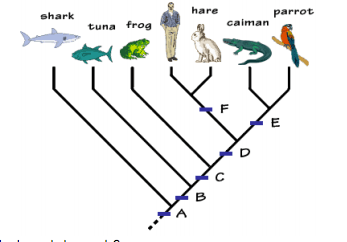
On the cladogram, which organism is the closest relative of the human?
a)
Frog
b)
Hare
c)
Caiman
d)
Parrot
100 %

