
NEW
Font size
S
M
L
XL
 Worksheets
Finals Review
Total questions: 53
Worksheet time: 31mins
Name
Class
Date
1.
Which object has more momentum, a 4,000 kg truck travelling 10 m/s or a 2,500 kg car travelling 15 m/s
a)
The Truck
b)
The Car
c)
They are Equal
2.
What is the momentum of a 50 kg person walking down the road at 5 m/s for 2 hours?
a)
100
b)
10
c)
25
d)
250
3.
How much force is required to stop a 4 kg bowling ball that is travelling at 5 m/s if it takes 0.5 seconds to stop?
a)
20
b)
50
c)
40
d)
10
4.

The forces on this object are:
a)
Balanced
b)
Unbalanced
5.

Which of the following descriptions best matches the diagram on the right?
a)
The rocket is accelerating from the ground
b)
The car is speeding up from a stop sign
c)
The jet is slowing down as it lands
d)
The book is sitting still on the desk
6.
Which of these is an example of potential energy?
a)
A car moving
b)
A battery
c)
Light
d)
Sound
7.
Which of these is an example of kinetic energy?
a)
Food
b)
A battery
c)
Electricity
d)
A stretched rubber band
8.
Potential energy is
a)
Energy in motion
b)
Stored energy
9.
Kinetic energy is
a)
Energy in motion
b)
Stored energy
10.

How is a parallel circuit different from a series?
a)
It has multiple paths for the current to follow and the voltage stays the same in all lights
b)
It has many branches that get weaker farther from the battery
c)
They are two circuits running side by side
d)
They are the same thing
11.

This picture is an example of what kind of circuit?
a)
Series
b)
Complete
c)
Parallel
d)
Broken
12.

What will the bulbs look like when this circuit is turned on?
a)
They will be equally bright
b)
The one in the middle will be brighter than the one on top
c)
The one on top on will be brighter than the middle one
d)
This circuit does not work
13.

Tiny particles surrounding atoms that have a negative charge are called...
a)
protons
b)
neutrons
c)
electrons
d)
circuits
14.
This type of circuit has more than one path. When one light goes out, the others stay on.
a)
closed circuit
b)
series circuit
c)
parallel circuit
d)
open circuit
15.

What do the lines around this magnet represent?
a)
North Pole
b)
South Pole
c)
Magnetic Declination
d)
Magnetic Field
16.
Electricity is the flow of ______.
a)
electrons
b)
protons
c)
neutrons
d)
atoms
17.
An object becomes postiively charged when which of the following occurs?
a)
loses electrons
b)
gains electrons
c)
loses protons
d)
gains neutrons
18.
How do two negative charges interact when they are brought close together?
a)
repel, no electricity
b)
no interaction
c)
attract, make electricity
d)
ground
19.
What causes magnetism?
a)
They movement of electrons within certain metals
b)
The movement of protons within certain metals
c)
An invisible force felt throughout the universe
d)
The transfer of electrons between objects
20.

If you put a piece of paper on a Van de Graaff generator it will stick for a moment then fly off, why is this?
a)
By the swapping of protons and electrons between objects
b)
Because at first they have oppostie charges and attract, then the paper also becomes (-) charged and they repel eachother
c)
The generator emits a magnetic field
d)
The generator is creating a breeze in the air around it
21.
How does increasing the number of coils effect and electromagnet?
a)
It makes it weaker
b)
It makes it stronger
c)
It doesn't change anything
d)
It switches the poles
22.
How are like electrical charges (+, + or -, -) and like poles (N, N or S, S) in magnets similar?
a)
They are both attracted to eachother
b)
They both repel eachother
c)
They both can shock you
d)
They have nothing in common
23.
Electromagnets are created by...
a)
Electrical Magnets
b)
Magnets being plugged into electrical sockets
c)
The flow of an electrical current around a metal core. Aligning the electrons and making a magnetic field
d)
The flow of protons around a magnet, creating a positive charge
24.

This picture is showing a
a)
Broken Battery
b)
Magnet
c)
Circuit
d)
Electromagnet
25.

How are the poles on these bar magnets most likely oriented?
a)
South/ North, South/ North
b)
North/ South, South/ North
26.

These magnetic fields are showing which rule of magnetism?
a)
Opposites attract
b)
The closer magnets are the stronger the force
c)
Like poles repel each other
d)
The force is with you
27.
Electromagnets are different than regular magnets because...
a)
They have no poles
b)
They can be turned on and off
c)
They have a stronger force
d)
Their magnetic fields can cross
28.
When you increase the voltage of the battery in an electromagnet you are really changing the ____________.
a)
Proton number
b)
Electrical current (electron flow)
c)
Electron force
d)
Orientation of the poles
29.
Which of these electromagnetic waves is longest wavelength on the EM spectrum?
a)
Ultraviolet
b)
Visible red light
c)
Microwaves
d)
x-rays
30.

How is wavelength measured?
a)
From trough to crest (B to D)
b)
From the center line to the crest (B to C)
c)
From one successive crest to the next (B to F)
d)
From one end of the wave to the far end of the wave (A to H)
31.
True or False:
Frequency is how many waves pass per second.
Frequency is how many waves pass per second.
a)
True
b)
False
32.

Which of these waves has the highest frequency?
a)
Orange
b)
Red
c)
Purple
d)
Green
33.
If you increase frequency what happens to the wavelength?
a)
Wavelength increases
b)
Wavelength decreases
c)
Wavelength remains the same
34.

What is amplitude in a wave?
a)
How wide it is
b)
How fast it travels
c)
How much energy it has
d)
How frequently it passes you
35.
When amplitude is increased how will it effect a light wave?
a)
Increase fequency
b)
Increased brightness
c)
Increases volume
d)
Decreases brightness
36.
Which EM wave has the highest frequency and shortest wavelength?
a)
x-rays
b)
Visible light
c)
Gamma waves
d)
Radio Waves
37.
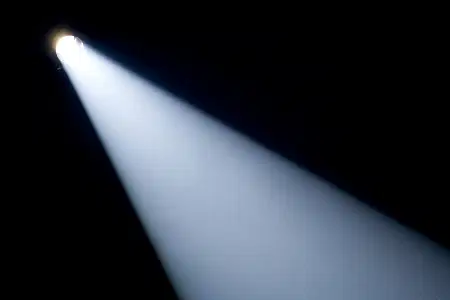
What is really happening when you see white light?
a)
You are seeing white light
b)
You are seeing a rainbow that's been combined
c)
You are seeing equal parts red, green, and blue light
d)
You are only seeing florescent light
38.

Why are oranges orange...?
a)
Because they emit orange light from their cells
b)
Because they absorb all colors except orange which is reflected back into your eyes
c)
Because they are actually a combination of some green and a little more red light
d)
Because orange is the yummiest color
39.
About how many days does it take to moon to go through a complete cycle?
a)
7 days
b)
365 days
c)
29 days
d)
20 days
40.

When the Earth is between the moon and sun, it is most likely a:
a)
new moon
b)
full moon
c)
waxing crescent
d)
waxing gibbous
41.
As the moon moves from a new moon to a full moon, you see:
a)
the moon appearing increasingly lighter
b)
The amount of light the moon is receiving decreasing
c)
the amount of light the moon gets staying constant
d)
more light and then less light
42.
Define Waxing
a)
Moon is increasing and light part appears to be growing
b)
Completely illuminated
c)
dark side is facing earth
d)
Moon is decreasing and light part appears to be shrinking
43.
Define Gibbous
a)
Less than half of moon visible
b)
More than half of moon visible
c)
All of moon visible
d)
None of moon visible
44.
Define Quarter Moon
a)
None of moon visible
b)
Less than Half the moon is visible
c)
More than half of moon is visible
d)
Half of the moon is visible
45.

Name the moon phase
a)
Waxing Gibbous
b)
Waxing Crescent
c)
Waning Crescent
d)
Waning Gibbous
46.

Name the moon phase
a)
Waning Crescent
b)
Waxing Crescent
c)
Waning Gibbous
d)
Waxing Gibbous
47.

Solar eclipses occur during which Moon phase?
a)
New Moon
b)
Waning Crescent
c)
Waxing Crescent
d)
Waning Gibbous
48.

Which type of eclipse is shown in the diagram?
a)
Solar Eclipse
b)
Lunar Eclipse
c)
Total Eclipse
d)
Partial Eclipse
49.

Which type of eclipse is shown in this picture?
a)
Solar Eclipse
b)
Orbit
c)
Lunar Eclipse
d)
Total Eclipse
50.
Earth's magnetic field is created by
a)
Convection currents in the plasma
b)
The moving electrons in the crust
c)
The north and south poles
d)
The spinning of Earth's iron/nickel core
51.
Two factors effecting the magnitude of the force of gravity between 2 objects are...
a)
mass and distance
b)
mass and matter
c)
distance and weight
d)
weight and mass
52.

Which body has the greater effect on Earth's tides?
a)
Sun
b)
Saturn
c)
Moon
d)
Venus
53.

What is a difference between spring and neap tides?
a)
Spring tides occur when the earth and sun are IN LINE with the new or full moon.
b)
Spring tides occur when moon in 3rd or 1st quarter phases
c)
Spring tides are LOWER than neap tides
Reset

