
 Worksheets
Thinkback
Total questions: 55
Worksheet time: 44mins
Name
Class
Date
1.
Alternative energy is
a)
Generated by natural resources and is renewable
b)
man made
c)
nonrenewable
d)
gross
2.
Geothermal energy is energy from
a)
the sun
b)
heat from deep in the earth
c)
wind
d)
inexhaustable
3.
Wind energy is
a)
generated from moving water
b)
starts with moving air and generates electricity
c)
starts with the sun
d)
comes from the earth
4.
Energy made from moving water or falling water is
a)
geothermal energy
b)
solar energy
c)
electrical energy
d)
hydro electrical energy
5.
Energy from the sun is called
a)
Biomass
b)
Solar
c)
Geothermal
d)
Hydro
6.
Renewable resources are
a)
man-made resources
b)
can be replaced in a short amount of time
c)
cannot be replaced
d)
never run out
7.
Non-Renewable resources are
a)
man-made resources
b)
cannot be replaced quickly
c)
can be replaced in a short amount of time
d)
never run out
8.
There are 5 forms of Alternative Energy
a)
True
b)
False
9.
Biomass comes from
a)
Plants like corn
b)
Animal Fats
c)
Algae
d)
All of the above
10.
Something that takes up space and has mass.
a)
volume
b)
matter
c)
mass
d)
density
11.
A state of matter that has a definite volume and shape.
a)
solid
b)
liquid
c)
gas
d)
matter
12.
The amount of space something takes up
a)
density
b)
volume
c)
mass
d)
matter
13.
Shape is a ____ that helps identify an object.
a)
physical property
b)
chemical property
c)
mass
d)
matter
14.
Iron + oxygen = rust is an example of a ___________.
a)
physical property/change
b)
chemical property/change
c)
mass
d)
volume
15.
A watermelon has more matter than a grape, so it has more
a)
mass
b)
eat
c)
solid
d)
greater
16.
You can measure ______ with grams.
a)
mass
b)
volume
c)
conductivity
d)
melting point
17.
The ability of a metal to allow heat or electricity to pass through it.
a)
conductivity
b)
insulator
c)
mass
d)
density
18.
What is the energy source for the water cycle?
a)
the sun
b)
the earth
c)
water
d)
the moon
19.
Which of these is an example of precipitation?
a)
snow
b)
air
c)
clouds
d)
vapor
20.
Which is the opposite of condensation?
a)
runoff
b)
evaporation
c)
precipitation
d)
transpiration
21.
Which best explains why runoff is important?
a)
It returns water to other locations on Earth
b)
It increases the chance of flooding
c)
It makes evaporation occur faster
d)
It increases condensation
22.
Snow, sleet, hail, and rain are all examples of ________________.
a)
evaporation
b)
condensation
c)
accumulation
d)
precipitation
23.
On which kind of day would you expect the most evaporation from the surface of a pond?
a)
sunny and hot
b)
sunny and cold
c)
rainy and hot
d)
rainy and cold
24.
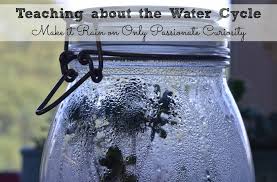
Dew also forms directly onto items, as water droplets. What part of the water cycle is this?
a)
run-off
b)
condensation
c)
evaporation
d)
precipitation
25.

This is what heats up the water to start the water cycle.
a)
sun
b)
moon
c)
stars
d)
Mars
26.

What does this illustration show?
a)
Sunrise
b)
The Water Cycle
c)
Sunset
d)
the recycling of snow
27.

what does the #4 show in the diagram?
a)
condensation
b)
evaporation
c)
precipitation
d)
run off
28.

Which stage does the #3 show in the diagram?
a)
condensation
b)
evaporation
c)
precipitation
d)
run off
29.
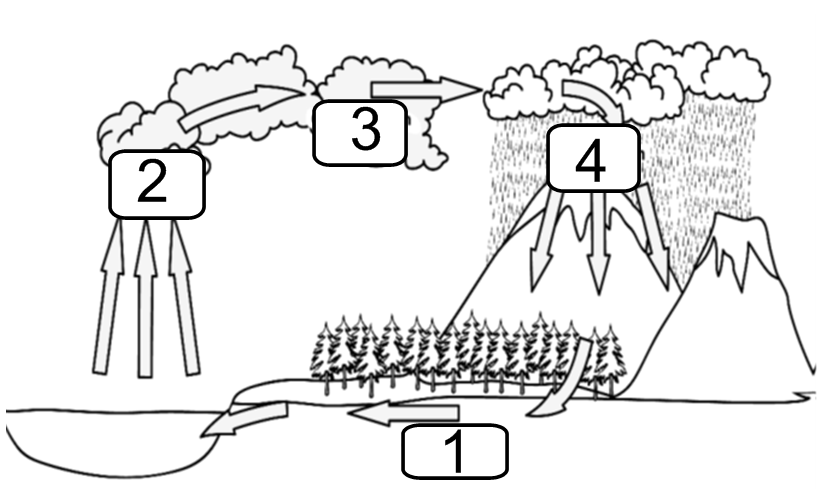
Which stage does the #2 show in the diagram?
a)
condensation
b)
evaporation
c)
precipitation
d)
run off
30.
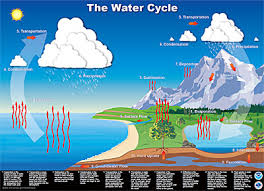
Which stage does ground water try to return to the ocean or soak into the ground?
a)
condensation
b)
evaporation
c)
precipitation
d)
run off
31.
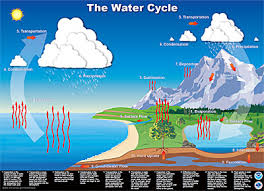
Which stages does liquid water from the ocean turn into water vapor?
a)
condesantion
b)
evaporation
c)
precipitation
d)
run off
32.
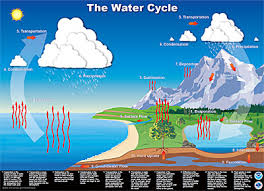
During which stage do clouds form?
a)
condensation
b)
evaporation
c)
precipitation
33.
What is a PUSH or PULL of an object?
a)
Motion
b)
Force
c)
Friction
d)
Gravity
34.
What is MOVEMENT?
a)
Inertia
b)
Force
c)
Work
d)
Motion
35.
What happens when one force PULLS an object toward another?
a)
Friction
b)
Motion
c)
Gravity
d)
Magnetism
36.
What is a force that works AGAINST MOTION?
a)
Force
b)
Motion
c)
Gravity
d)
Friction
37.
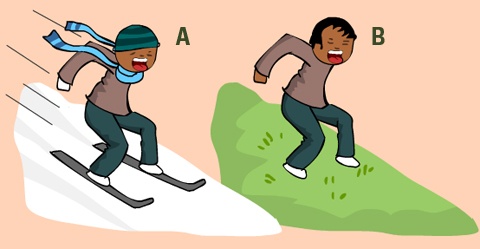
Why is it harder for the boy in Image B to get down the hill?
a)
Motion
b)
Friction
c)
Work
d)
Displacement
38.

In the image, which of the person and their bikes will get down a hill faster?
a)
The boy because he is younger
b)
The woman because she is stronger
c)
The boy because he has a greater mass which applies a greater force
d)
The woman because she has more mass and applies a greater force
39.
How is gravity affected by mass?
a)
the larger the mass of the object, the greater the gravity
b)
small objects have no gravity
c)
gravity is not affected by mass of objects, whether large or small
40.
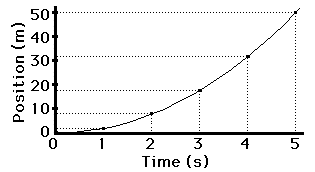
The picture of the position vs. time graph shows an object that is...
a)
accelerating/speeding up
b)
moving at a constant speed
c)
not moving
d)
accelerating/slowing down.
41.
Why does a rolling ball stop?
a)
Gravity
b)
Friction
c)
Waterfalls
d)
Sand
42.
The amount of matter in an object
a)
weight
b)
force
c)
gravity
d)
mass
43.
True or False: Your hypothesis can never be wrong.
a)
True
b)
False
44.
If plants are exposed to sunlight, then they will grow taller.
What part of the scientific method is this an example of?
What part of the scientific method is this an example of?
a)
Procedure
b)
Hypothesis
c)
Question
d)
Results
45.
What step does every scientific experiment begin with?
a)
hypothesis
b)
question/problem
c)
procedures
d)
conclusion
46.
The summary at the end of an experiment that explains the results.
a)
conclusion
b)
procedures
c)
materials
d)
hypothesis
47.
Observations made during an experiment are considered:
a)
data
b)
problems
c)
conclusions
d)
questions
48.

What is a hypothesis?
a)
an educated guess stating what you believe will be the result of your experiement
b)
a random guess
c)
a statement of the outcome of your experiment
d)
step by step directions for your experiment
49.

What are the procedures step in the experiment?
a)
the conclusion to your experiment
b)
the materials needed to complete experiment
c)
step by step directions of how to complete your experiment
d)
an educated, best guess
50.

What are the materials in your scientific method?
a)
your favorite markers and lucky eraser
b)
everything you will need to complete your experiment
c)
a hypothesis
d)
step by step directions to complete an experiment
51.
The variable that is being measured or observed is called the _______________. Hint: this is the variable that is the result or effect
a)
independent variable
b)
dependent variable
c)
control variable
52.
An experiment is performed on plants to see how different liquids affect plant growth. Each plant in the experiment is given a different liquid: water, apple juice, or milk. What variables should be kept constant/controlled?
a)
type of plant, flower pot, soil, and amount of sunlight
b)
water, apple juice, milk
c)
only the amount of sunlight
d)
type of plant only
53.
Why do we want to test one variable at a time?
a)
Because it is hard to setup a data table with more
b)
To know what is causing the changes. This helps us understand cause and effect.
c)
It is what has always been done
54.
What is a constant/control in an experiment?
a)
Things that do not change inana experiment. It's the variable that stays the same. You can have many variables stay the same.
b)
It's the variables that the scientist changes in the experiment
c)
It's the variables that are being measured in an experiment
55.

What is being kept constant?
a)
how fast the water boils
b)
amount of water
c)
temperature of stove
100 %

