
 Worksheets
Atmospheric Energy Review
Total questions: 35
Worksheet time: 8hrs 53mins
Name
Class
Date
1.
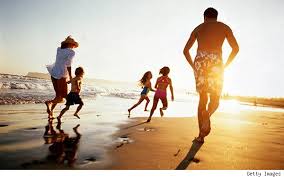
The sun shines down on this family as the play on the beach.
a)
conduction
b)
convection
c)
radiation
2.
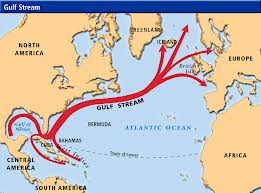
The Gulf Stream is a current that brings warm ocean water from the south to the north.
a)
conduction
b)
convection
c)
radiation
3.

Walking on the warm sand sand with your bare feet.
a)
conduction
b)
convection
c)
radiation
4.
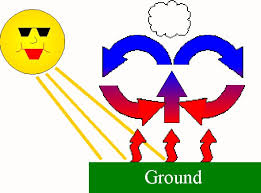
Warm air rises and the cool air sinks.
a)
conduction
b)
convection
c)
radiation
5.

Does the rose reflect or absorb red?
a)
Reflect
b)
Absorb
6.
Which group of substances is arranged in order of decreasing specific heat values?
a)
Iron, granite, basalt
b)
Copper, lead, iron
c)
dry air, water vapor, iceOption 3 (optional)
d)
Liquid water, ice, water vapor
7.
Which process is responsible for the greatest loss of energy from Earth’s surface into space on a clear night?
a)
Condensation
b)
Conduction
c)
Radiation
d)
Convection
8.
If the tilt of Earth’s axis were increased from 23.5° to 30°, summers in New York State would become
a)
Cooler, and winters would become cooler
b)
Cooler, and winters would become warmer
c)
Warmer, and winters would become cooler
d)
Warmer, and winters would become warmer
9.
During the month of January, at which location in New York State is the Sun lowest in the sky at solar noon?
a)
Massena
b)
Niagara Falls
c)
Utica
d)
New York City
10.
Equal areas of which surface will absorb the most insolation?
a)
Partially melted snowfield
b)
Blacktop parking lot
c)
White sand beach
d)
Lake surface
11.
Most of which type of electromagnetic radiation is given off by Earth’s surface at night?
a)
gamma rays
b)
ultraviolet light
c)
visible light
d)
infrared rays
12.

During the course of the day, which location had the greatest intensity of insolation at solar noon?
a)
A
b)
B
c)
C
d)
D
13.
Equal areas of which type of surface will reflect the most insolation?
a)
light gray rooftop Option 1*
b)
dark tropical forest
c)
snow-covered field
d)
black paved road
14.

Which diagram best represents how greenhouse gases in our atmosphere trap heat energy?
a)
1
b)
2
c)
3
d)
4
15.

Which graph best shows the duration of insolation at this location as the angle of insolation changes?
a)
1
b)
2
c)
3
d)
4
16.

Which type of light does the Ozone layer protect against?
a)
Visible light
b)
Ultraviolet Rays
c)
Gamma Rays
d)
Infrared Rays
17.

Which phase change requires the most energy in water?
a)
Freezing
b)
Melting
c)
Vaporization
18.
If suddenly, a thick layer of fog appeared in Earth's atmosphere, what do you think could happen as a result?
a)
More insolation would reach Earth's surface
b)
The sun would heat up
c)
Less insolation would reach Earth's surface
d)
The fog would sink
19.
What types of waves are trapped by a greenhouse?
a)
Infrared, because they have a longer wavelength
b)
Ultraviolet, because they have a shorter wavelength
c)
Infrared, because they have a shorter wavelength
d)
Ultraviolet, because they have a longer wavelength
20.
What absorbs ultraviolet rays in the atmosphere?
a)
troposphere
b)
stratosphere
c)
ozone layer
d)
greenhouse gases
21.
Which of these sets of three items produce CFCs
a)
cars, factories, and cardboard
b)
spray cans, cardboard, insulation
c)
spray cans, refrigerant, cardboard
d)
spray cans, refrigerant, insulation
22.
How many oxygen atoms does a molecule of ozone contain?
a)
1
b)
2
c)
3
d)
4
23.
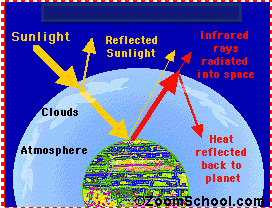
What does this diagram illustrate?
a)
Ozone Layer
b)
The Greenhouse Effect
c)
Ultraviolet Radiation
d)
Layers of the atmosphere
24.
Where is the ozone located?
a)
troposphere
b)
stratosphere
c)
mesosphere
d)
thermosphere
25.
Warm air is __________ dense than cold air and rises creating convection currents.
a)
more
b)
less
26.
Transfer of thermal energy through "space"
a)
conduction
b)
convection
c)
radiation
27.
Heat would best be transferred by conduction between
a)
a candle and the air.
b)
an oven and a glass dish.
c)
a stove and a copper pot.
d)
ocean currents
28.
Water has a specific heat of 4184 J/KgºC. Wood has a specific heat of 1760 J/KgºC. What material needs more energy to raise the temperature 1ºC
a)
Wood
b)
Water
c)
Both are the same
29.
How does heat flow?
a)
Always from cold to warm
b)
Always from warm to cold
c)
Both warm to cold & cold to warm
d)
Low to high pressure
30.

Copper, Stainless Steel, Carbon Steel, and Zinc were all heated using the same thermal energy. What material would be the coolest after being heated?
a)
Copper
b)
Carbon Steel
c)
Zinc
d)
Stainless Steel
31.
Do we here on Long Island (Hint: 41 degrees latitude) ever see the sun directly overhead?
a)
Yes, on June 21
b)
Yes, on December 21
c)
No
32.

What is the only region of Earth that sees the sun directly overhead at some point during the year?
a)
The equator
b)
The poles
c)
Between the Acrtic Circle and the Antarctic Circle (66 degrees S - 66 degrees N)
d)
Between the Tropics (23.5 degrees S - 23.5 degrees N)
33.
How has the human population changed since 1900?
a)
Not much
b)
Has gone down dramatically
c)
Has increased by a few percent
d)
Has increased tremendously
34.

Which planet is heavily impacted by the greenhouse effect?
a)
Jupiter
b)
Venus
c)
Mercury
d)
Mars
35.
Which substance will heat up the slowest?
a)
Asphalt (blacktop)
b)
Liquid water
c)
Iron
d)
Lead
100 %

