
NEW
Font size
S
M
L
XL
 Worksheets
Heat Transfer
Total questions: 53
Worksheet time: 57mins
Name
Class
Date
1.
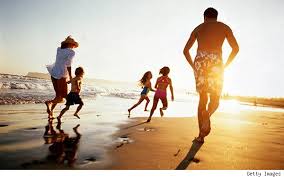
The sun shines down on this family as the play on the beach.
a)
conduction
b)
convection
c)
radiation
2.

A group of friends gather around a fire to stay warm.
a)
conduction
b)
convection
c)
radiation
3.

Walking on the warm sand sand with your bare feet.
a)
conduction
b)
convection
c)
radiation
4.

Which direction will the heat flow while this person holds a hot cup of tea?
a)
from the cup to her hand
b)
from her hand to the cup
c)
no heat is transferred
5.

Which direction will the heat flow while this ice cap melts?
a)
there is no heat transfer
b)
from the icecap to the water
c)
from the water to the icecap
6.
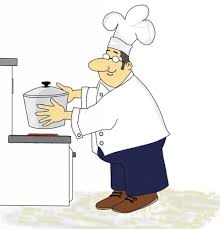
The man goes to take the hot pot off the stove with his bare hands.
a)
conduction
b)
convection
c)
radiation
7.
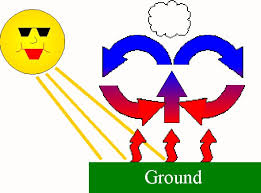
Warm air rises and the cool air sinks.
a)
conduction
b)
convection
c)
radiation
8.
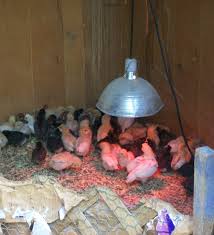
The baby chickens are kept warm from the heat lamps.
a)
conduction
b)
convection
c)
radiation
9.

In some cultures, walking on fire is the ultimate sign of strength.
a)
conduction
b)
convection
c)
radiation
10.

In this experiment, the WARM red dye and the COLD blue dye was placed in the water at the same time. The warm red dye rose to the top while the cold blue dye sank to the bottom.
a)
conduction
b)
convection
c)
radiation
11.
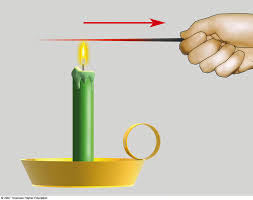
The candle will slowly heat the metal and transfer the heat directly to the mans hand.
a)
conduction
b)
convection
c)
radiation
12.

The warm air from this heater creates a current when the warm air rises and the cold air sinks.
a)
conduction
b)
convection
c)
radiation
13.

Heat transfers from an area of ____temperature to an area of ___ temperature.
a)
high to low
b)
low to high
c)
high to high
14.
Poor conductors like wood and plastic are called:
a)
conductors
b)
insulators
c)
burners
15.
What is the definition of CONDUCTION?
a)
When heat is transferred from objects like rays of light or electromagnetically.
b)
a hot liquid or air that expands, becomes less dense, and rises or becomes more dense, and sinks.
c)
When heat transfers from objects that are touching.
d)
When heat transfers through the heater or AC in your house.
16.
What is the definition of CONVECTION
a)
When heat transfers through waves.
b)
When heat transfers from objects that are touching.
c)
a hot liquid or air that expands, becomes less dense, and rises or becomes more dense, and sinks.
d)
Heat traveling from the sun
17.
Which of the following is an example of convection?
a)
A hair dryer is drying up your hair.
b)
When the AC or heater changes the temperature.
c)
When a car engine turns hot after being turned on.
d)
When you are making soup and the water is rising and lowering.
18.
In a swimming pool, water near the surface is slightly warmer. The warm water rises because of
a)
conduction
b)
convection
c)
radiation
19.
Heat moves by ______ when it travels through waves.
a)
radiation
b)
conduction
c)
insulator
d)
convection
20.
Thermal energy ALWAYS moves from _____ to _____.
a)
solid to liquid
b)
ice to water
c)
hot to cold
d)
solid to gas
21.
Heat is the movement of ______.
a)
radiation
b)
thermal energy
c)
cold
d)
fire
22.
The way heat moves in liquids and gases is called _______.
a)
convection
b)
radiation
c)
conduction
d)
temperature
23.
Heat moves by ______ when it travels from one solid to another solid.
a)
radiation
b)
convection
c)
thermal energy
d)
conduction
24.
The way heat moves in liquids and gases is called _______.
a)
convection
b)
radiation
c)
conduction
d)
temperature
25.
All matter is made of _____ that are constanly moving.
a)
insulators
b)
particles
c)
convection
d)
pieces of plastic
26.
If an object has particles that are moving very quickly, the object 's temperature is probably _____.
a)
cold
b)
slow
c)
big
d)
hot
27.
If an object has particles that are moving very slowly, the object's temperature is probably ______.
a)
hot
b)
small
c)
cold
d)
big
28.
The flow of thermal energy from warmer objects to cooler objects is called ______.
a)
heat
b)
movement
c)
friction
d)
energy
29.
To measure the temperature difference between two cups of water, you would use a _____.
a)
measuring cup
b)
ruler
c)
thermometer
d)
balance scale
30.
Which material would NOT make a good baking pan (for high temperatures in the oven)?
a)
aluminum
b)
plastic
c)
steel
d)
glass
31.
Sawing a piece of wood causes the end being sawed to become warm. In this case, heat is produced by ____.
a)
burning fuels
b)
mixing matter
c)
electricity
d)
friction
32.
Glass, steel, and aluminum are good examples of ______.
a)
insulators
b)
thermal energy
c)
conductors
d)
radiation
33.
Plastic foam, wood, and rubber are good examples of ______.
a)
conductors
b)
insulators
c)
solar energy
d)
convection
34.

The heat from a hot burner to a pot is transferred by ______.
a)
convection
b)
insulation
c)
radiation
d)
conduction
35.

The way the heat is moving from the hot coffee is called...
a)
convection
b)
radiation
c)
insulation
d)
conduction
36.
Insulation is used in the walls of a building to ____.
a)
trap solar energy
b)
keep thermal energy from moving through the walls
c)
conduct thermal energy
d)
keep cold air from moving through the walls
37.
A metal spoon placed in a bowl of hot soup is heated by _____.
a)
radiation
b)
conduction
c)
friction
d)
convection
38.
On a hot summer day, which shirt would you put on to make sure you stay cool while you are outside playing?
a)
A black shirt because it reflects the sun's energy.
b)
A white shirt because it reflects the sun's energy.
c)
A black shirt because it absorbs the sun's energy.
d)
A white shirt because it absorbs the sun's energy.
39.
When holding a cup of ice water, your warm hand becomes cold. How does the heat transfer?
a)
From the cold cup to your hand
b)
From the cold cup to the warm air
c)
From the ice to your hand
d)
From your warm hand to the cold cup.
40.
How are heat from the sun and heat from a campfire alike?
a)
They move by radiation.
b)
They move by convection.
c)
They move by conduction.
d)
They are solar energy.
41.
Why do you want to live in a home with good insulation during the cold winter months?
a)
The insulation will keep you cool during winter.
b)
If there is good insulation, the thermal energy will not be able to move easily from inside the warm home to the cool areas outside the building.
c)
If there is not good insulation, the air inside the home will become too hot.
d)
A house with good insulation will keep the warm air in the attic.
42.
Heat passes from...
a)
High to low
b)
Cold to hot
c)
Hot to cold
d)
Heat cannot be passed
43.
What is a conductor?
a)
Something that does NOT absorb heat very well.
b)
Something that absorbs heat.
44.
What is an insulator?
a)
Something that does NOT absorb heat very well.
b)
Something that absorbs heat.
45.
Why do objects cool down?
a)
All heat will slowly be destroyed.
b)
The cold attacks the heat.
c)
Heat is always transferring so the heat will always move to a cooler place.
d)
The heat disappears.
46.
Everything has heat
a)
True
b)
False
47.
When things are cold molecules are moving...
a)
Fast
b)
Slow
c)
They are not moving
d)
They are moving by not fast or slow
48.
When things are hot molecules are moving...
a)
Fast
b)
Slow
c)
They are not moving
d)
They are moving by not fast or slow
49.
Can heat be created or destroyed?
a)
Yes
b)
No
c)
Only when things are cooling off
d)
Only when things are warming up
50.
What happens when an object heats up?
a)
gains energy and and expands
b)
loses energy and condenses
c)
it floats
d)
nothing
51.
What does a liquid do when it is heated quickly.
a)
boils
b)
evaporates
c)
freezes
d)
melts
52.
What state of matter has the fastest moving particles?
a)
solid
b)
liquid
c)
gas
53.
What state of matter has the slowest moving particles?
a)
solid
b)
liquid
c)
gas
Reset

