
 Worksheets
8th Grade Science Review
Total questions: 57
Worksheet time: 2hrs 44mins
Name
Class
Date
1.
The amount of space an object takes up
a)
mass
b)
matter
c)
volume
d)
density
2.

Who arranged the first periodic table according to atomic mass?
a)
Mendeleev
b)
Mosely
c)
Einstein
d)
Pasteur
3.
Define: Atomic Number
a)
Number of protons in the nucleus of an atoms
b)
force that brings oppositely charged ions together
c)
Particle with a positive or negative charge
d)
Total number of protons and neutrons in an atom's nucleus.
4.

the measurement from crest to crest or trough to trough
a)
amplitude
b)
frequency
c)
wavelength
d)
speed
5.

Which is the independent variable in the following example: Cinderella is wondering if the temperature affects how fast her carriage is.
a)
Temperature
b)
Her glass slipper
c)
How fast her carriage goes
d)
Her fairy godmother
6.
This force opposes motion
a)
friction
b)
gravity
c)
inertia
d)
rotation
7.
matter can not be destroyed nor can it be created, but it can be changed
a)
Physical property
b)
Density
c)
Solubility
d)
Law of conservation
8.
negatively charged particles that move about the nucleus
a)
Proton
b)
Atomic number
c)
Periodic table
d)
Electron
9.

If the spring scale is pulled 3.5 cm, the spring scale should read...
a)
12 N
b)
13 N
c)
14 N
d)
15 N
10.

How much time is required for a bicycle to travel a distance of 100m at an average speed of 2m/s?
a)
0.02 s
b)
50 s
c)
100 s
d)
200 s
11.

Which of the following represents the velocity of a moving object?
a)
40
b)
40 m North
c)
40 m/s
d)
40 m/s north
12.

This box will increase in speed...
a)
downward and to the left
b)
downward and to the right
c)
upward and to the left
d)
upward and to the right
13.

What is the density of a 64 g iron cube that displaces 8 mL of water?
a)
512 g/mL
b)
32 g/mL
c)
8 g/mL
d)
4 g/mL
14.
Which class of elements best conducts electricity?
a)
metals
b)
nonmetals
c)
semimetals
d)
noble (inert) gases
15.
Metals are malleable. What does that mean?
a)
They can be flattened without shattering
b)
They conduct electricity well
c)
They conduct heat well
d)
They are shiny
16.

Based on the element box provided, how many protons are in one helium atom.
a)
A. 1
b)
B. 2
c)
C. 4
d)
D. 6
17.

The picture above shows a large box being pushed by two men. The box did not change its position in the room because…
a)
A. The opposing forces were balanced
b)
B. The smooth floor created no friction
c)
C. The man on the left side applied more force than the man on the right side.
d)
D. The man on the right side applied more force than the man on the left side.
18.

What is the ability of an object to resist a change of motion?
(objects in motion stay in motion, objects at rest stay at rest)
(objects in motion stay in motion, objects at rest stay at rest)
a)
speed
b)
inertia
c)
acceleration
d)
momentum
19.
Sound waves are waves that require particles to vibrate. Sound waves cannot _________________________________.
a)
travel around corners
b)
move through solids.
c)
be heard underwater.
d)
transmit through empty space.
20.

the # of waves that pass a point in a given amount of time
a)
frequency
b)
wavelength
c)
amplitude
d)
crest
21.
positively charged particle present in the nucleus of atoms
a)
Proton
b)
Atomic number
c)
Periodic table
d)
Electron
22.
A wave in the EM Spectrum with a long wavelength will have a ______ frequency and _____ energy
a)
high, low
b)
high, high
c)
low, high
d)
low, low
23.
Which section of the spectrum is the ONLY one we can see?
a)
X-rays
b)
Visible Light
c)
Gamma Rays
d)
Ultraviolet Rays
24.

Which wave has the highest frequency?
a)
1
b)
2
c)
3
d)
4
25.

Whales, dolphins, and bats use echolocation to locate things, humans use:
a)
sonar
b)
spectrometers
c)
lightning
d)
telescopes
26.

The picture is an example of:
a)
absorbtion
b)
reflection
c)
refraction
d)
echo
27.
Gold, silver, iron, hydrogen, nitrogen, oxygen, helium.
What do all of these have in common?
What do all of these have in common?
a)
they are all solids
b)
they are all compounds
c)
they are all elements
d)
they are all gases
28.

What type of wave is this?
a)
Ocean wave
b)
Transverse Wave
c)
Longitudinal Wave
d)
Sound Wave
29.

What is the speed of the graphed object?
a)
0.5 meters / minute
b)
2 meters / minute
c)
25 meters / minute
d)
50 meters / minute
30.

In which region of the table would nonmetals be found?
a)
1
b)
2
c)
3
d)
4
31.

Which item below is the most dense?
a)
A. Ping Pong Ball
b)
B. Lamp Oil
c)
C. Bolt
d)
D. Corn Syrup
32.

Which is a nonrenewable energy resource?
a)
solar
b)
wind
c)
water
d)
natural gas
33.
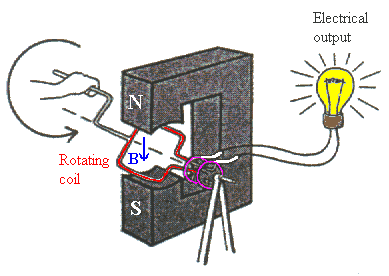
What is the transfer of electricity in a generator?
a)
Mechanical to Electrical
b)
Physical to Potential
c)
Electrical to Mechanical
d)
Yogurt to Light
34.
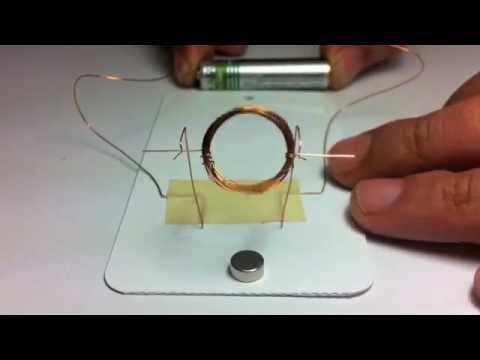
What is the energy chain for a motor?
a)
mechanical to electrical
b)
electrical to radiant
c)
chemical to thermal
d)
electrical to mechanical
35.
If an acid is combined with a base of equal strength, the result will most likely be
a)
a neutral solution.
b)
a stronger acid.
c)
impossible to tell without testing the pH.
d)
a stronger base
36.
If the pH of a solution is 9, it is a....
a)
acid
b)
base
c)
both
d)
none
37.

Which line segment demonstrates vaporization occurring?
a)
B-C
b)
C-D
c)
D-E
d)
E-F
38.
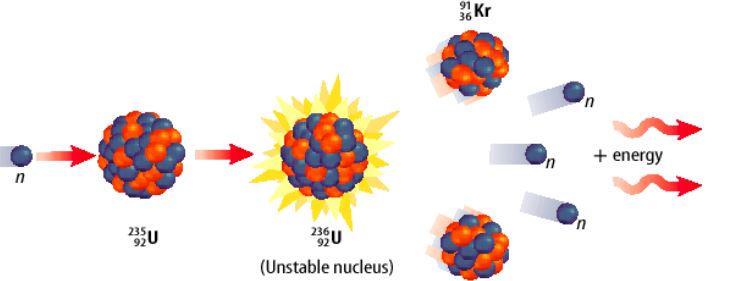
This is an example of...
a)
Nuclear fission
b)
Nuclear fusion
c)
Decomposition reaction
d)
Decay
39.
Takes two small nuclei and combines them into a larger nucleus
a)
fission
b)
fusion
40.
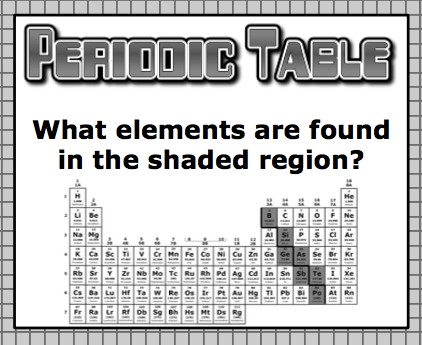
a)
Metals
b)
Nonmetals
c)
Metalloids
41.
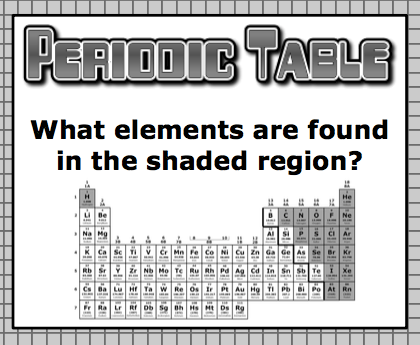
a)
Metals
b)
Nonmetals
c)
Metalloids
42.
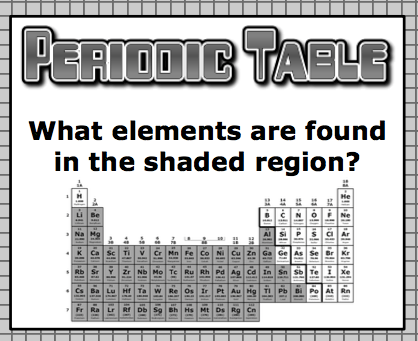
a)
Metals
b)
Nonmetals
c)
Metalloids
43.

Beryllium (Be) is in group number______.
a)
Group 2
b)
Group 3
c)
Group 4
d)
Group 7
44.

Name group 1 on the periodic table.
a)
alkali metals
b)
alkaline earth metals
c)
noble gases
noble gases
noble gases
d)
halogens
45.

Name group 18 on the periodic table.
a)
alkali metals
b)
alkaline earth metals
c)
transition metals
d)
noble gases
46.

Name groups 3 - 12 on the periodic table.
a)
noble gases
b)
halogens
c)
metalloids
d)
transition metals
47.

Name group 17 on the periodic table.
a)
transition metals
b)
metalloids
c)
halogens
d)
alkali metals
48.

what does the 6 represent?
a)
Atomic mass
b)
atomic number
c)
chemical symbol
d)
element name
49.
What are the units for work?
a)
Joules
b)
Watts
c)
Meters
d)
seconds
50.
What are the units for power?
a)
Joules
b)
Watts
c)
Meters
d)
seconds
51.
What are the units for force?
a)
Joules
b)
Seconds
c)
Meters
d)
Newtons
52.
Work done = Force x _________
a)
a. distance
b)
b. acceleration
c)
c. velocity
d)
d. speed
53.

"For every action, there is an equal and opposite reaction."
a)
Newton's 1st Law
b)
Newton's 2nd Law
c)
Newton's 3rd Law
d)
Newton's 4th Law
54.

Force = Mass x Acceleration
a)
Newton's 1st Law
b)
Newton's 2nd Law
c)
Newton's 3rd Law
d)
Newton's 4th Law
55.

"An object in motion (or at rest) will to stay in motion (or at rest) until an outside force acts upon it."
a)
Newton's 1st Law
b)
Newton's 2nd Law
c)
Newton's 3rd Law
d)
Newton's 4th Law
56.

Any push or pull on an object.
a)
force
b)
velocity
c)
inertia
d)
momentum
57.

A magician pulls a tablecloth out from under dishes and glasses on a table without disturbing them.
a)
Newton's 1st Law
b)
Newton's 2nd Law
c)
Newton's 3rd Law
100 %

