wayground logo

Free Printable Worksheets

Font size

S
M
L
XL
Worksheets

Biochemistry Review

Total questions: 53

Worksheet time: 52mins

Name
Class
Date
1.
A single building block of a molecule . . .
a)
Monomer
b)
Polymer
c)
Lipid
d)
Independent Variable
2.
What are the 4 biological molecules?
a)
Lipids, Proteins, Carbohydrates, Nucleic Acids
b)
Proteins, Amino Acids, Glycerol, Carbohydrates
c)
Fatty Acids, Amino Acids, Monosaccharides, Proteins
3.
The monomers of a protein...
a)
Amino Acids
b)
Monosaccharides
c)
Polysaccharides
d)
Sugar, Phosphate, Base
4.
Glucose, Fructose, Cellulose & Starch are all examples of . . .
a)
Carbohydrates
b)
Lipids
c)
Proteins
d)
Nucleic Acids
5.
DNA and RNA are types of . . .
a)
Nucleic Acids
b)
Amino Acids
c)
Proteins
d)
Carbohydrates
6.
Lipids are made of  . . .
a)
Glycerol and Fatty Acids
b)
Monosaccharides
c)
Sugar, Base & Phosphate
d)
Amino Acids
7.
Nucleotides are made of . . .
a)
A sugar, Phosphate, Base
b)
Glycerol & Fatty Acids
c)
Nitrogen
d)
Amino Acids
8.
To be organic, living things are mostly made of
a)
Carbon
b)
Calcium
c)
Sulfur
d)
Oxygen
9.
Type of bond in which electrons are SHARED
a)
Covalent
b)
Ionic
c)
Hydrogen
d)
Cohesion
10.
Type of bond that gives water many of its properties (like cohesion and adhesion)
a)
Hydrogen
b)
Covalent
c)
Polar
d)
Ionic
11.
What property of water makes it a good SOLVENT?
a)
Polarity
b)
Cohesion
c)
Adhesion
d)
Hydrogen Bonds
12.
What part of an atom forms bonds with other atoms?
a)
Valence Electrons
b)
Protons
c)
Neutrons
d)
ATOMS!
13.
Enzymes and Antibodies are examples of . . .
a)
Proteins
b)
Carbohydrates
c)
Lipids
d)
Nucleic Acids
14.
Fats, oils, waxes, cholesterol & Steroids are examples of . . .
a)
Lipids
b)
Proteins
c)
Nucleic Acids
d)
Carbohydrates
15.
Which of the following gives us FAST ENERGY?
a)
Carbohydrates
b)
Proteins
c)
Lipids
d)
Nucleic Acids
16.
on the pH scale, a pH of 9 would be .....
a)
Basic
b)
Acidic
c)
Neutral
17.
________ help keep our body's pH at neutral
a)
Buffers
b)
Proteins
c)
Acids
d)
Water
18.
Which pH is the STRONGEST ACID?
a)
2
b)
6
c)
5
d)
14
19.
CHNOPS represents . . . .
a)
Elements found in living things
b)
Types of Carbohydrates
c)
Is a type of Potato Chip
d)
A way to remember the 4 biological molecules
20.
Dehydration Synthesis means that _______ is being removed to JOIN monomers together.
a)
Water
b)
Acid
c)
Fat
d)
Hydrogen
21.
A solution such as NaOH has a high amount of OH- ions. It is ...
a)
A base
b)
An acid
c)
Neutral
d)
Water
22.
If I add sugar to water, what is the SOLUTE?
a)
Sugar
b)
Water
23.
Which part of water molecule is POSITIVE?
a)
The 2 Hydrogens
b)
The 1 Oxygen
c)
The entire molecule
d)
There is no positive part to a water molecule
24.
Attractions between water molecules are called
a)
Covalent bonds
b)
Ionic bonds
c)
Polar bonds
d)
Hydrogen bonds
25.
A water molecule is a ________ molecule, which has one oxygen that has a __________ charge and two hydrogens that have a ___________ charge.
a)
nonpolar, positive, negative
b)
polar, positive, negative
c)
polar, negative, positive
d)
nonpolar, negative, positive
26.
What subatomic particle is electrically neutral (no charge)?
a)
Proton
b)
Ion
c)
Neutron
d)
Electron
27.
How many protons does this atom have?
a)
2.5
b)
6
c)
5
d)
10.811
28.

What is a polymer?

a)

a small building block of a larger molecule

b)

a large molecule made of smaller pieces

c)

A large molecule made of large pieces

d)

a small molecule made of large pieces

29.

How many NEUTRONS does this atom have? (hint: round the mass)

a)

2.5

b)

6

c)

5

d)

10.811

30.

How do enzymes speed up chemical reaction?

a)

Increasing activation energy

b)

Decreasing activation energy

c)

Increasing deactivation energy

d)

Decreasing deactivation energy

31.
What is a substance called if it speeds up a chemical reaction?
a)
reusable
b)
catalyst
c)
specific
d)
fragile
32.
With what 3 letters do enzymes typically end?
a)
-ose
b)
-ase
c)
-ese
d)
-tic
33.
Any substance that is acted upon by an enzyme is called a(n)?
a)
Coenzyme
b)
Substrate
c)
Vitamin
d)
Polypeptide
34.
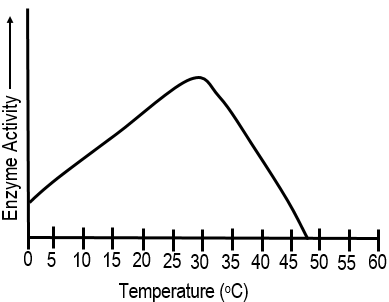
Based on the graph, what is the optimal temperature for this enzyme? 
a)
15oC
b)
40oC
c)
30oC
d)
35oC
35.
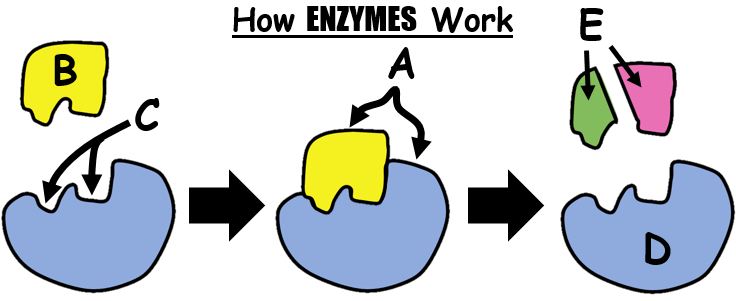
In the diagram, what is letter A? 
a)
product
b)
substrate
c)
enzyme-substrate complex
d)
active site
36.
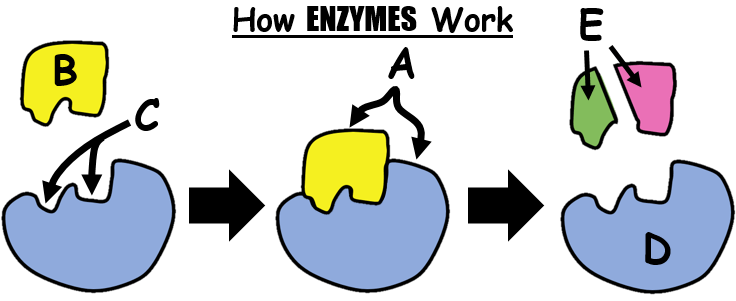
Letter B...
a)
active site
b)
enzyme
c)
substrate
d)
products
37.
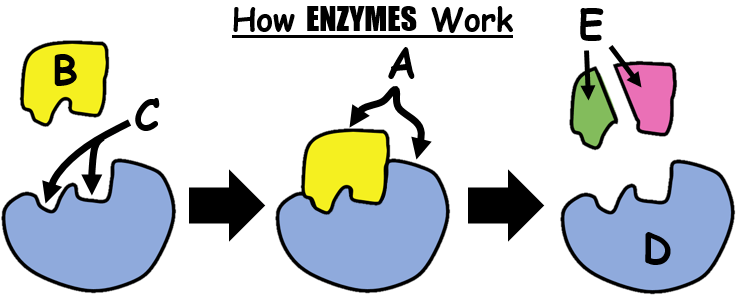
Letter D...
a)
active site
b)
enzyme
c)
substrate
d)
products
38.
Which of these is the proton.
a)
A
b)
B
c)
C
d)
None
39.
Which of these is the electron?
a)
A
b)
B
c)
C
d)
D
40.
B and C are found in the ______ of an atom.
a)
Energy levels
b)
Space
c)
Nucleus
d)
Outside
41.
Which particle is negatively charged?
a)
proton
b)
atom
c)
neutron
d)
electron
42.

Which biological molecules are CORRECTLY matched with its monomer/basic unit? select all

a)

Proteins -- Amino Acids

b)

Starch -- Glucose

c)

Lipids -- Fatty Acids Glycerol

d)

Nucleic Acid -- Nucleotide

e)

Nucleic Acid -- Amino Acid

43.

Which of the following molecules contain Carbon? select all

a)

Fats

b)

Carbohydrates

c)

Proteins

d)

Water

e)

Iodine

44.

If a solution is too basic, what can be added to lower the pH and make it more acidic?

a)

Vinegar

b)

Bleach

c)

Soap

d)

Baking Soda

45.

The variable that is measured in an experiment

a)

Dependent Variable

b)

Control

c)

Independent Variable

d)

Constant

46.

The variable CHANGED in an experiment

a)

Independent

b)

Dependent

c)

Control

47.

Which of the following are true about water?

a)

it has a pH of 7

b)

releases heat when it evaporates

c)

the solid form sinks

d)

It is has the properties of cohesion and adhesion

e)

It is polar

48.

Which of the following are true about the elements found in living things (SPONCH)? select all

a)

S = Sulfur

b)

S = Sodium

c)

N = Nitrogen

d)

C = Carbon

e)

P = Potassium

49.

The levels of biological hierarchy IN ORDER from SMALL to BIG. select all

a)

molecule-cell-tissue-organ-organ system

b)

organism-population-community-ecosystem-biosphere

c)

biosphere-ecosystem-population-organism

d)

cell-tissue-molecule-organ system

50.

Select all that show QUANTITATIVE DATA

a)

There are six legs on the bug

b)

The mass of the coin is 12.4g

c)

15 students are 156 cm tall

d)

The boy is wearing a red shirt

e)

The flower has yellow petals

51.
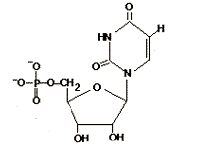
The molecule show is a ______ and is the building block of _____.
a)
monosaccharide, carbohydrate
b)
fatty acid, lipid
c)
nucleotide, nucleic acids
d)
amino acid, protein
52.

What macromolecule is shown above?

a)

Carbohydrate

b)

Lipid

c)

Protein

d)

Nucleic Acid

53.

What macromolecule is shown above?

a)

Carbohydrate

b)

Lipid

c)

Protein

d)

Nucleic Acid