
 Worksheets
Ch. 3 Review: Biosphere
Total questions: 20
Worksheet time: 9mins
Name
Class
Date
1.
Which one of these does not add CO2 to the atmosphere?
a)
cooking with gas
b)
planting trees
c)
burning wood
d)
riding in a bus
2.
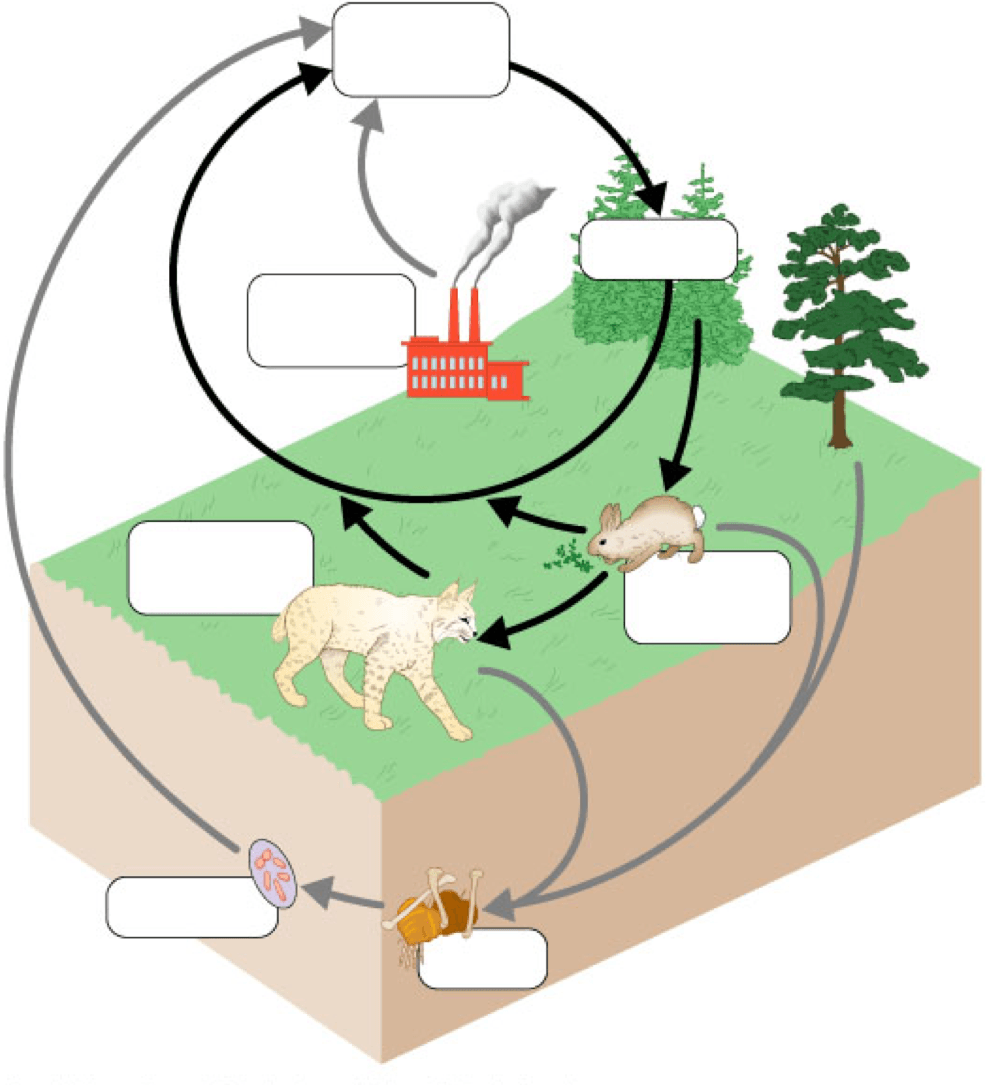
In what process is Carbon transformed into chemical energy?
a)
Photosynthesis
b)
Respiration
c)
Primary Production
d)
Secondary Production
3.
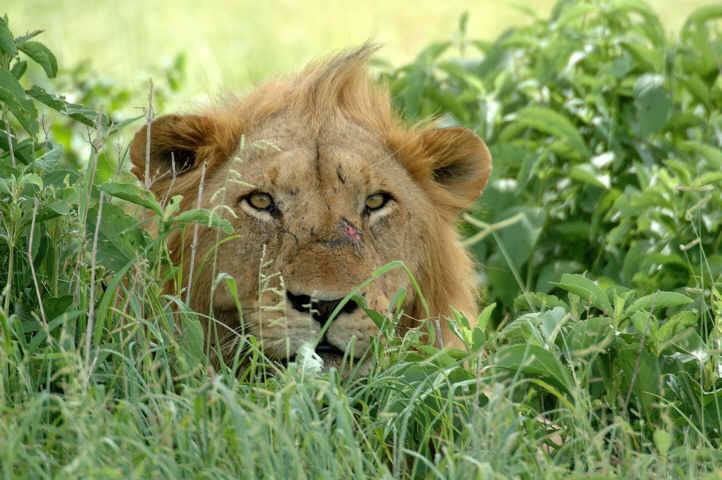
How does the carbon in grass become part of a lion?
a)
The lion eats the grass
b)
Carbon from grass doesn't end up in a lion.
c)
The carbon ends up in the lion's food chain.
d)
The lion breathes in carbon given out by the plant
4.

The diagram is intended to show relationships in an ecosystem. What do the arrows represent?
a)
The direction of population migration
b)
Differences in dietary habits
c)
Progressively smaller organisms
d)
The direction of the energy flow
5.

The diagram represents different levels of a marine food pyramid. Between which two levels is the greatest amount of energy transferred
a)
R and Q
b)
S and R
c)
T and S
d)
U and T
6.

If these organisms were arranged in a food pyramid, which organism would have the least amount of total energy available?
a)
coyote
b)
insect
c)
lizard
d)
shrub
7.

The diagram represents a model of a food pyramid. Which statement best describes what happens in this food pyramid?
a)
More organisms die at higher levels than at lower levels, resulting in less mass at higher levels.
b)
Energy is lost to the environment at each level, so less mass can be supported at each higher level.
c)
When organisms die at higher levels, their remains sink to lower levels, increasing the mass of lower levels.
d)
Organisms decay at each level, and thus less mass can be supported at higher levels
8.

A scientist collected data in a certain field which is shown in the diagram. He observed that these numbers remained stable over a period of time. He then introduced a large omnivore into the ecosystem. Assuming that the large omnivore was placed here by the scientist, which result can best be inferred?
a)
The birds would not be affected because they are at the top of the pyramid
b)
A large omnivore would consume energy at every trophic level, reducing the amount of energy available to each level above the producers
c)
A large omnivore would consume energy only at the first two trophic levels and the 3rd and 4th levels would be unaffected
d)
The omnivore had little affect because the birds would eat the omnivore’s offspring and the omnivore would die off
9.

Which of the following is an accurate food chain?
a)
Owl, Grasshopper, Grain
b)
Bird, Fox, Rabbit
c)
Carrot, Rabbit, Fox
d)
Grass, Mice, Bird
10.

What level does the mice primarily eat in?
a)
1st trophic level
b)
2nd trophic level
c)
3rd trophic level
d)
4th trophic level
11.

Why are decomposers located to the side of the pyramid?
a)
They recycle dead material from all levels
b)
The eat living things from all levels
c)
They are not a living organisms
d)
They are too large to fit on the pyramid
12.
A ________ is a group of similar organisms that can breed and produce fertile offspring.
a)
species
b)
population
c)
community
d)
ecosystem
13.
A group of different populations that live in a defined area is called a __________.
a)
community
b)
population
c)
species
d)
biosphere
14.
Living things that capture energy from sunlight or chemicals and convert it into usable energy for cells are called __________________.
a)
heterotrophs
b)
autotrophs
c)
monotrophs
d)
terratrophs
15.

A grasshopper feeds on a leaf. The grasshopper is feeding as a(an):
a)
secondary consumer
b)
heterotroph
c)
autotroph
d)
tertiary autotroph
16.
Carbon Dioxide is believed to cause global warming because...
a)
CO2 is hot and it warms up the earth
b)
CO2 kills trees, which increases global tempeature
c)
CO2 traps the sun's heat like a blanket
d)
CO2 reflects the sun's rays
17.
Which of the following is the formula for photosynthesis?
a)
CO2 + H20 ---> glucose + O2
b)
glucose + O2 ---> CO2 + H20
c)
glucose + CO2 --> H2O + O2
d)
glucose + H2O ---> CO2 + O2
18.
Which of the following is the formula for cellular respiration?
a)
CO2 + H20 ---> glucose + O2
b)
glucose + O2 ---> CO2 + H20
c)
glucose + CO2 --> H2O + O2
d)
glucose + H2O ---> CO2 + O2
19.

How do plants get the nitrogen they need?
a)
from the air
b)
from the soil or water in which they live
c)
from the Sun
d)
from broken-down rocks
20.
Scientists have detected a dramatic decrease in usable nitrogen levels in the soil of a local ecosystem. Which of the following is a likely theory to explain this problem?
a)
A decrease in the amount of lightning strikes.
b)
An increase in fertilizer usage at local farms.
c)
An increase in the biomass forming plants.
d)
A decrease in bacterial colonies within the soil.
100 %

