
 Worksheets
Evolution & Natural Selection Review
Total questions: 31
Worksheet time: 50mins
Name
Class
Date
1.
Which of the following best illustrates natural selection?
a)
An organism with favorable genetic variations will tend to survive and breed successfully
b)
A population monopolizes all of the resources in its habitat, forcing other species to migrate
c)
A community whose members work together utilizing all existing resources and migratory routes
d)
The largest organism in the species receive the only breeding opportunities
2.
A small portion of the population that is geographically isolated from the rest of the population runs the risk of decreased.
a)
genetic drift
b)
mutation rate
c)
genetic variation
d)
natural selection
3.
Which of these would have the least effect on natural selection in a subspecies of giraffes that is geographically isolated from other subspecies of giraffes?
a)
available niches
b)
existing predators
c)
chromosome number
d)
available food resources
4.
Over time, the climate of an island became drier, which resulted in changes to the populations of various island finch species. Finch populations with a certain beak shape thrived, while those not having that beak shape decreased. Which of the following describes a necessary condition for these changes in the finch populations to occur?
a)
overproduction of offspring
b)
limited beak variations
c)
fewer mutations
d)
limited food resources
5.
The sorting and recombination of genes during reproduction is an important step in the evolution process. What effect do sorting and recombination have on a population?
a)
Decreases the chances of producing offspring that are adapted to the environment.
b)
Increases the ability of all the offspring to adapt to the environment
c)
Decreases variation which helps maintain a stable population
d)
Increases variation that enables a species to adapt to change
6.
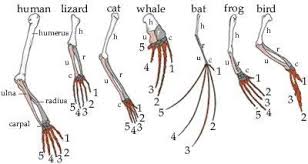
What is this an example of?
a)
vestigial structures
b)
embryology
c)
homologous structures
d)
fossil record
7.
What is a change in an organism that allows for it to survive in its environment?
a)
homologous
b)
vestigial
c)
variation
d)
adaptation
8.
Which term refers to the process by which individuals that are better suited to the environment survive and reproduce therefore passing down their genes to their offspring?
a)
Evolution
b)
Variation
c)
Adaptation
d)
Natural Selection
9.
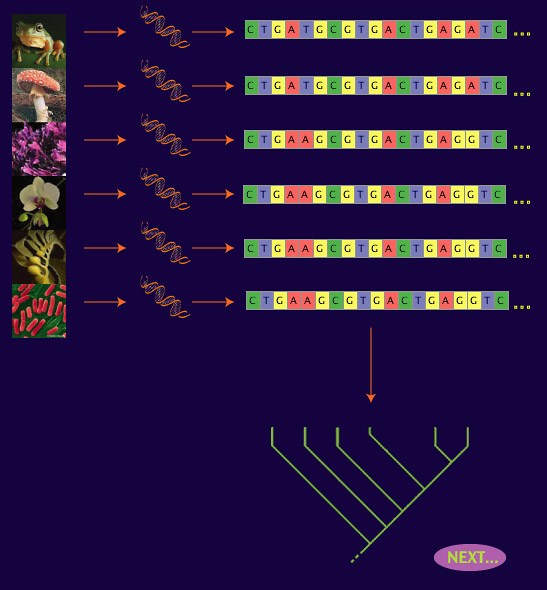
Two organisms that are closely related would have
a)
very similar DNA sequence
b)
exactly the same DNA sequences
c)
no proteins in common
d)
completely different DNA sequence
10.
Genetic differences between organisms of the same species
a)
Variation
b)
Adaptation
c)
Behavior
d)
Environment
11.
What is suggested by the similarity of early embryos of different species of vertebrates?
a)
no evolutionary relationships between the groups
b)
recent common ancestry
c)
similar environments in the past
d)
evolution froma distant common ancestor
12.
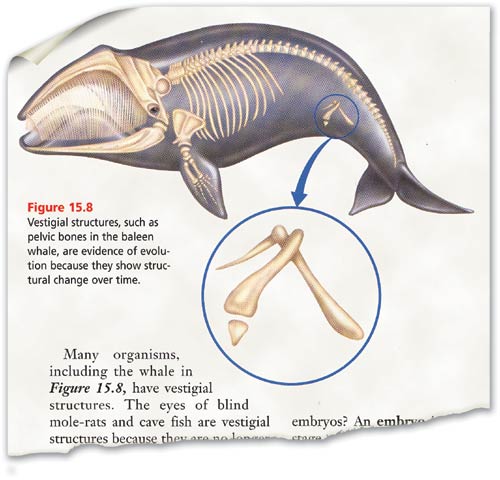
Which of the following is an example of a vestigial structure?
a)
the wings of a red-tailed hawk
b)
the hind limbs of a house cat
c)
the fins of sharks
d)
the tailbone of a human
13.

According to the law of superposition, the oldest fossils are found
a)
At the top of the rock layers
b)
Near the bottom of the rock layers
c)
In the middle of the rock layers
d)
Somewhat near the surface
14.

Which rock layer most likely contains fossils of the most recently evolved organisms?
a)
1
b)
2
c)
3
d)
4
15.
Mutations ...
a)
are natural and produce genetic diversity
b)
are unnatural and reduce genetic variation.
c)
are a mechanism of natural selection
d)
are a way for organisms to increase their chance of undergoing genetic drift.
16.

According to the data, the unknown bacterial species is most closely related to...
a)
Species I
b)
Species II
c)
Species III
d)
Species IV
17.
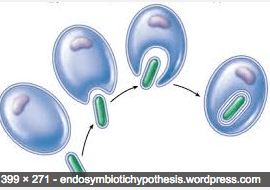
What is the belief of the theory shown
a)
Natural selection is the main mechanism of evolution
b)
Prokaryotes might have entered the host cell as prey or parasites.
c)
Life can come from non-living matter
d)
Life can only arise from life.
18.
Miller/Urey and other scientists have shown that:
a)
Life on early Earth required material from space
b)
Cells survived in the primitive atmosphere
c)
Amino acids could be produced from inorganic molecules
d)
Simple cells can be produced in a laboratory
19.
Based upon the conditions of the early Earth, which forms of live most likely appeared first?
a)
Prokaryotic and aerobic
b)
Prokaryotic simple single-celled organisms
c)
Eukaryotic complex multicellular organisms
d)
Eukaryotic and anaerobic
20.

Scientists are studying the evolutionary history of a group of plants in the United States, and they developed an evolutionary tree, as shown below. Which statement can be inferred from the evolutionary tree?
a)
Species 1 is most closely related to Species 8.
b)
Species 2 is most closely related to Species 3.
c)
Species 4 is most closely related to Species 7
d)
Species 3 is most closely related to Species 4
21.
Which of the following correctly describes the general trend in hominid evolution?
a)
larger body size, broad forehead, smaller brains
b)
thickening of the skull, protruding teeth, organized hunting
c)
increase in brain capacity, bipedalism, use of tools
d)
large canine teeth, small skulls, diet of coarse plant material
22.

What does this suggest about hominid evolution and jaw size?
a)
They evolved to be smaller over time
b)
They evolved to be larger over time
c)
There is no change
d)
Jaws changed because of a change in brain size
23.
Genetic recombination through Meiosis is an important process. What effect does this have on populations?
a)
Decreases natural selection
b)
Increases ability to adapt
c)
Decreases variation
d)
Increases variation
24.
Chimpanzees live on an island in a small population whose traits have remained constant. What effect would genetic drift have on these chimps?
a)
A new species will appear
b)
Other primates can breed with them to produce a new species
c)
Isolation will cause new traits to appear
d)
Extinction is likely due to limited genetic variation
25.

Looking at the fossil record, horses have gotten bigger over time. What does this suggest?
a)
Horses have increased in number
b)
Horses have changed as a result of natural selection
c)
Horses do not appear in the fossil record
d)
Small horses were selccted for and had an advantage
26.
Which evolutionary trait allowed hominids to locate food at great distances and simultaneously transport it for long distances using their arms?
a)
binocular vision
b)
opposable thumbs
c)
larger brain cavity
d)
bipedalism
27.
Why would a species want to have a large number of offspring?
a)
It increases the chance that enough individuals will survive to become adults and reproduce.
b)
To increase the population size and therefore increase ability to obtain resources.
c)
Species have no control on their offspring numbers and therefore overproduction is irrelevant.
d)
Species have large numbers to minimize the genetic variation
28.
What word describes a trait that helps an organism survive in its environment?
a)
natural selection
b)
mutation
c)
camouflage
d)
adaptation
29.
Whales are aquatic mammals that contain a pelvis bone. Even though it does not aid in its movement, the function must have been used by a common ancestor of the whale. Thus, the pelvis is referred to as a(n)
a)
vestigial structure
b)
analogous structure
c)
homologous structure
30.

What is the definition of natural selection?
a)
Genes that are chosen by humans such as farmers and ranchers
b)
Organisms that are chosen by environmental pressures such as climate, available food, predators and habitat.
c)
Dogs and Wolves
d)
EvidGenes that are chosen by scientist and academics.
31.
In 1915, a disease killed almost all the oysters in a Canadian bay. The few oysters that survived reestablished the population. By 1940, the disease-causing organism was still present in the bay, but the size of the oyster population was greater than it was before 1915. Which of the following statements describes what most likely occurred in the oyster population between 1915 and 1940?/
a)
The oysters that survived in 1915 bred with other species, so the offspring could not be infected by the disease anymore.
b)
The oysters that survived in 1915 had offspring that learned to fight all disease, so disease rates in the oyster population were lower.
c)
The oysters that survived in 1915 had resistance to the disease, so the proportion of resistant oysters in the population increased by natural selection
d)
The oysters that survived in 1915 mutated to reproduce more quickly, so the reproductive rate exceeded the disease rate in the oyster population.
100 %

