
 Worksheets
UCEA Yr 8 LP3 Interim Assessment
Total questions: 30
Worksheet time: 18mins
Name
Class
Date
1.

Which microbe would be considered the smallest and can cause a cold or the flu?
a)
Tick
b)
Bacterium
c)
Virus
d)
Germ
2.

Which type of microbe lives and grows like plants and can cause athlete’s foot?
a)
Protozoa
b)
Virus
c)
Fungi
d)
Bacteria
3.
What are the four ways in which microbes are spread?
a)
touch, food, water, insects & animals
b)
touch, sight, taste, hearing, smell
c)
jumping, leaping, hopping, skipping
d)
touch, food, drink, oxygen
4.
Name one way in which microbes can enter the body through the circulatory system.
a)
Enter through a cut
b)
Enter through a wound
c)
Enter through a bite
d)
All of the above
5.
Name one way in which microbes can enter the body through the respiratory system.
a)
People breathe microbes
b)
People touch their ears with dirty hands
6.
A _________________________________ is an instrument used to magnify objects that are hard to see or invisible to the naked eye.
a)
telescope
b)
stethoscope
c)
endoscope
d)
microscope
7.
All microbes are harmful.
a)
True
b)
False
8.
The following is a protein located in the Immune System that kills invading pathogens.
a)
Antiboitics
b)
White Blood Cells
c)
Boosters
d)
Antibodies
9.
What pathogen do antibiotics attack?
a)
Virus
b)
Bacteria
c)
Fungi
d)
Protista
10.
Viruses are not affected by antibiotics.
a)
True
b)
False
11.
What is a pathogen?
a)
a doctor who specializes in curing diseases
b)
microbe that are beneficial when present
c)
a special machine that is used to grow microbes
d)
a small living organism that can cause disease
12.
What is the best environment for microorganisms to grow?
a)
sunny, cold and dry
b)
hot and dry
c)
warm, dark and moist
d)
cold and wet
13.
What is the single most effective way to break the chain of infection?
a)
handwashing
b)
sterilization
c)
cleaning surfaces
d)
nutrition
14.
A species is a group of similar organisms that
a)
can mate with each other and produce fertile offspring.
b)
can live together on an island.
c)
can migrate to an island from the mainland.
d)
all have exactly the same traits.
15.
Differences between members of the same species are called
a)
predators.
b)
selections.
c)
traits.
d)
variations.
16.
What did Darwin observe about finches in the Galápagos Islands?
a)
Their feathers were adapted to match their environment.
b)
Their beaks were adaptations related to the foods the finches ate.
c)
Their beaks were adaptations related to the foods the finches ate.
d)
They had identical genotypes in all locations.
17.
The gradual change in a species over time is called
a)
mutation.
b)
evolution.
c)
migration.
d)
variation.
18.
Which term refers to the process by which individuals that are better adapted to their environment are more likely to survive and reproduce?
a)
natural selection
b)
overproduction
c)
competition
d)
variation
19.
Who created the theory of evolution?
a)
Charles Darwin
b)
Charles Derwin
c)
Charlie Darwin
d)
Chris Darwin
20.
What was the name of the ship Charles Darwin sailed on?
a)
Boaty McBoaty Face
b)
HMS Beagle
c)
HMS Britannia
d)
HMS Bulldog
21.
Where did Charles Darwin travel to?
a)
Australia
b)
Barbados
c)
Galapagos
d)
Trinidad
22.
How did Darwin think life started?
a)
We evolved from apes
b)
We evolved from fish
c)
We evolved from each other
d)
We evolved from a simple cell
23.
What is natural selection?
a)
Your natural fate is decided from birth
b)
Nature actively chooses who surivives
c)
Those best suited to demands of environment surivie
d)
The weakest of a species surivie
24.
When all of the organisms of a species have died it is called
a)
evolution
b)
extinction
c)
adaptation
d)
natural selection
25.

Which layer is the oldest?
a)
1
b)
2
c)
3
d)
4
26.
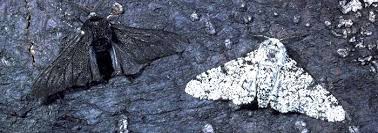
Predict which moth would increase in population
a)
light
b)
dark
27.
When the DNA of an organism is altered it is referred to as…
a)
Mutation
b)
Gene Flow
c)
Genetic Drift
d)
Sexual Selection
28.
What do we get from a having a vaccine (shot)? What is in the vaccine?
a)
a virus
b)
a miracle
c)
a bacteria
d)
pain
29.
A vaccine can help a person avoid getting sick from influenza.
a)
True
b)
False
30.
What is one of the ways that antibiotics work?
a)
They can stop bacteria from reproducing
b)
They can stop viruses from reproducing
c)
They stop toxins from poisoning the tissues of hosts
d)
They engulf the pathogens
100 %

