
 Worksheets
Chemistry
Total questions: 65
Worksheet time: 2hrs 47mins
Name
Class
Date
1.
The state of matter that takes the shape of its container is....
a)
Gas
b)
Solid
c)
Liquid
d)
None of these
2.
Which of the following is a PRODUCT of photosynthesis?
a)
Oxygen
b)
Carbon dioxide
c)
Water
d)
Light
3.

What is the mass number of this element?
a)
5
b)
27
c)
32
d)
59
4.

The positively charged particles of an atom are the ________.
a)
electrons
b)
protons
c)
neutrons
d)
protons & neutrons
5.

The negatively charged particles of an atom are the ______.
a)
electrons
b)
protons
c)
neutrons
d)
protons & neutrons
6.

The particles with no charge in an atom are the _______.
a)
electrons
b)
neutrons
c)
protons
d)
protons and neutrons
7.
# neutrons + # protons = ___
a)
atomic number
b)
Atomic thing
c)
Mass Number
d)
Valence Electrons
8.

How many electrons would an atom of Krypton have?
a)
83.80
b)
36
c)
12
d)
none
9.

Where on the periodic table are the metalloids found?
a)
Red
b)
green
c)
blue
10.

Where on the periodic table are most of the metals found?
a)
red
b)
green
c)
blue
11.

Where on the periodic table are most of the nonmetals found?
a)
red
b)
blue
c)
green
12.
Luster is ___________
a)
A. the way light is reflected off a surface.
b)
A. how well a piece of matter conducts electricity.
c)
A. the capability of being drawn out into thin wires or threads.
d)
A. the capability of being hammered out thin.
13.
Brittleness is _________
a)
the capability of being broken.
b)
the capability of being bent.
c)
the capability of being stretched.
d)
the capability of being molded.
14.
Metalloids _____________
a)
have no properties of metals.
b)
have no properties of nonmetals.
c)
have some properties of both metals and nonmetals.
d)
none of the above
15.
Describes if a substance is likely to break, snap, or crack
a)
Dull
b)
Malleable
c)
Brittle
d)
Ductile
16.
_____ - how well it allows electricity to move through.
a)
Ductility
b)
Luster
c)
Malleability
d)
Conductivity
17.

Which of following elements, belongs in group 13?
a)
Al
b)
Ge
c)
As
d)
Se
18.

Select the element that belongs in period 3
a)
Na
b)
Ca
c)
Rb
d)
H
19.

How many valence electrons does group 17 have?
a)
17
b)
7
c)
5
d)
25
20.

What is the atomic mass of "F"
a)
9
b)
18
c)
17
d)
19
21.
The central region of an atom where its neutrons and protons are is its
a)
nucleus
b)
electron cloud
c)
core
d)
center
22.
The chemical symbol for Carbon is
a)
C
b)
Cb
c)
Ca
d)
Cl
23.
What are the 3 states of matter?
a)
Water, fire, wind
b)
mass, volume, grams
c)
solid, liquid, gas
d)
chair, table, pencil
24.

What is the number of protons that the element in this image contain?
a)
14
b)
7
c)
15
d)
18
25.

What does the C represent?
a)
atomic mass
b)
atomic number
c)
element name
d)
chemical symbol
26.

The state of matter can be changed by __________.
a)
temperature
b)
particles
c)
elements
27.
This state of matter has a definite volume, but not a definite shape
a)
solid
b)
liquid
c)
gas
28.
A physical property can be observed by _________________.
a)
burning the substance
b)
changing the chemical identity of a substance
c)
using the senses
d)
placing the substance in acid
29.

These are found on the Periodic Table.
a)
elements
b)
mixtures
c)
compounds
30.
What is the atomic number?
a)
the number of protons
b)
the number of protons and neutrons
c)
the number of neutrons
d)
the number of protons and electrons
31.
If an atom has 3 electrons, how many protons does it have?
a)
1
b)
2
c)
4
d)
3
32.
The smallest particle of any particular type of matter is known by which of the following terms?
a)
Compound
b)
Atom
c)
Chemical
d)
Element
33.
In the compound 2H2, the H stands for
a)
Helium
b)
Hydrogen
c)
Herculineum
34.
H2
a)
Element
b)
Compound
35.
CO2
a)
Element
b)
Compound
36.
CaCo3
a)
Element
b)
Compound
37.
H2O
a)
Element
b)
Compound
38.
Burning a piece of paper
a)
Chemical Change
b)
Physical Change
39.
How many ATOMS are in the following compound: C2H4O2
a)
3
b)
8
c)
1
d)
6
40.
Which of the following is NOT a mixture?
a)
NaCl + H2O
b)
C6H12O6 + H2O
c)
C6H12O6
d)
SiO2 +H2O
41.

What is the symbol for the element Neon?
a)
Na
b)
Ne
c)
He
d)
N
42.
Salt Water
a)
Compound
b)
Mixture
43.
The basic unit of matter is
a)
a mixture
b)
a substance
c)
an atom
d)
a compound
44.
A substance that contains only one type of atom is a(n)
a)
compound
b)
element
c)
heterogeneous mixture
d)
homogeneous mixture
45.
The smallest unit of an element that still has the properties of that element is?
a)
a substance
b)
a mixture
c)
a compound
d)
an atom
46.
Which of these is not an example of a molecule?
a)
CH4
b)
C
c)
C6H12O6
d)
H2O
47.
Which of these is a mixture?
a)
Uncooked chocolate chips and cookie dough blended together with a spoon.
b)
Distilled water
c)
A nugget of gold
d)
A molecule of Oxygen
48.
Atoms of an element always have a certain number of
a)
neutrons
b)
protons
c)
electrons
d)
ions
49.
The smallest unit of a compound that still has the properties of that compound is?
a)
an atom
b)
a molecule
c)
a mixture
d)
a substance
50.
Two or more elements chemically combined:
a)
an atom
b)
a compound
c)
a mixture
d)
a pure substance
51.
A mixture that appears to be evenly mixed throughout:
a)
an atom
b)
a compound
c)
a homogeneous mixture
d)
a heterogeneous mixture
52.

What does the 1.00794 stand for?
a)
Hydrogen
b)
atomic number
c)
atomic mass
d)
atomic explosion
53.
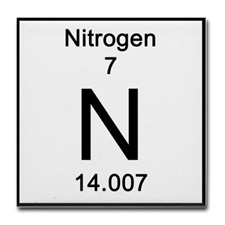
What is the number of protons that the element in this image contain?
a)
14
b)
7
c)
15
d)
18
54.
electrons have this type of charge?
a)
negative
b)
positive
c)
neutral
55.
What is the atomic number for an element with three protons?
a)
2
b)
1
c)
3
d)
6
56.
an atom with atomic number 6 would have how many protons
a)
6
b)
12
c)
3
d)
cannot be determined
57.
All matter is made of .....
a)
energy
b)
atoms
c)
air
d)
chemistry
58.
The periodic table is arranged by
a)
atomic number
b)
atomic mass
c)
properties
d)
mass number
59.
which one can be found on the periodic table
a)
Compound
b)
Element
60.
Is salt (NaCI) a compound or a element
a)
Compound
b)
element
61.
The smallest part of an element is
a)
proton
b)
atom
c)
compound
d)
mixture
62.
Which of the following represents an element?
a)
H2O
b)
H2
c)
NaCl
d)
CaCO3
63.

This picture represents which of the following?
a)
element
b)
compound
c)
mixture of elements
d)
mixture of compounds
64.

This picture represents which of the following?
a)
element
b)
compound
c)
mixture
65.

This picture represents which of the following?
a)
element
b)
compound
c)
mixture
100 %

