
 Worksheets
Earth and Sun's Chemistry
Total questions: 21
Worksheet time: 40mins
Name
Class
Date
1.
Mass is the amount of what in an object
a)
Density
b)
Space
c)
Matter
2.
How does the sun creates energy?
a)
fusion of Hydrogen nuclei to Helium in the core of the sun
b)
fission of Hydrogen nuclei to Helium in the core of the sun
c)
Fusion of Helium nuclei to Hydrogen in the core of the sun
3.
How are fusion and fission different?
a)
Fusion splits nuclei, fission combines nuclei
b)
Fusion combines nuclei, fission splits nuclei
c)
they are not different
d)
they both create energy
4.
What allows you to feel the warmth of the sun on your skin?
a)
Visible light is absorbed by our skin
b)
Light is reflected off our skin
c)
UV is reflected off our skin
d)
UV is absorbed by our skin
5.
Particles in an atom that are neutral and have no charge are
a)
negatrons
b)
electrons
c)
neutrons
d)
protons
6.
Which of the following is a negatively charged subatomic particle?
a)
Electron
b)
Proton
c)
Neutron
d)
Quark
7.
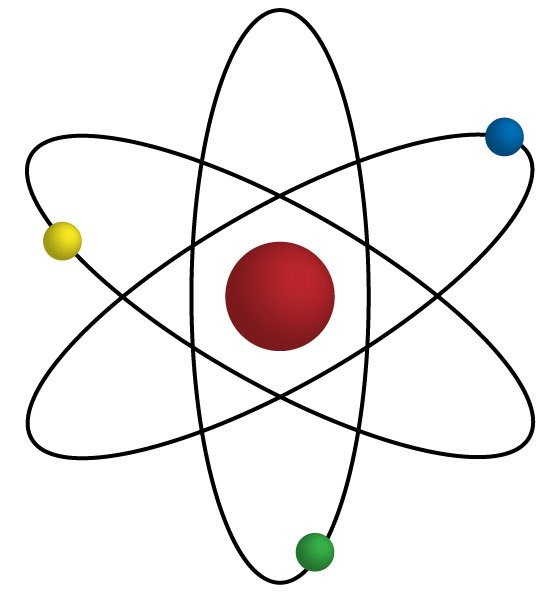
What are the 3 particles that make-up the atom?
a)
protons, neutrons, and isotopes
b)
neutrons, isotopes, and electrons
c)
positives, negatives, and electrons
d)
protons, neutrons, and electrons
8.
This produces all of Earth's energy
a)
atmosphere
b)
Sun
c)
Moon
9.
How long does it take the Sun's energy to reach Earth, once it is emitted from the photosphere?
a)
100,000 years
b)
24 hours
c)
28 days
d)
8 minutes
10.
Energy in stars, including our Sun, is produced by
a)
nuclear fission
b)
nuclear fusion
c)
burning gases
11.
_____________ - no definite shape; no definite volume
a)
plasma
b)
gas
c)
liquid
d)
solid
12.
Substance that cannot be broken down into simpler substances
a)
Element
b)
Atom
c)
Matter
d)
Particle
13.
Smallest part of an element that has all the properties of that element.
a)
Element
b)
Atom
c)
Matter
d)
Particle
14.
Has a positive charge.
a)
proton
b)
neutron
c)
electron
15.
This is the splitting of an atom into smaller atoms.
a)
fission
b)
fusion
16.
What is the sun made of?
a)
lava
b)
liquid nitrogen
c)
fusonium
d)
plasma
17.
How is energy from the Sun transferred to Earth?
a)
conduction
b)
convection
c)
radiation
d)
magnetization
18.
What makes one type of electromagnetic radiation different from another?
a)
temperature
b)
only frequency
c)
only wavelength
d)
wavelength and frequency
19.
What are high-energy particles that flow into our solar system?
a)
death rays
b)
cosmic rays
c)
lunar rays
d)
manta rays
20.
What process, fueled by the Sun, turns solar energy into chemical energy to be used by living organisms?
a)
photosynthesis
b)
cellular respiration
c)
light transformation
d)
solar chemical refinement
21.
What is matter?
a)
Anything that has volume
b)
Anything that has mass
c)
Anything that has mass and volume
d)
Anything that takes up space
100 %

