
 Worksheets
Volcanoes Topic Revision Quiz
Total questions: 50
Worksheet time: 26mins
Name
Class
Date
1.

The arrow is pointing to...
a)
an ash cloud
b)
lava
c)
magma
d)
a vent
2.

The arrow is pointing to...
a)
an ash cloud
b)
lava
c)
magma
d)
a vent
3.

The arrow is pointing to...
a)
an ash cloud
b)
lava
c)
magma
d)
a vent
4.

The arrow is pointing to...
a)
an ash cloud
b)
lava
c)
magma
d)
a vent
5.
_________________________ is hot, molten, or melted rock which reaches the surface of the Earth.
a)
magma
b)
lava
c)
volcano
d)
earthquake
6.
Lava that is still deep inside the earth is called ____________________________.
a)
lava
b)
magma
c)
volcano
d)
earthquake
7.
The state of _______________________ is a group of volcanic islands in the Pacific Ocean.
a)
Hawaii
b)
Japan
c)
California
d)
Volcano
8.

What kind of plate boundary is shown here?
a)
Destructive
b)
Constructive
c)
Conservative
d)
Collision
9.
What geologic feature/event would you most likely to find at a Constructive boundary between two pieces of oceanic crust?
a)
Rift Valley
b)
Mid-Ocean Ridge
c)
Island Arc
d)
Flat land
10.
A subduction zone is formed...
a)
when one tectonic plate sinks below another
b)
at every type of destructive plate boundary
c)
at every type of constructive plate boundary
d)
at conservative boundaries
11.

Name the boundary
a)
destructive boundary
b)
constructive boundary
c)
conservative boundary
d)
collision boundary
12.

Name the boundary
a)
collision boundary
b)
destructive boundary
c)
conservative boundary
d)
constructive boundary
13.
In which type of boundary do the plates move away from each other?
a)
collision
b)
conservative
c)
constructive
d)
destructive
14.
The area where two or more plates meet is called a __________________.
a)
fault
b)
plate boundary
c)
plate edge
d)
ring of fire
15.
Plates slide past one another at ____________ boundaries.
a)
destructive
b)
collision
c)
conservative
d)
constructive
16.
What geologic feature/event you be most likely to find at a Conservative boundary?
a)
Earthquakes
b)
Volcanoes
c)
Mountains
d)
Rift Valleys
17.
Plates move towards one another at ______________ boundaries.
a)
Constructive
b)
destructive
c)
conservative
18.
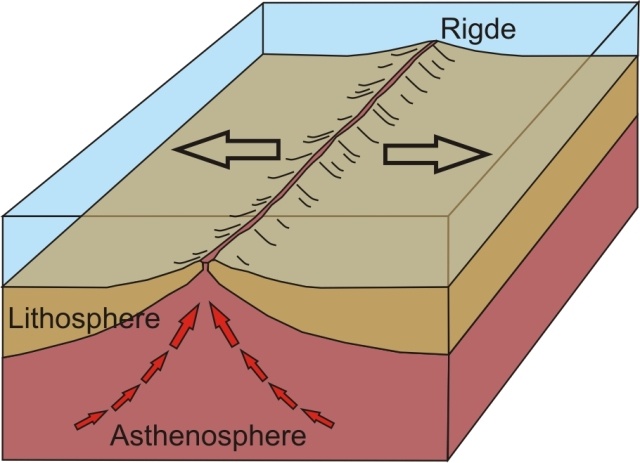
What kind of plate boundary is shown here?
a)
Constructive
b)
Destructive
c)
Collision
d)
Conservative
19.

What kind of plate boundary is shown here?
a)
Constructive
b)
Destructive
c)
Conservative
d)
Collision
20.

What is the red part of the diagram called?
a)
Inner core
b)
Outer Core
c)
Mantle
d)
Crust
21.
What is the orange part of the diagram called?
a)
Inner core
b)
Outer Core
c)
Mantle
d)
Crust
22.
What is the outside part of the diagram called?
a)
Inner core
b)
Outer Core
c)
Mantle
d)
Crust
23.

2 plates slide past each other, either in different directions, or in same direction but at different speeds
a)
Constructive
b)
Collison
c)
Destructive
d)
Conservative
24.

2 plates pull apart
a)
Constructive
b)
Collison
c)
Destructive
d)
Conservative
25.
What geologic feature/event you be most likely to find at a Conservative boundary?
a)
Earthquakes
b)
Volcanoes
c)
Mountains
d)
Rift Valleys
26.

What is the Grey part of the diagram called?
a)
Inner Core
b)
Outer Core
c)
Mantle
d)
Crust
27.
The arrow is pointing to...
a)
an ash cloud
b)
lava
c)
magma
d)
a vent
28.
_________________________ is hot, molten, or melted rock which reaches the surface of the Earth.
a)
magma
b)
lava
c)
volcano
d)
earthquake
29.
How hot is the inner core?
a)
100
b)
500,0000
c)
5,500
d)
1000
30.
How many large plates are there?
a)
7
b)
2
c)
6
d)
20
31.
What makes plates move?
a)
Wind
b)
Convectional currents
c)
Gremlins
32.
Do earthquakes happen at destructive mountains?
a)
yes
b)
no
33.
Which type of crust is denser?
a)
Continental
b)
oceanic
34.
At which margin do plates move away from each other?
a)
constructive
b)
destructive
c)
collision
d)
conservative
35.
What can rise through cracks in the crust?
a)
water
b)
magma
c)
steam
d)
rock
36.
What type of boundary forms shield volcanoes?
a)
Constructive
b)
Destructive
37.
Which type of boundary has composite volcanoes on it?
a)
Constructive
b)
Destructive
38.
Which plate is the UK located on?
a)
North American
b)
Nazca
c)
Eurasian
d)
Pacific
39.
What type of volcano is Mount St Helens?
a)
Composite
b)
Shield
40.
What type of volcano is Mauna Loa?
a)
Composite
b)
Shield
41.
Which of these is not one of the '3P's' that we study in Geography?
a)
People
b)
Physical
c)
Places
d)
Processes
42.
Which type of geography is the study of naturally occurring features?
a)
Environmental
b)
Physical
c)
Human
43.
What type of geography would be studying tribes in the rainforest?
a)
Environmental
b)
Human
c)
Physical
44.
What type of geography would involve studying pollution?
a)
Environmental
b)
Human
c)
Physical
45.
What type of geography would be studying tribes in the rainforest?
a)
Environmental
b)
Human
c)
Physical
46.
Which of the following is an example of Physical Geography?
a)
Volcano
b)
Rubbish
c)
Tribes
47.
An example of Human geography is...
a)
Volcano
b)
Skyscraper
c)
Rubbish
48.
What type of geography is...Protecting endangered animals?
a)
Physical
b)
Environmental
c)
Human
49.
What type of geography is...How mountains are formed?
a)
Physical
b)
Human
c)
Environmental
50.
What type of geography is...River pollution killing wildlife?
a)
Physical
b)
Human
c)
Environmental
100 %

