wayground logo

Free Printable Worksheets

Font size

S
M
L
XL
Worksheets

Saving

Total questions: 20

Worksheet time: 10mins

Name
Class
Date
1.
How is wealth defined?
a)
How much money you have in your Checking and Saving accounts
b)
Debts - Assets
c)
All assets, including money in the bank + retirment
d)
Assets - Debts
2.

Which of the following is FALSE about saving and investing? (hint: choose 2 correct answers)

a)

Saving doesn't outpace inflation; investing usually does

b)

Both saving and investing generally have low returns

c)

Saving is for short-term; investing is for the long-term

d)

Saving has more risk; investing has less risk

3.
Which is NOT a typical goal for a savings account?
a)
To create an emergency fund
b)
To pay for higher education
c)
To save for a new car
d)
To buy groceries for this week
4.
What is a general rule of thumb on how much you should save?
a)
5% of your income
b)
10% of your income
c)
20% of your income
d)
30% of your income
5.
What is a 529 account?
a)
A type of retirement account for teens & younger adults
b)
A special type of saving account for minors
c)
A tax exempt fund that lets your savings grow for school
d)
A special type of saving account for college students only
6.
About how much should you save in an emergency fund?
a)
1-3 months of living expenses
b)
3-6 months of living expenses
c)
6-9 months of living expenses
d)
9-12 months of living expenses
7.
What is a good strategy to help you save?
a)
1st, spend money on all expenses; put the rest into saving
b)
Tap into your savings on a regular basis to purchase small items, like snacks
c)
Pay yourself first - set aside money for savings each month
d)
Keep your spending and saving money together in 1 account
8.

Which of the following is FALSE about opening up a Roth IRA? (hint: choose 2 correct answers)

a)

A person of any age with earned income can open one

b)

It can help teens start saving for retirement early

c)

Compounding occurs at a slower rate in a Roth IRA

d)

You need to put at least $1,000 in it every year

9.

What is a reason for why so many Americans live paycheck-to-paycheck?

a)

Many people are paying themselves first and then spending

b)

Many people only buy what they NEED, not what they WANT

c)

Many people impulse shop

d)

Many people spend within their budget
10.
What is a benefit of opening up a Health Savings Account (HSA)?
a)
The funds expire only every 5 years
b)
You earn interest, but it's taxed
c)
You can use the funds for retirement once you're 75
d)
You can use pre-tax $ to pay for out-of-pocket costs
11.
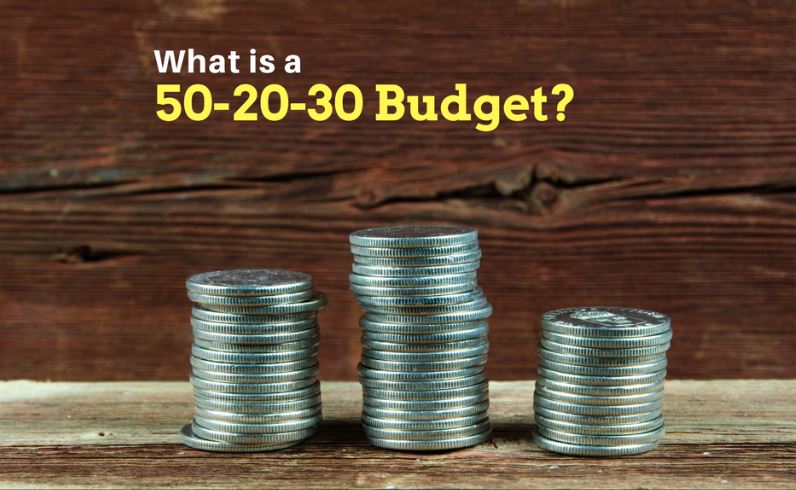
How does the 50-20-30 rule distribute your income?
a)
50% expenses, 20% flexible spending, 30% saving
b)
50% expenses, 20% saving, 30% flexible spending
c)
50% flexible spending, 20% saving, 30% expenses
d)
50% saving, 20% flexible spending, 30% expenses
12.
How is compound interest different than simple interest?
a)
It is simple interest - interest earned on that interest
b)
It is double the simple interest earned on an investment
c)
It is simple interest + interest earned on that interest
d)
It's not different; they are one and the same
13.

Which is TRUE about online saving accounts? (hint: choose 2 correct answers)

a)

Usually have higher interest rates than non-online accounts

b)

They usually have lower costs compared to brick-and-mortar banks

c)

Online accounts are not FDIC insured

d)

You can withdraw money an unlimited # of times
14.
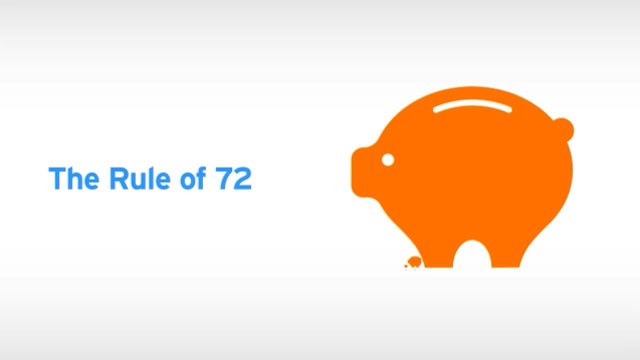
Assuming a rate of growth of 8%, in how many years will your $ double?
a)
3 years
b)
6 years
c)
9 years
d)
12 years
15.

At what rate does your $ need to grow in order to double in 18 years?

a)

2%

b)

4%

c)

6%

d)

8%

16.
Saving accounts differ from checking accounts in that...
a)
Money in a saving account can be used to fund a bank's loans
b)
Saving accounts let you withdraw $ an unlimited # of times
c)
Saving accounts come with more fees than checking accounts
d)
Checking accounts offer higher interest rates
17.

What might you need to open a savings account? (hint: choose 2 correct answers)

a)

Minimum opening deposit

b)

Your previous year's tax returns (or your parents')

c)

The routing number to a checking account

d)

Identification

18.
How does inflation impact the money in your savings account?
a)
Inflation decreases only the $ you earn in interest
b)
Inflation increases the value of the money in your account
c)
Inflation has no impact on $ in your savings account.
d)
The purchasing power of your money decreases over time
19.
True or False: You need a checking account to open a savings account.
a)
True
b)
False
20.

Which is TRUE about Certificates of Deposit (CDs)? (hint: choose 2 correct answers)

a)

You agree to keep $ in a CD for an undetermined period of time

b)

You pay the bank some interest to keep $ in the CD

c)

The bank can loan out the $ in your CD

d)

The bank pays you interest in return