
 Worksheets
Scientific Revolution and Enlightenment
Total questions: 36
Worksheet time: 30mins
Name
Class
Date
1.
The Catholic Church considered some thinkers of the Scientific Revolution to be heretics because they
a)
loved anatomy
b)
traveled frequently to Africa
c)
questioned claims made in biblical passages.
d)
valued natural resources.
2.
During the Scientific Revolution, European scientists focused their work on explaining
a)
how government affects the individual.
b)
Life
c)
advanced chemistry
d)
the workings of the natural world
3.
Before the scientific revolution the people believed kings got there power to rule
a)
from Congress / Parliament
b)
from the people (democratic elections)
c)
from the worldwide web
d)
from God (divine right)
4.
Francis Bacon is known for his invention of the
a)
laws of motion
b)
telescope
c)
scientific method
d)
gravity
5.
Thomas Hobbes wrote this book about the structure of society and governments.
a)
Santa Maria
b)
Leviathan
c)
The Old Man and the Sea
d)
Carterican
6.
This Enlightenment thinker believed that we are all good and pure until we are corrupted by society.
a)
Thomas Hobbes
b)
Galileo
c)
John Locke
d)
Jean Jacques Rousseau
7.
Which Enlightenment thinker said "If women be educated for dependence; that is, to act according to the will of another fallible being, and submit, right or wrong, to power, where are we to stop?"
a)
Mary Wollstonecraft
b)
Mike Jones
c)
Tommy Hobbes
d)
Thomas Jefferson
8.
The idea that the sun is the center of the universe is the ____________ theory.
a)
geocentric
b)
heliocentric
c)
solar
d)
sunny
9.
Which scientist developed laws of motion?
a)
Ptolemy
b)
Copernicus
c)
Galileo
d)
Newton
10.
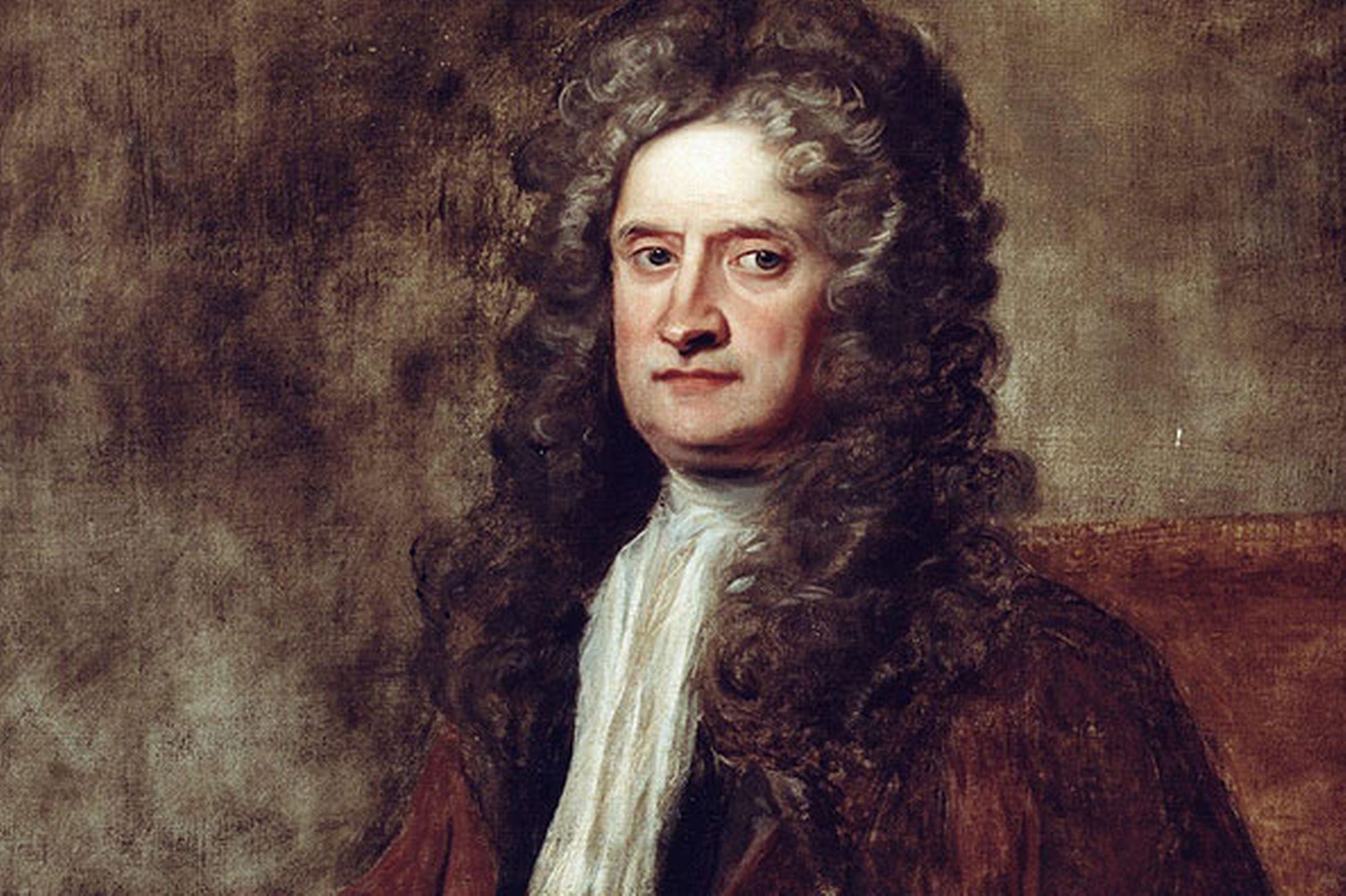
Which of the following was developed by Isaac Newton?
a)
the heliocentric theory
b)
the scientific method
c)
the theory of scientifc rationalism
d)
the theory of universal gravitation
11.
The idea of "Checks and Balances" in government came from
a)
Montesquieu
b)
Locke
c)
Smith
d)
Rousseau
12.

This philosopher believed in freedom of speech and freedom of religion
a)
Montesquieu
b)
Hobbes
c)
Locke
d)
Voltaire
13.
A period of history from 1550 to 1700 when many important scientific advances were made
a)
The enlightenment
b)
The Scientific Revolution
c)
Age of Reason
d)
The English Civil War
14.
Which Scientist was charged with heresy for supporting Copernicus’s teaching that Earth revolves around the Sun?
a)
Galileo
b)
Newton
c)
Kepler
d)
Bacon
15.
Hobbes was a philosopher who that all people were born _.
a)
Selfish
b)
Good
c)
Free
d)
All of the above
16.
Which historical event was inspired by the ideas of Enlightenment philosophers?
a)
The American Revolution
b)
WWI
c)
WWII
d)
Vietnam
17.
What was Denis Diderot's contribution to the Enlightenment?
a)
the Encyclopedia
b)
freedom of speech
c)
the Edict of Nantes
d)
The Social Contract
18.
The Scientific Method was created by which of the following?
a)
Sir Francis Bacon
b)
Galileo Galilei
c)
Johannes Kepler
d)
Tycho Brahe
19.
Who believed people are born with 3 natural rights?
a)
Hobbes
b)
Locke
c)
Voltaire
20.
Promoted democracy, believed that people had the right to life, liberty, and property.
a)
Jean Jacques Rousseau
b)
John Locke
c)
Sir Isaac Newton
d)
Thomas Hobbes
21.
One scientific belief held by Rene Descartes is that
a)
reasoned thought is the way to discover truth
b)
new theories should be made to fit existing traditional ideas
c)
the method by which discoveries are made is unimportant
d)
difficult problems should be solved by reading religious texts
22.
Adam Smith’s doctrine that maintains that the state should not intervene in economics, from his book Wealth of Nations, is called ______.
a)
Laissez-faire
b)
Socialism
c)
Mercantilism
d)
Imperialism
23.
This man developed the laws of gravity
a)
Sir Galileo
b)
Nicholas Copernicus
c)
Sir Tyro Brahe
d)
Sir Isaac Newton
24.
This man confirmed the heliocentric theory correct after using a telescope and studying astronomy.
a)
Boyle
b)
Galileo
c)
Hooke
d)
Brach
25.
Which group was not excited about the new discoveries of the Scientific Revolution because it often proved them wrong?
a)
monarchs
b)
nobles
c)
merchants
d)
Church
26.
The ______ was a time when philosophers tried to use reason and logic to understand people and governments.
a)
Crusades
b)
Enlightenment
c)
Black Death
d)
University
27.
A champion for women's rights during the Enlightenment
a)
Hobbes
b)
Wollstonecraft
c)
Beccaria
d)
Montesquieue
28.
Major believer in the right to the freedom of speech
a)
Voltaire
b)
Hobbes
c)
Beccaria
d)
Locke
29.
Had a negative outlook on humans. He thought humans were naturally selfish, cruel and needy.
a)
Hobbes
b)
Locke
c)
Montesquieue
d)
Wollstonecraft
30.
He believed that a government need to have multiple branches of power. He thought the best was 3 branches with a legislative, executive, and judicial branch.
a)
Beccaria
b)
Locke
c)
Hobbes
d)
Montesquieu
31.
This man had a more positive look on humans and thought governments should exist to protect the natural rights of people. Those natural rights include life, liberty, and right to own property.
a)
Hobbes
b)
Locke
c)
Beccaria
d)
Voltaire
32.
Geocentric Theory stated that the _______ was the center of the universe
a)
Earth
b)
Sun
c)
Moon
d)
Mars
33.
This man thought that an absolute monarchy was the best form of government
a)
Locke
b)
Rousseau
c)
Hobbes
d)
Voltaire
34.
Which scientist claimed the universe, space, and time was infinite so he was burned at the stake?
a)
Bruno
b)
Galileo
c)
Joan of Arc
d)
Mr. A
35.
Famous for being the first to create the theory that the sun was the center of the universe.
a)
Brahe
b)
Copernicus
c)
Hooke
d)
Bacon
36.
What scientist had a pet moose that drank too much and fell down the stairs and died?
a)
Bruno
b)
Brahe
c)
Copernicus
d)
Kepler
100 %

