
 Worksheets
Nervous System Review
Total questions: 50
Worksheet time: 57mins
Name
Class
Date
1.
The job of the somatic nervous system is to control breathing and the respiratory system.
a)
True
b)
False
2.
What is NOT part of the peripheral nervous system (PNS)?
a)
axons
b)
sensory receptors
c)
spinal cord
d)
motor neurons
3.
Division of the Autonomic Nervous System (which is a subdivision of the Peripheral Nervous System) that is FIGHT OR FLIGHT
a)
sympathetic
b)
parasympathetic
4.
Division of the Autonomic Nervous System (which is a subdivision of the Peripheral Nervous System) that is & REST AND DIGEST
a)
sympathetic
b)
parasympathetic
5.
What does the autonomic nervous system control?
a)
Voluntary movement
b)
Cardiac muscles only
c)
Involuntary responses
d)
The spinal cord
6.
Amy has an itch on her nose and would like to scratch it. What part of her nervous system will control the movement of her arm to scratch her nose?
a)
Somatic
b)
Sympathetic
c)
Parasympathetic
d)
Autonomic
7.

X
a)
Axon Terminal Button
b)
Neurotransmitters
c)
Dendrite
d)
Synapse
8.

Z
a)
Dendrite
b)
Axon Terminal
c)
Neurotransmitters
d)
Synapse
9.
What is Acetylcholine mainly responsible for?
a)
mood
b)
alertness
c)
emotion
d)
muscle action/movement
10.
You have two types of nerves in your peripheral nervous system
a)
somatic and autonomic
b)
sensory and motor
c)
parasympathetic and sympathetic
d)
neurons and anti-neurons
11.
The gap that a message has to cross to get from one neuron to the other is called the _____
a)
synapse
b)
dendrite
c)
axon
d)
nucleus
12.
When a neuron is not engaged in an impulse.
a)
Resting potential
b)
Action potential
c)
Neural potential
d)
Synaptic potential
13.

Label the Neuron-What does the letter "D" represent?
a)
Dendrite
b)
Axon
c)
Myelin Sheath
d)
Node of Ranvier
14.

Label the Neuron-What does the letter "C" represent?
a)
Cell Body
b)
Dendrite
c)
Axon Terminal
d)
Myelin Sheath
15.

Label the Neuron-What does the letter "B" represent?
a)
Myelin Sheath
b)
Schwann Cell
c)
Cell Body
d)
Nucleus
16.

Label the Neuron-What does the letter "A" represent?
a)
Axon
b)
Dendrite
c)
Axon Terminal
d)
Cell Body
17.
What are the two parts of the nervous system?
a)
The brain and spinal cord
b)
The central nervous and peripheral nervous system
c)
The neurons and the dendrites
d)
The cerebrum and the medulla
18.
What are the 3 main parts of the brain?
a)
Brain stem and medulla, neurons, and cerebrum
b)
Cerebellum, motor nerves, brain stem and medulla
c)
Cerebrum, cerebellum, spinal cord
d)
Cerebrum, cerebellum and brain stem
19.
Whose job is it to carry nerve impulses away from a cell body in a neuron?
a)
Axons
b)
Dendrites
c)
Spinal Cord
d)
Synapses
20.
What is the central nervous system (CNS) made of?
a)
brain and spinal cord
b)
brain and cranial nerves
c)
spinal cord and spinal nerves
d)
cranial nerves and spinal nerves
21.

Identify the lobe of the brain that is highlighted.
a)
frontal
b)
temporal
c)
occipital
d)
parietal
22.

Identify the lobe of the brain
a)
frontal
b)
temporal
c)
occipital
d)
parietal
23.

What is the part highlighted in red?
a)
Cerebrum
b)
Cerebellum
c)
Brain Stem
d)
Diencephalon
24.

What does the cerebrum control?
a)
controls thoughts and voluntary actions
b)
controls vital and involuntary actions
c)
controls balance
d)
controls the uvula
25.
What is the largest area of the brain that controls everything conscious?
a)
Cerebellum
b)
Cerebrum
c)
Diencephalon
d)
Brain Stem
26.

This part is known as the "Little Brain" and is in charge of balance and coordinating movements.
a)
Thalamus
b)
Reticular Formation
c)
Hypothalamus
d)
Cerebellum
27.

Part of the nervous system made of the nerves that are not part of the brain or spinal cord.
a)
central nervous system
b)
peripheral nervous system
28.

Label the Neuron-What does the letter "E" represent?
a)
Schwann Cell
b)
Node of Ranvier
c)
Axon Terminal
d)
Myelin Sheath
29.
What is the chemical used by a neuron to transmit an impulse across a synapse to another nerve cell?
a)
Neurotransmitters
b)
Synapse
c)
Threshold
d)
Impulse
30.
What is the main function of the nervous system?
a)
clean waste from the cells
b)
absorb nutrients for energy
c)
deliver messages to the brain
31.
A condition caused by sudden movement of the brain, where the brain hits the skull is called
a)
Brain Injury
b)
Concussion
c)
Headache
d)
Nervous System disease
32.

When you react to catch a dropped ruler your body reacts in this order:
a)
1) muscles contract 2) eyes sense ruler move 3) message sent to brain 4) message sent to the muscles
b)
1) message sent to muscles 2) muscles contract 3) message sent to brain 4) eyes sense ruler move
c)
1) eyes contract 2) muscles sent to brain 3) message sense moves 4) ruler is sent to muscles
d)
1) eyes sense ruler move 2) message sent to brain 3) message sent to muscles 4) muscles contract
33.

Controls involuntary actions like heartbeat and breathing.
a)
Brian stem
b)
Nerve
c)
Synapse
d)
Cerebellum
34.

What part of the brain controls hunger and body temperature?
a)
Cerebrum
b)
Cerebellum
c)
Hypothalamus
d)
Brain Stem
35.

The right side of the body is controlled by
a)
RIGHT hemisphere of the brain
b)
LEFT hemisphere of the brain
c)
BOTH sides of the brain
d)
NONE OF THE ABOVE
36.
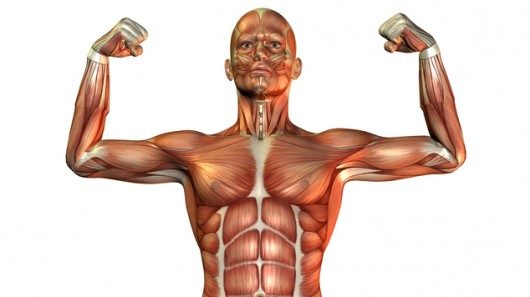
Neurons that send information from the brain TO THE MUSCLES.
a)
Sensory neurons
b)
Arteries
c)
Patchelous neurons
d)
Motor neurons
37.
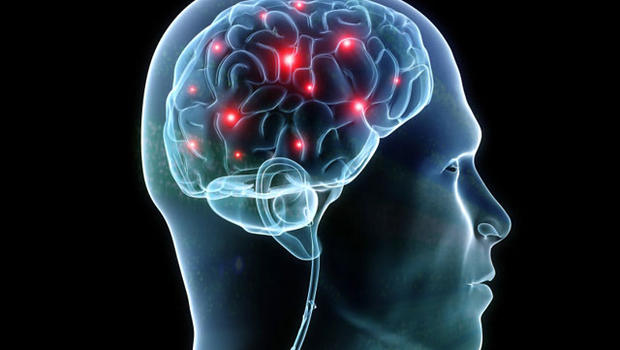
Neurons that send "information" from the environment TO THE BRAIN.
a)
Sensory neurons
b)
Kittiesoft neurons
c)
Lilivenous neurons
d)
Motor neurons
38.

The hippocampus is part of the cerebrum, and it's the area of your brain that
a)
Controls emotions
b)
Smell
c)
Short-term & Long-term memory
d)
Feelings
39.
______ send signals away from neurons whereas ______ receive signals from other neurons.
a)
dendrites; axons
b)
axons; dendrites
c)
synapses; dendrites
d)
axons; synapses
40.
Neurons communicate with each other by sending electrical impulses called:
a)
Action potentials
b)
Membrane potentials
c)
Neuromodulators
d)
Neurotransmitters
41.
Which of the following structures found within the plasma membrane of a neuron helps maintain its transmembrane potential.
a)
exocytosis
b)
cell mediated endocytosis
c)
sodium-potassium pump
d)
concentration gradients
42.
Gaps in the myelin sheath are called _______.
a)
nodes of Ranvier
b)
the synapse
c)
axonal interstices
d)
myelinoids
43.
These are the supporting cells of the CNS
a)
neuron.
b)
sensory.
c)
motor.
d)
neuroglia.
44.
what are the two ions transported across the membrane in an action potential?
a)
O2- and K+
b)
K+ and Na+
c)
Ca+2 and B+3
d)
Na+1 and Cl
45.
What type of neuroglial cell attaches neurons to capillaries?
a)
Astrocyte
b)
Oligodendrocytes
c)
Microglial
d)
Ependymal
46.
Which type of glial cell performs phagocytosis?
a)
astrocyte
b)
microglial cell
c)
oligodendrocyte
d)
Schwann cell
47.
Which type of glial cells make up the myelin sheath in the PNS?
a)
astrocytes
b)
Schwann cells
c)
microglial cells
d)
oligodendrocytes
48.
Which type of glial cells make up the myelin sheath in the CNS?
a)
astrocytes
b)
Schwann cells
c)
microglial cells
d)
oligodendrocytes
49.
Which is the correct nerve pathway?
a)
dendrite > axon > cell body > synapse > dendrite
b)
dendrite > cell body > axon > synapse > dendrite
c)
axon > cell body > dendrite > synapse > axon
d)
axon > cell body > dendrite > synapse > axon
50.
what are the 2 types of nerves?
a)
sensory nerves and motor nerves
b)
sensory nerves and circular nerves
c)
motor nerves and circular nerves
d)
circular nerves and octular nervs
100 %

