
NEW
Font size
S
M
L
XL
 Worksheets
The Planets
Total questions: 60
Worksheet time: 5hrs 44mins
Name
Class
Date
1.
Which planet is known as the "Red Planet"?
a)
Mecury
b)
Venus
c)
Earth
d)
Mars
2.

What is a common characteristic of the inner planets?
a)
Large
b)
Gaseous
c)
Rings
d)
Rocky Surface
3.
What is a common characteristic of the inner planets?
a)
Large
b)
Gaseous
c)
Rings
d)
Rocky Surface
4.

True or False
The planets are not lined up in a perfectly straight line
The planets are not lined up in a perfectly straight line
a)
True
b)
False
5.
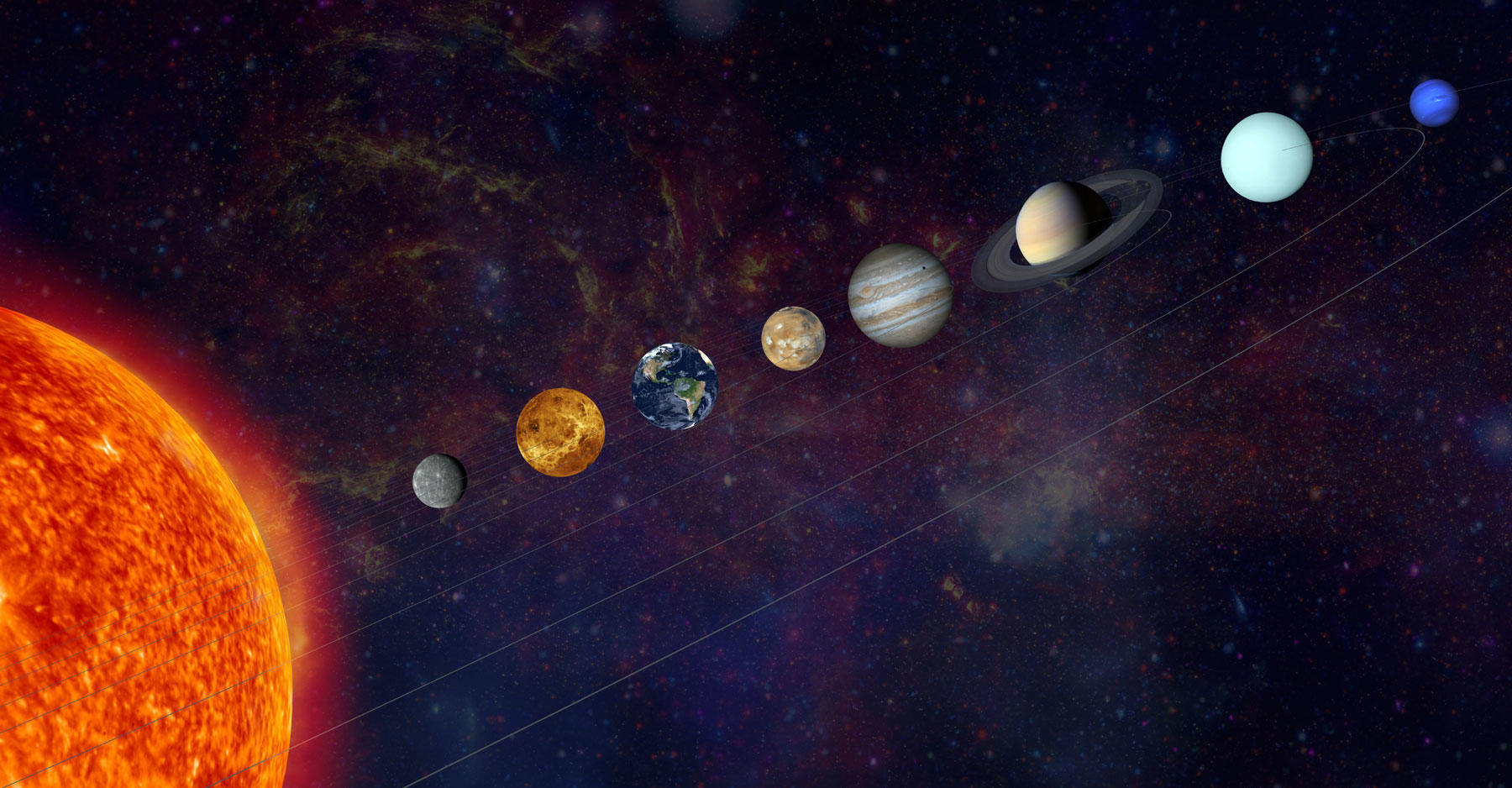
True or False
The planets are all equally distanced from each other.
The planets are all equally distanced from each other.
a)
True
b)
False
6.

Which planet has no atmosphere and looks like our moon?
a)
Mercury
b)
Venus
c)
Earth
d)
Mars
7.

Which planet has a thick atmosphere and is the hottest planet?
a)
Mercury
b)
Venus
c)
Earth
d)
Mars
8.

Which planet is covered in water?
a)
Mercury
b)
Venus
c)
Earth
d)
Mars
9.

Which planet has iron in its soil and is the red planet?
a)
Mercury
b)
Venus
c)
Earth
d)
Mars
10.

Which planet is the smallest?
a)
Mercury
b)
Venus
c)
Earth
d)
Mars
11.

Which planet is Earth's sister planet?
a)
Mercury
b)
Venus
c)
Earth
d)
Mars
12.

Which planet rotates to give day/night every 24 hours?
a)
Mercury
b)
Venus
c)
Earth
d)
Mars
13.

Which planet has had rovers sent to it to study its soil?
a)
Mercury
b)
Venus
c)
Earth
d)
Mars
14.

What is in between the inner planets and the outer planets?
a)
Asteroid belt
b)
Kuiper belt
c)
Sun
d)
Moon
15.

True or False
The Earth is the center of the solar system.
The Earth is the center of the solar system.
a)
True
b)
False
16.

What force keeps the planets orbiting the sun?
a)
Gravity
b)
Magnetism
c)
Electricity
d)
Friction
17.
Almost Earth’s twin in size and mass, this planet has very thick atmosphere.
a)
Venus
b)
Mars
c)
Mercury
d)
Neptune
18.
The surface of this planet appears red due to rusting iron in the rocks.
a)
Mercury
b)
Mars
c)
Pluto
d)
Venus
19.
This is the smallest planet in the solar system
a)
Mercury
b)
Venus
c)
Earth
d)
Mars
20.
The largest known volcano in the solar system, Olympus Mons, is located on this planet.
a)
Venus
b)
Mars
c)
Mercury
d)
Earth
21.
This is the only planet in the solar system with oceans of liquid water.
a)
Mercury
b)
Mars
c)
Venus
d)
Earth
22.
Scientists have been able to find no atmosphere around this planet because it has little gravity and is closest to the sun.
a)
Mars
b)
Venus
c)
Mercury
d)
Earth
23.
The spinning of an object on its axis is called______
a)
orbit
b)
rotation
c)
revolution
d)
tide
24.
Day and night is caused by the _____________ of earth on its axis.
a)
revolution
b)
orbit
c)
rotation
25.
The earth orbits around...
a)
the sun.
b)
the moon
c)
other planets
d)
the Milky Way
26.
Which Planet comes after Earth in the solar system?
a)
Mercury
b)
Mars
c)
Venus
d)
Eros
27.
Only planet known to have life
a)
Earth
b)
Mars
c)
Venus
d)
Mercury
28.
Which is the second closest planet to the sun?
a)
Earth
b)
Saturn
c)
Venus
d)
Mercury
29.
Which is the fourth planet from the sun?
a)
Mars
b)
Saturn
c)
Earth
d)
Jupiter
30.
What are terrestrial or the inner planets composed of?
a)
water
b)
gas
c)
rock
d)
none of the above
31.
To measure the distance between our sun and the planet in our solar system we use
a)
AU
b)
LY
c)
Km
d)
m
32.
The distance between the planets is all the same.
a)
True
b)
False
33.
The distance is greater between the inner planets than the distance between the outer planets.
a)
True
b)
False
34.
The spinning of an object on its axis is called______
a)
orbit
b)
rotation
c)
revolution
d)
tide
35.

Solid, rocky surface
a)
Inner planets
b)
Outer planets
c)
Both
d)
Saturn
36.

Located between the inner and outer planets.
a)
Sun
b)
Asteroid belt
c)
Uranus
d)
Moons
37.
What are the Inner Planets?
a)
Mercury, Mars, Earth, and Venus
b)
Earth, the Moon, Mars
c)
Neptune, Pluto, Earth
d)
:)
38.
Which list places the inner planets in order from largest in size to smallest in size?
a)
Venus, Earth, Mercury, Mars
b)
Mercury, Mars, Venus, Earth
c)
Earth, Venus, Mars, Mercury
d)
Venus, Mars, Earth, Mercury
39.

Which two inner planets are known as "sister planets?"
a)
Venus and Mars
b)
Mars and Earth
c)
Venus and Earth
40.
The air on Venus is mostly ____.
a)
carbon dioxide
b)
oxygen
c)
sulfur
41.
What are the inner planets composed of?
a)
gases and ice
b)
rock and ice
c)
gases and rock
d)
rock
42.
_____ is a planet with massive volcanoes and canyons; and seasons similar to Earth.
a)
Mercury
b)
Venus
c)
Mars
d)
Jupiter
43.
Which of the following planets experiences a runaway greenhouse effect?
a)
Venus
b)
Earth
c)
Mars
d)
Mercury
44.

What compound is responsible for the color of the soil on Mars?
a)
iron oxide
b)
carbon dioxide
c)
methane gas
d)
nitrogen oxide
45.
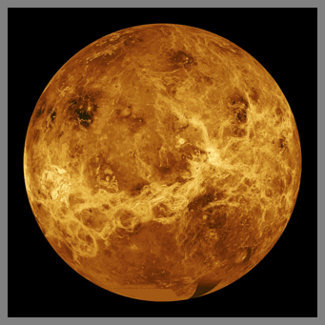
Solar system's hottest planet
a)
Mercury
b)
Venus
c)
Earth
d)
Neptune
46.
This planet has 2 moons.
a)
Mercury
b)
Venus
c)
Earth
d)
Mars
47.
Which is NOT a characteristic of inner planets?
a)
gaseous
b)
rocky
c)
small
d)
dense
48.
TRUE or FALSE
All of the inner planets have moons.
All of the inner planets have moons.
a)
True
b)
False
49.
Which inner planet does NOT have an atmosphere?
a)
Mercury
b)
Venus
c)
Earth
d)
Mars
50.
When heat is trapped by the gases in the planet's atmosphere it is called the _______ _______.
a)
water cycle
b)
centrifugal force
c)
greenhouse effect
d)
global warming
51.
The only planet that has an atmosphere that is rich in oxygen.
a)
Mercury
b)
Venus
c)
Earth
d)
Mars
52.
a planet's orbit around the sun
a)
rotation
b)
revolution
c)
gravity
d)
season
53.
There are signs that water may have flowed on this planet in the past.
a)
Mercury
b)
Venus
c)
Earth
d)
Mars
54.
This planet has an atmosphere so thick it is always covered in clouds.
a)
Mercury
b)
Venus
c)
Earth
d)
Mars
55.
This planet's rotation (day) take longer than its revolution (year).
a)
Mercury
b)
Venus
c)
Earth
d)
Mars
56.
Which inner planets have a moon?
a)
Earth and Mars
b)
Mercury and Mars
c)
Earth and Jupiter
d)
Mars and Venus
57.
What do Mercury and Venus have in common?
a)
They both thick atmospheres.
b)
They both rotate counter clockwise.
c)
They have a similar diameter.
d)
They both have no moons.
58.
If we needed to move to another planet right now, which planet could we move to?
a)
Mars
b)
Venus
c)
Mercury
d)
There is no other planet that we know of that we could survive on.
59.
The inner planets are closer to the sun so
a)
they take longer to orbit the sun.
b)
they orbit the sun faster.
60.
Day and night is caused by the _____________ of a planet on its axis.
a)
revolution
b)
orbit
c)
rotation
Reset

