
 Worksheets
Plate Tectonics
Total questions: 62
Worksheet time: 1hrs 16mins
Name
Class
Date
1.
Holes drilled several kilometers into Earth’s crust provide direct evidence about Earth’s interior in the form of _______
a)
seismic waves.
b)
rock samples.
c)
liquid iron.
d)
volcanic eruption.
2.
Geologists obtain indirect evidence about Earth’s interior by _______
a)
measuring pressure differences at Earth’s surface.
b)
estimating temperature inside earth.
c)
directly looking under the many layers.
d)
recording and studying seismic waves.
3.
What is the correct order (starting from the surface) of Earth’s layers?
a)
crust, outer core, inner core, mantle
b)
mantle, outer core, inner core, crust
c)
crust, mantle, outer core, inner core
d)
outer core, inner core, crust, mantle
4.
Earth’s inner core is _______
a)
a dense ball of solid metal.
b)
a layer of molten metal.
c)
a layer of hot rock.
d)
a layer of rock that forms Earth’s outer skin.
5.
Heat transfer within a fluid takes place by _______
a)
convection currents.
b)
radiation.
c)
conduction.
d)
density.
6.
According to Wegener’s hypothesis of continental drift, _______
a)
Earth’s surface is made up of seven major landmasses.
b)
the continents do not move.
c)
Earth is slowly cooling and shrinking.
d)
the continents were once joined together in a single landmass.
7.
What is Pangaea?
a)
the name of a German scientist
b)
the name of the supercontinent that existed millions of years ago
c)
another name for continental drift
d)
the name of an ancient fossil
8.
Which type of evidence was NOT used by Alfred Wegener to support his continental drift hypothesis?
a)
evidence from landforms
b)
evidence from fossils
c)
evidence from human remains
d)
evidence from climate
9.
Most geologists rejected Alfred Wegener’s idea of continental drift because _______
a)
they were afraid of a new idea.
b)
Wegener was interested in what Earth was like millions of years ago.
c)
Wegener used several different types of evidence to support his hypothesis.
d)
Wegener could not identify a force that could move the continents.
10.
In sea-floor spreading, molten material rises from the mantle and erupts _______
a)
along the edges of all the continents.
b)
along mid-ocean ridges.
c)
in deep-ocean trenches.
d)
at the north and south poles.
11.
How did scientists discover that rocks farther away from the mid-ocean ridge were older than those near it?
a)
by observing eruptions of molten material on the sea floor
b)
by mapping rocks on the sea floor using sonar
c)
by determining the age of rock samples obtained by drilling on the sea floor
d)
by measuring how fast sea-floor spreading occurs
12.
The geological theory of _______ states that pieces of Earth’s lithosphere are in constant, slow motion.
a)
subduction
b)
plate tectonics
c)
deep-ocean trenches
d)
sea-floor spreading
13.
A place where two plates slip past each other, moving in opposite directions, is known as a _______
a)
transform boundary.
b)
divergent boundary.
c)
convergent boundary.
d)
rift valley.
14.
A rift valley forms at a _______
a)
convergent plate boundary
b)
divergent plate boundary.
c)
transform boundary.
d)
deep-ocean trench.
15.
Using data from seismic waves, geologists have learned that Earth’s interior is made up of several _______
a)
continents.
b)
ridges.
c)
layers.
d)
trenches.
16.
Scientists think that convection currents flow in Earth’s _______
a)
continents.
b)
mantle.
c)
lithosphere.
d)
inner core.
17.
The place where two plates come together is known as a _______
a)
transform boundary.
b)
divergent boundary.
c)
convergent boundary.
d)
rift valley.
18.
Who proposed the seafloor spreading theory?
a)
Alfred Wegener
b)
Harry Hess
c)
Abraham Ortelius
d)
Carl Sagan
19.
As Earth’s plates move apart at some boundaries, they collide at others, and form what?
a)
Mountains and volcanoes
b)
Ocean basins
c)
Strike-slip faults
d)
Both a & b
20.
The presence of these same objects on several continents supports the idea of continental drift.
a)
Fossils
b)
Rocks
c)
Neither a nor b
d)
Both a and b
21.
What is the cycle of heating, rising, cooling, and sinking?
a)
Subduction zone
b)
Convergent boundary
c)
Convection current
d)
Conduction current
22.
When continental plates pull apart at a divergent boundary on land, a(an) ____________________________________ forms.
a)
Rift valley
b)
mountain
c)
ocean basin
d)
trench
23.
The part of the mantle called the ____________________________________ is made of soft rock that bends like plastic.
a)
lithosphere
b)
crust
c)
asthenosphere
d)
lower mantle
24.
The process of ____________________________________ continually adds new crust to the ocean floor along both sides of the mid-ocean ridge.
a)
convection currents.
b)
subduction
c)
transformation
d)
strike-slip faults
25.
Subduction occurs where the oceanic crust bends down toward the mantle at a(an) ____________________________________
a)
mountain
b)
volcano
c)
deep ocean trench
d)
rift valley
26.
The lithosphere is broken into sections called ____________________________________ which float on top of the asthenosphere.
a)
plate boundaries
b)
asthenosphere
c)
plates
d)
crust
27.
The ocean floor sinks beneath a deep-ocean trench and back into the mantle in a process known as ____________________________________
a)
subduction
b)
Convergent boundary
c)
Convection current
d)
rift valley
28.
Scientists think that the ____________________________________ made of liquid iron and nickel, moves to produce Earth’s magnetic field.
a)
inner core
b)
mantle
c)
lithosphere.
d)
outer core
29.
Which of the following causes Earth's tectonic plates to move?
a)
Energy from the Sun
b)
Magnetic Pole Reversal
c)
Convection currents in the mantle
d)
Faults in Mountain Ranges
30.
The type of plate boundary where two plates come together is a .....
a)
Convergent Boundary
b)
Divergent Boundary
c)
Transform Boundary
d)
Plate Boundary
31.
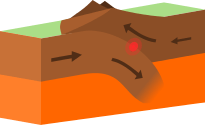
What type of plate boundary is this?
a)
Plate
b)
Divergent
c)
Convergent
d)
Transform
32.

What type of event will occur at this boundary?
a)
Earthquake
b)
Volcano Eruption
c)
Tornado
d)
Mountain Building
33.
A divergent boundary occurs when plates ....
a)
Pull apart
b)
Come together
c)
Slide past each other
d)
subducting
34.
Which of the following is the name of the ancient supercontinent formed 28 Million Years ago.
a)
Pangea
b)
Gondwanda
c)
Laurasia
d)
Neverland
35.
Which of the following is NOT evidence to support the theory of plate tectonics?
a)
Fossils
b)
Mountains
c)
Glaciers
d)
Sand Erosion
36.
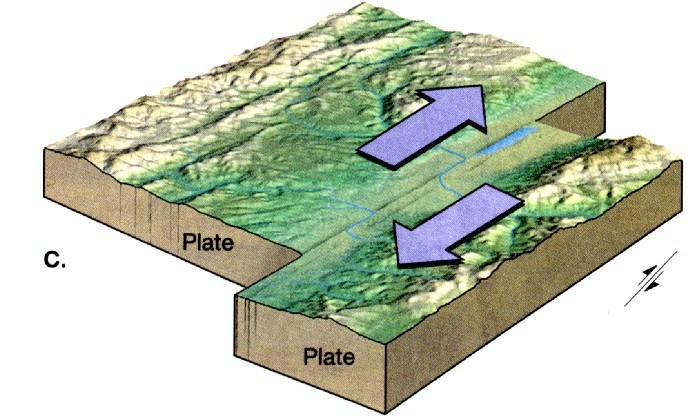
What type of plate boundary is this?
a)
Transform
b)
Convergent
c)
Divergent
d)
Plate
37.
The theory that says Earth's continents once made up an ancient supercontinent, and have been drifting apart ever since, is called the theory of...
a)
Pangea
b)
Plate Tectonics
c)
Natural Selection
d)
Gravity
38.
Oceanic Trenches are formed by _______ plate boundaries
a)
Convergent
b)
Transform
c)
Plate
d)
Divergent
39.
A fault is formed by the movement of a __________ plate boundary
a)
Transform
b)
Convergent
c)
Divergent
40.
How is it possible for new crust to be formed without increasing the surface area of the Earth?
a)
Crust is destroyed at the same time it is created
b)
New crust is underwater where it sinks
c)
New crust breaks more easily than old crust
41.
Mountains are created when....
a)
Two continental plates collide
b)
Two oceanic plates pull apart
c)
An Oceanic plate subducts under a Continental Plate
d)
Two continental plates pull apart
42.
True or false : Deep-Ocean Trenches are underwater canyons?
a)
False
b)
True
43.
What was Wegener's hypothesis called?
a)
The Pangea
b)
Moving Continents
c)
The Continental Drift
d)
Techtonic Plates
44.
What evidence helped Wegener support his theory?
a)
Climate
b)
Fossils
c)
Land Features
d)
All of the Above
45.
True or False : Sea-floor Spreading adds new material to the ocean floor?
a)
True
b)
False
46.
What evidence helps scientists show how sea floor spreading occurs?
a)
Ocean Floor Material
b)
Magnetic Stripes
c)
Drilling Samples
d)
All of the Above
47.
What happens when Subduction occurs?
a)
Parts of the crust fall into the mantle
b)
Parts of the crust fall into the core
c)
Parts of the crust fall into space
d)
None of the Above
48.
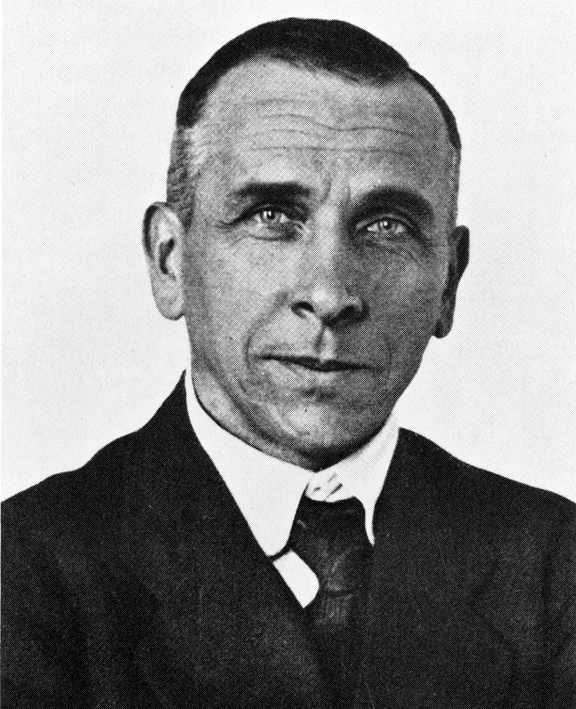
Who is the person credited with developing the theory of continental drift?
a)
Harry Hess
b)
Galileo
c)
Alfred Wegener
d)
Newton
49.
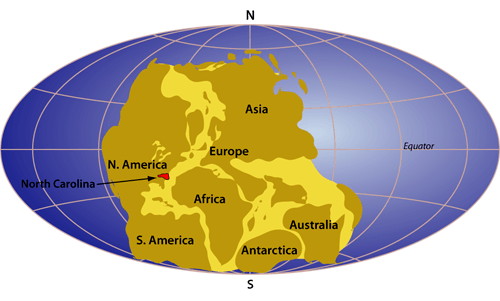
What is this a picture of?
a)
plate tectonics
b)
continental drift
c)
pangea
d)
glacier scaring
50.
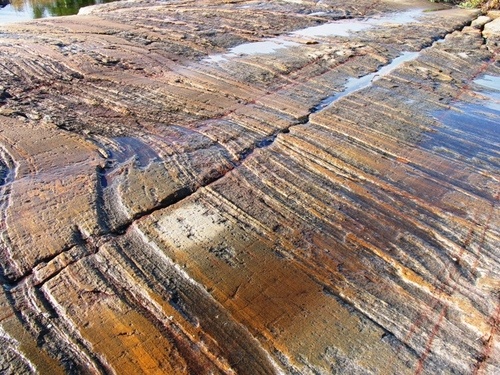
This is a picture of glacier scars found in Africa. What are these evidence for?
a)
Africa has always been near the equator
b)
Africa was once in an area of the Earth that had a very cold climate
c)
The continents have not moved
d)
sea floor spreading
51.
Why did no one believe Wegener's thoery?
a)
He could not explain HOW the continents moved
b)
He didn't have evidence
c)
His data was wrong
d)
He didn't use the right technology to gather data
52.
Transfer of thermal energy through fluids is:
a)
conduction
b)
convection
c)
radiation
53.
Transfer of thermal energy through direct contact is:
a)
conduction
b)
convection
c)
radiation
54.
Transfer of thermal energy through "space" is:
a)
conduction
b)
convection
c)
radiation
55.
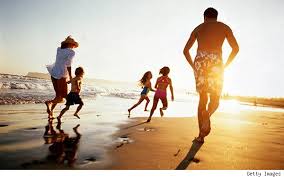
The sun shines down on this family as the play on the beach. This is an example of:
a)
conduction
b)
convection
c)
radiation
56.

A group of friends gather around a fire to stay warm. This is an example of:
a)
conduction
b)
convection
c)
radiation
57.

Walking on the warm sand with your bare feet is an example of:
a)
conduction
b)
convection
c)
radiation
58.

Blow drying your wet hair is an example of:
a)
conduction
b)
convection
c)
radiation
59.
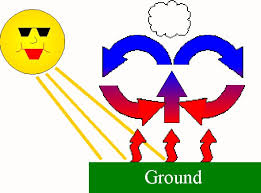
When warm air rises and the cool air sinks, this is:
a)
conduction
b)
convection
c)
radiation
60.

The chocolate bunny getting warmer from the lamp is:
a)
conduction
b)
convection
c)
radiation
61.

The chocolate bunny being heated by warm air from the blow dryer is:
a)
conduction
b)
convection
c)
radiation
62.

The chocolate bunny being heated by the iron touching it is:
a)
conduction
b)
convection
c)
radiation
100 %

