
 Worksheets
Earths History
Total questions: 57
Worksheet time: 2hrs 49mins
Name
Class
Date
1.
What is a Fossil?
a)
A Bone
b)
Nasty
c)
the preserved remains or traces of animals, plants, and other organisms from the remote past
d)
The Bone of a dead thing
2.

Which rock layer is the oldest
a)
A
b)
E
c)
D
d)
C
3.
Which type of rock results from melting and cooling of magma?
a)
Igneous
b)
Metamorphic
c)
Sedimentary
d)
Extrusive
4.
Which type of igneous rock forms above ground?
a)
Intrusive
b)
Organic
c)
Extrusive
d)
Foliated
5.
The Earth is approximately _________________________.
a)
4,600 years old
b)
2017 years old
c)
6.4 billion years old
d)
4.6 billion years old
6.
By which method have scientists determined that the Earth is about 4.5 billion years old?
a)
plate tectonics
b)
relative dating
c)
radioactive dating
d)
law of superposition
7.

An imprint of a living thing preserved in rock is a...
a)
extinct
b)
fossil
c)
ozone
d)
half-life
8.

Trilobites are found in the _____________.
a)
Cenozoic
b)
Mesozoic
c)
Paleozoic
d)
Cretaceous
9.

Paleozoic is an example of_________.
a)
an epoch
b)
an era
c)
a period
d)
an eon
10.

The longest Era was...
a)
Precambrian
b)
Paleozoic
c)
Mesozoic
d)
Cenozoic
11.

The Era when life began was...
a)
cenozoic
b)
paleozoic
c)
mesozoic
d)
precambrian
12.
What came first?
a)
Palezoic
b)
Mesozoic
c)
Cenozoic
d)
Precambrian
13.
What is Pangaea?
a)
The name of a German Scientist
b)
the name of the supercontinent that existed millions of years ago
c)
another name for continental drift
d)
the name of an ancient fossil
14.
The Paleozoic, Mesozoic, and Cenozoic are divisions in the geologic time scale called ____
a)
centuries
b)
layers
c)
periods
d)
eras
15.
The Cenozoic Era is often called "the Age of the ____"
a)
Dinosaurs
b)
Mammals
c)
Amphibians
d)
Reptiles
16.
How long in a geologic time period?
a)
3 million years
b)
4.6 billion years
c)
a period doesn't have an exact length
d)
they are all the same length
17.
___________ a record of the geologic events and the evolution of life forms as shown in the fossil record.
a)
Eras
b)
Geologic Time Scale
18.
Which of the following correctly lists the geologic time periods in order from OLDEST to MOST RECENT?
a)
Precambrian, Mesozoic, Paleozoic, Cenozoic
b)
Cenozoic, Mesozoic, Paleozoic, Precambrian
c)
Precambrian, Paleozoic, Mesozoic, Cenozoic
d)
Mesozoic, Paleozoic, Precambrian, Cenozoic
19.
At the end of the Mesozoic Era there was a mass extinction. Which of the following is attributed as being the main cause?
a)
asteroid or comet impact
b)
major volcanic eruption
c)
earthquakes
d)
climatic changes
20.
During the Mesozoic Era we find the following Periods:
a)
Cretaceous, Permian, Cambrian
b)
Silurian, Cambrian, Devonian
c)
Triassic, Jurassic, Cretaceous
d)
Triassic, Jurassic, Devonian
21.
According to the theory of plate tectonics, where do activities such as earthquakes and volcanic eruptions occur?
a)
the center of plates
b)
along the plate boundaries
c)
in the outer regions of plates
d)
in the inner core
22.

Which city is most likely to experience an earthquake?
a)
Boston, Massachusetts
b)
Denver, Colorado
c)
Orlando, Florida
d)
San Francisco, California
23.

What type of geologic feature would you expect to find along the west coast of South America?
a)
a rift valley
b)
a chain of volcanoes
c)
an ocean ridge
d)
a transform fault
24.
What is the method of measuring age that gives the most precise results?
a)
radioactive dating, when scientists measure the levels of an isotopic element inside of an object
b)
relative dating, when scientists fill an object with carbon and measure how much will fit
c)
rate of sedimentation, which dates layers of Earth based on their thickness
d)
law of superposition, which dates layers of Earth based on their order
25.

The figure below shows one type of physical evidence that scientists use to understand how Earth’s climate has changed in the past.
What type of physical evidence is shown in this figure?
What type of physical evidence is shown in this figure?
a)
copolite
b)
fossil
c)
ice core
d)
tree rings
26.
What type of plate boundary divides?
a)
Transform
b)
Divergent
c)
Convergent
d)
Strike Slip
27.
During sea floor spreading the rock that is furthest from the plate boundary are _______________.
a)
Oldest
b)
Youngest
28.
Which word best describes relative dating?
a)
Older
b)
14 years old
c)
2017
d)
4.6 million years ago
29.
Which best describes absolute dating?
a)
older
b)
younger
c)
oldest
d)
14 years old
30.

Layers of rock can tell us a lot about the history of an area. The most accurate way to date rock is using the law of superposition.
a)
True
b)
False
31.
Modern humans (Homo sapiens) and dinosaurs never existed together on Earth.
a)
True
b)
False
32.

This rock was another type of rock that was heated and compressed over time. What type of rock is this?
a)
Sedimentary
b)
Igneous
c)
Metamorphic
33.
An invertebrate is an animal with a backbone.
a)
True
b)
False
34.
The Mesozoic Era is often called the Age of _____________ because of the success of these animals.
a)
Reptiles
b)
Mammals
35.

According to the law of superposition, which layer is the youngest?
a)
A
b)
B
c)
C
36.
April is older than Zack, who is older than Rick. This is an example of:
a)
Relative Dating
b)
Absolute Dating
c)
Law of superposition
d)
radiometric dating
37.
The collection of all discovered fossils make up:
a)
Museum
b)
Fossil Record
c)
Law of superposition
d)
Index Fossils
38.

Heat & pressure
a)
metamorphism
b)
volcanism
c)
magmarism
d)
lithification
39.
True or False: Once a rock is sedimentary, it cannot become an igneous rock.
a)
True
b)
False
40.
When you watch a volcano erupt molten rock, you are seeing _____
a)
Lava
b)
Magma
c)
Mineral Crystals
d)
Igneous Rocks
41.
What are the 3 major types of rocks?
a)
Igneous, Metamorphic, Sedimentary
b)
Metamorphic, Igneous, Cementation
c)
Brown, Red, Gray
d)
Streak, Hardness, Breakage
42.
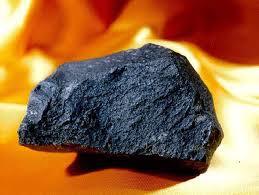
This rock was found near the mouth of a volcano. What type of rock is this?
a)
Sedimentary
b)
Igneous
c)
Metamorphic
43.

The process when rocks break into smaller pieces due to exposure to natural elements is called
a)
erosion
b)
weathering
c)
sediments
44.
The movement of weathered material (sediment) is called?
a)
weathering
b)
erosion
c)
deposition
45.

This rock formed when bits of other rocks became pressed into a solid. What type of rock is it?
a)
Sedimentary Rock
b)
Metamorphic Rock
c)
Igneous Rock
46.

Which period are we currently in?
a)
Quaternary
b)
Holocene
c)
Jurassic
d)
Tertiary
47.

Which era is the longest?
a)
Cenozoic
b)
Cambrian
c)
Precambrian
d)
Phanerozoic
48.
Paleozoic, Mesozoic & Cenozoic are all
a)
Epochs
b)
Eras
c)
Periods
d)
Eons
49.
The Mesozoic Era was the Age of Reptiles, and the current Cenozoic Era is the Age of
a)
Birds
b)
Ice
c)
Mammals
d)
Humans
50.
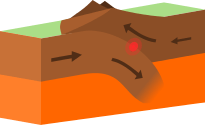
What type of plate boundary is this?
a)
Plate
b)
Divergent
c)
Convergent
d)
Transform
51.

What type of event will occur at this boundary?
a)
Earthquake
b)
Volcano Eruption
c)
Tornado
d)
Mountain Building
52.
A divergent boundary occurs when plates ....
a)
Pull apart
b)
Come together
c)
Slide past each other
d)
subducting
53.
Which of the following is the name of the ancient supercontinent formed 28 Million Years ago.
a)
Pangea
b)
Gondwanda
c)
Laurasia
d)
Neverland
54.
Mountains are created when....
a)
Two continental plates collide
b)
Two oceanic plates pull apart
c)
An Oceanic plate subducts under a Continental Plate
d)
Two continental plates pull apart
55.
What is Pangaea?
a)
The name of a German Scientist
b)
the name of the supercontinent that existed millions of years ago
c)
another name for continental drift
d)
the name of an ancient fossil
56.
Plate movement is caused by ______________.
a)
the rotation of the Earth
b)
ocean tides
c)
convection currents in the mantle
d)
the moon's gravity
57.
Fossils of a particular animal species have been found in both southern Africa and South America but nowhere else. Which of the following is MOST LIKELY the reason why?
a)
The fossils evolved into different organisms
b)
The climate changed and became much colder.
c)
In the past, Africa and South America were part of the same continent
d)
In the future, Africa and South America will be part of the same continent.
100 %

