
 Worksheets
Earth History Part 2
Total questions: 57
Worksheet time: 49mins
Name
Class
Date
1.
Identify the Era:
called the "Age of Mammals"
called the "Age of Mammals"
a)
Precambrian
b)
Paleozoic
c)
Mesozoic
d)
Cenozoic
2.
The geologic time scale is a record of___
a)
the thickness of sedimentary rock layers
b)
the rate of fossil formation
c)
the life forms and geologic evnts in Earth's history
d)
the time since the evolution of dinosaurs
3.
Identify the Era:
where dinosaurs thrived
where dinosaurs thrived
a)
Precambrian
b)
Paleozoic
c)
Mesozoic
d)
Cenozoic
4.
Identify the Era:
Amphibians first developed in this era.
Amphibians first developed in this era.
a)
Precambrian
b)
Paleozoic
c)
Mesozoic
d)
Cenozoic
5.
The fossil record shows that life on Earth has changed over time. For example, paleontologists have found that older rocks contain fossils of
a)
organisms that are more complex than those alive today
b)
both simple and complex organisms
c)
only organisms that are alive today
d)
organisms that are simpler than those alive today
6.
How do most fossils form?
a)
Living things die and their remains are covered by sediment
b)
The hard parts of an organism dry out in the air
c)
The soft parts of an organism change to stone
d)
Freezing preserves the remains of an organism
7.
What do most scientists think caused the mass extinction of dinosaurs and other organisms at the end of the Cretaceous period?
a)
an object from space struck Earth
b)
volcanic eruptions covered large areas with lava
c)
an ice age covered most of Earth with ice
d)
The dinosaurs ate too many other organisms and then starved
8.
The Paleozoic, Mesozoic, and Cenozoic are divisions in the geologic time scale called ____
a)
centuries
b)
layers
c)
periods
d)
eras
9.

The presence of the same ________ on several continents supports the idea of continental drift.
a)
rocks
b)
fossils
c)
both fossils and rocks
d)
neither fossils nor rocks
10.

A lack of evidence for continental drift prevented many scientists from believing a single supercontinent called _________ existed.
a)
Glossopteris
b)
Pangaea
c)
Gondwanaland
d)
Mesosaurus
11.

Many scientists think hot plastic-like rock in the mantle is forced upward toward the surface, cools, and sinks. This process is called a(n) _________.
a)
earthquake
b)
convergent boundary
c)
volcano
d)
convection current
12.

What is the correct order (starting from the surface) of Earth’s layers?
a)
mantle, outer core, inner core, crust
b)
crust, mantle, outer core, inner core
c)
outer core, inner core, crust, mantle
d)
crust, outer core, inner core, mantle
13.

Plates move apart at _________ boundaries.
a)
volcanic
b)
divergent
c)
convergent
d)
transform
14.

Which type of plate boundary is shown at A?
a)
transform boundary
b)
convergent boundary
c)
divergent boundary
d)
fractured boundary
15.
Paleozoic, Mesozoic, and Cenozoic are all
a)
eons
b)
eras
c)
epochs
d)
periods
16.
Fossils are usually found in
a)
igneous rock
b)
extrusions
c)
intrusions
d)
sedimentary rock
17.

What type of fossil is found in the most different layers?
a)
dinosaur
b)
ammonite
c)
plant
d)
bird
18.

Which layer is oldest?
a)
A
b)
W
c)
G
d)
Z
19.
Why don't all living things become fossils?
a)
because some living things are too small
b)
because some living things are too big
c)
because some are subject to catastrophism and others are not
d)
because environmental conditions have to be just right to prevent decay
20.
How do fossils form?
a)
Living things die and their remains are covered by sediment
b)
insects are covered in tree sap
c)
all of these are correct
d)
Freezing preserves the remains of an organism
21.

Which feature of a rose helps it grow without being eaten by large animals?
a)
flowers with bright colors
b)
sharp thorns
c)
small seeds
d)
deep roots
22.

Which feature helps an animal hide from other animals?
a)
looking like a dangerous animal
b)
being the same color as the place it lives (camoflauge)
c)
having sharp claws or a strong shel
d)
having only a few young and caring for them
23.

Giraffes have long necks. This allows them to eat from the tops of trees where other animals cannot reach. This is a result of...
a)
Natural Selection
b)
Adaptation
c)
Variation
24.
Which animal is most representative of the Paleozoic era?
a)
insects
b)
dinosaurs
c)
mammals
25.
Which animal is most representative of the Mesozoic era?
a)
insects
b)
dinosaurs
c)
mammals
26.
Which animal is most representative of the Cenozoic era?
a)
insects
b)
dinosaurs
c)
mammals
27.
Which statement is NOT a reason why trilobites are good index fossils?
a)
They are found in many different locations
b)
They are found in many rock layers
c)
They lived for only a short period of time
d)
They are unique
28.
Which of the following best represents the Paleozoic era?
a)
Flowering plants are common
b)
Ferns & Mosses
c)
Seed Plants
29.
Which of the following best represents the Mesozoic era?
a)
Flowering plants are common
b)
Ferns & Mosses
c)
Seed Plants
30.
Which of the following best represents the Cenozoic era?
a)
Flowering plants are common
b)
Ferns & Mosses
c)
Seed Plants
31.
Sedimentary rocks found high in the Himalayan Mountains have been found with fossils of clams and other marine life. What does this indicate about the origin of the Himalayan Mountains?
a)
There was once a large ocean at top of the mountains.
b)
The Earth's crust that formed these mountains was once covered with an ocean.
c)
Animals that now live on the mountains once lived under water.
d)
Continental drift resulted two tectonic moving closer to each other over time.
32.

Fossils found in layers of sediment give us clues to Earth's past. Based on the fossil record of this area, we can assume that this area was
a)
once a desert.
b)
once underwater.
c)
the site of volcanic activity
d)
located in a different place on Earth.
33.
A team of archaeologists excavating a sedimentary rock layer come across some primitive hunting tools used by early humans. As the dig progresses, they unearth the fossilized remains of a dinosaur from another layer of the sedimentary rock. Why do these discoveries indicate that the rocks were formed over millions of years?
a)
Early humans appeared on Earth about a million years ago.
b)
Humans and dinosaurs coexisted about a million years ago.
c)
Humans hunted dinosaurs and were responsible for their extinction.
d)
Dinosaurs became extinct millions of years before humans appeared.
34.
Which is NOT a factor that affects fossilization?
a)
body decay due to natural elements
b)
predators destroying the body
c)
age of the organism
d)
hard or soft body parts
35.
The environment plays a crucial role in an organism's ability to fossilize. Which is the best location for fossilization?
a)
bottom of a lake covered by sediment
b)
very dry environments, such as land
c)
an environment exposed to natural elements
d)
bottom of a river
36.
Several factors affect an organisms ability to fossilize. A sedimentary depositional environment allows organisms to be buried by sediment before ____________.
a)
decay, weathering, or scavengers destroy the remains.
b)
scavengers destroy the remains.
c)
before decay weathering the remains.
d)
decay or weathering destroy the remains.
37.
Which of the following is characteristic of an index fossil?
a)
Species lived over a long time period.
b)
Species lived over wide areas on Earth
c)
Species are found in many different rock layers.
d)
Species can be used to find exact ages of fossils that are around it.
38.
Fossil A is found in a layer of rock that is lower than the layer that Fossil B is found in. Based on this information, which statement is correct?
a)
Fossil A is older than Fossil B.
b)
Fossil B is older than Fossil A.
c)
Fossil A is younger than Fossil B.
d)
Fossil A is the same age as Fossil B.
39.

Some plants exhibit a behavior called thigmotropism that causes the plant to grow or move in response to touch or contact. Climbing vines use this behavior to grow tendrils that curl around other plants for support. What is the MOST likely reason a climbing vine would evolve this ability?
a)
to absorb water and food from the host plants
b)
to grow high off the ground in order to maximize sunlight exposure
c)
to grow roots needed to absorb water and nutrients
d)
to help ensure seeds are widely dispersed
40.

Using the data in the table, which species of South American cats is likely to be well-adapted to the arid grasslands of Argentina and Chile?
a)
jaguar
b)
pampas cat
c)
ocelot
d)
kodkod
41.
The arctic fox has adapted to its environment in a number of ways. Its fur turns white in winter and it does not begin to shiver until temperatures plunge below 10 degrees Fahrenheit. Global warming is likely to bring many changes, including an increase in mean air temperature. Over time, the arctic fox will have to adapt to this change. Which adaptation is MOST LIKELY to occur?
a)
Its paw pads may thicken.
b)
Its tail may have thinner fur.
c)
Its ears may be shorter and rounder.
d)
Its fur may stay white longer.
42.
Extinction happens for many reasons. All but one is a reason for a species to become extinct. That is
a)
a species is unable to adapt to changes in the environment.
b)
a species is destroyed by human activity such as over-hunting.
c)
a species is introduced to an area without natural predators.
d)
a species of rat is wiped out when a new disease is introduced.
43.
What is it called when better adapted organisms survive to pass traits along to their offspring.
a)
Evolution
b)
Natural Selection
c)
Extinction
d)
Artifical Selection
44.
Some lizards have different size legs. Lizards with longer legs are able to better access food. Over time, lizards with short legs became less common.
Which lizard was favored by natural selection?
Which lizard was favored by natural selection?
a)
short legs
b)
Long legs
45.
Identify the Era in which each of the events occurred:
Jurassic period
Jurassic period
a)
Mesozoic
b)
Paleozoic
c)
Cenozoic
d)
Precambrian
46.
True or False: geologists subdivide period into eras.
a)
True
b)
False
47.
Where the better adapted organisms survive to pass traits along to offspring.
a)
Evolution
b)
Natural Selection
c)
Extinction
d)
Artifical Selection
48.
Why are advantageous traits more likely to be passed onto offspring?
a)
Because they are more likely to survive and reproduce.
b)
Because they come from dominant alleles.
c)
Because they come from recessive alleles.
d)
Because the trait is an acquired phenotype.
49.
The differences among a species, like different bird beaks, are called
a)
genes.
b)
variations.
c)
traits.
d)
theories.
50.

What is this an example of?
a)
diversity of species
b)
variation
c)
vestigial structures
d)
DNA studies
51.
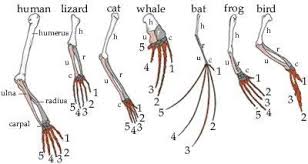
Bob says that this illustration supports his claim that these organisms come from a common organism. Is he correct
a)
yes
b)
no
52.
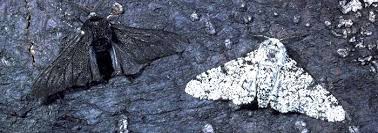
Predict which moth would natural selection favor
a)
light
b)
dark
53.

Darwin wrote that organisms with traits that are best suited to the environment will ________________
a)
increase in number
b)
become extinct
54.
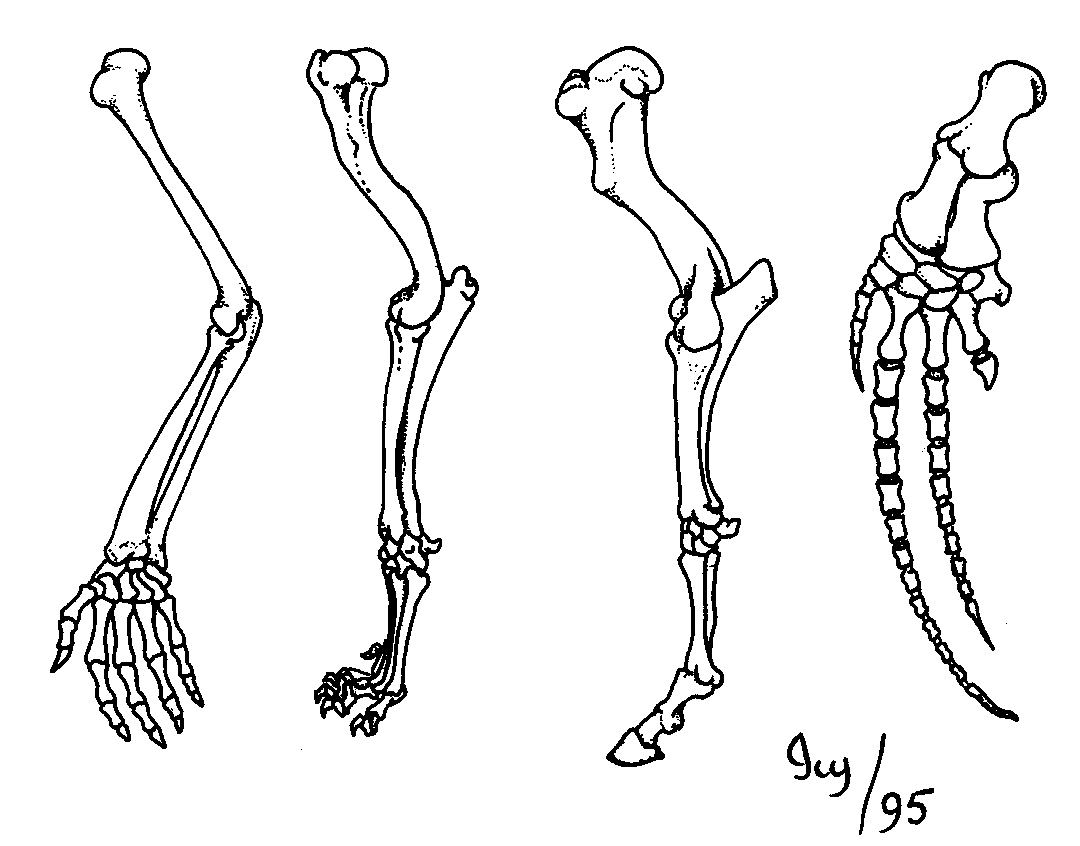
Structures with the same parts have different functions. This suggests that organisms
a)
are the same species
b)
share a common ancestry
c)
are the same organisms
d)
are have varations across species
55.

What is the middle period in the Mesozoic era?
a)
Mississippian
b)
Jurassic
c)
Ordovician
d)
Mesozoic
56.
Which era lasted the longest?
a)
Cenozoic
b)
Mesozoic
c)
Paleozoic
d)
Mrs. Alford's Science Class
57.

Based on the illustration, most of Earth's history occurs in the...
a)
Cenozoic Era
b)
Mesozoic Era
c)
Paleozoic Era
d)
Precambian Time Span
100 %

