
 Worksheets
Matter $ Properties of the Matter
Total questions: 61
Worksheet time: 1hrs 2mins
Name
Class
Date
1.
Something that takes up space and has mass.
a)
volume
b)
matter
c)
mass
d)
density
2.

Orange juice is an example of a ....
a)
solid
b)
liquid
c)
gas
3.

Which state of matter has particles that are tightly packed?
a)
liquid
b)
gas
c)
solid
4.

Substance that fills its container but will not "spill" into more space unless more of the substance is added...
a)
solid
b)
liquid
c)
gas
5.

Substance with a DEFINITE volume, but NO definite shape...
a)
solid
b)
liquid
c)
gas
6.

Substance with a DEFINITE shape and DEFINITE volume...
a)
solid
b)
liquid
c)
gas
7.

Substance with NO definite volume or shape...
a)
solid
b)
liquid
c)
gas
8.
Type of matter made of two or more elements...
a)
element
b)
mixture
c)
compound
9.

True or False: Ice cubes and water are made up of the same atoms (hydrogen and oxygen).
a)
True
b)
False
10.

A pure substance containing only one kind of atom.
a)
element
b)
mixture
c)
compound
11.
What are compounds?
a)
Substances made of one or more types of elements.
b)
Substances made of one or more types of neutrons.
c)
Substances made of one or more types of nuclei.
d)
Substances made of one or more type of electron.
12.
What are elements?
a)
Nitrogen
b)
Oxygen
c)
Matter made of one type of atom
d)
Matter made of many types of atoms.
13.
The States of Matter are:
a)
Solid Liquid Grass
b)
Solid Liquid Gasp
c)
Solid Liquid Gap
d)
Solid Liquid Gas
14.
Which of the following is NOT an example of matter?
a)
Rocks
b)
Minerals
c)
Oxygen
d)
Sound
15.

Air is an example of a ....
a)
solid
b)
liquid
c)
gas
16.
What is a solid?
a)
it keeps its shape and size
b)
it takes the shape of the container that holds it
c)
it has no shape, and spreads to fill the space they are in
d)
it changes with a temperature change
17.

How can you describe this picture?
a)
liquide
b)
gas
c)
solid
18.

How can you describe this picture?
a)
liquid
b)
solid
c)
gas
19.
Which state of matter has particles that are tightly packed?
a)
liquid
b)
gas
c)
solid
20.

Ice is an example of a ....
a)
gas
b)
solid
c)
liquid
21.

Which state of matter has particles that are very loose?
a)
solids
b)
liquids
liquids
liquids
c)
gases
gases
gases
22.

Which one is a liquid?
a)
a
b)
b
c)
c
23.

Which one is a solid?
a)
a
b)
b
c)
c
24.

Which one is a gas?
a)
a
b)
b
c)
c
25.

The difference between elements and compounds is that...
a)
elements can be separated by physical means and compounds cannot.
b)
elements cannot be separated by physical means and compounds can.
c)
elements contain only one kind of atom and compounds contain more than one kind of atom.
d)
elements contain more than one kind of atom and compounds contain only one kind of atom.
26.

Which of the following is not a compound?
a)
HCl
b)
Cl
c)
NaCl
d)
CO2
27.

Which of the following represents an element?
a)
H2O
b)
H2
c)
NaCl
d)
CaCO3
28.

Is salt (NaCI) a compound or a element
a)
compound.
b)
element.
29.

An element is a
a)
pure substance.
b)
compound.
c)
mixture.
d)
molecule.
30.
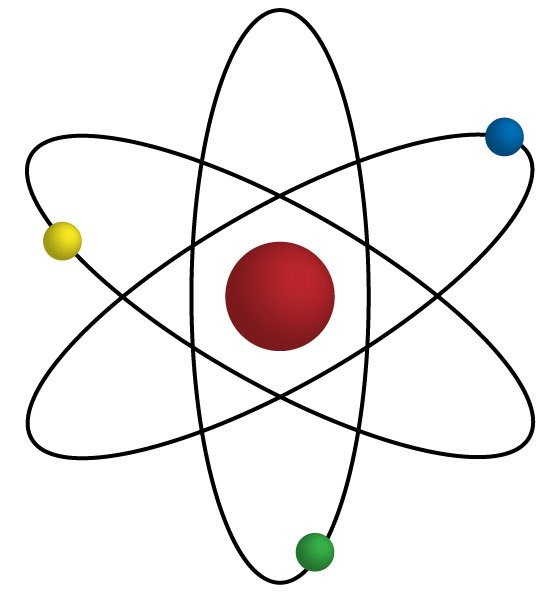
What are the 3 particles that make-up the atom?
a)
protons, neutrons, and isotopes
b)
neutrons, isotopes, and electrons
c)
positives, negatives, and electrons
d)
protons, neutrons, and electrons
31.

All matter is made of what
a)
energy.
b)
atoms .
c)
electrons .
d)
compounds.
32.

Anything that has mass and takes up space.
a)
energy
b)
matter
c)
molecules
d)
atoms
33.

This is formed when two or more atoms combined.
a)
atom
b)
compound
c)
molecule
d)
element
34.

Gasses do not have a shape or volume of their own. You cannot see most gasess.
a)
True
b)
False
35.
Homogeneous mixtures...
a)
Have a uniform composition. Once the diferent components are mixed, they cannot be identified or separated from each other
b)
Have an irregular composition. They are formed by two or more elements that do not combine with each other. The different components maintain their characteristics.
36.
Heteregoneous mixtures...
a)
Have a uniform composition. Once the diferent components are mixed, they cannot be identified or separated from each other
b)
Have an irregular composition. They are formed by two or more elements that do not combine with each other. The different components maintain their characteristics.
37.

Mass measueres the amount of matter in an object
a)
True
b)
False
38.

Volume is the amount of space that matter takes up
a)
True
b)
False
39.
What is matter?
a)
Volume of an object
b)
Anything that has mass and takes up space
c)
Mass of an object
d)
Space of an object
40.
Which state of matter takes the shape of its container?
a)
solid
b)
gas
c)
liquid
41.
Texture, color, mass, and volume are ways you can measure _____________.
a)
chemical properties
b)
physical properties
42.
Water, Salt, and Rust are examples of
a)
elements
b)
metals
c)
compounds
43.
What is the amount of matter in an object?
a)
mass
b)
weight
c)
volume
44.

What type of substance is shown in the picture below?
a)
compound
b)
mixture
c)
element
45.

What type of substance is shown in the picture?
a)
element
b)
compound
c)
mixture
46.

Which physical property is measured in liters?
a)
color
b)
length
c)
mass
d)
volume
47.

Water in its solid form is _____________.
a)
a vapor
b)
ice
c)
a liquid
d)
boiling
48.

Which statement about atoms is true?
a)
They are all the same
b)
All substances are made of just one kind
c)
You can see them with your eyes
d)
They are too small to be seen with an ordinary microscope
49.

One hot summer, you remember you left a cup of water outside. A few weeks later, you saw that the cup was empty and you remember the cup having water. What happened to the water?
a)
It evaporated
b)
It underwent deposition
c)
It melted
50.
A student was asked to help pass out cups of hot chocolate to two other students. A teacher poured the steaming liquid into cups. Once cup was made of stainless steel and the other was made of thick plastic. As the student walked across the room, he suddenly put one of the cups on a desk and exclaimed "Ouch". Which cup did he put down and why?
a)
He put down the plastic cup because the contents were spilling everywhere.
b)
He put down the steel cup because it was conducting thermal energy from the liquid to his hand.
c)
He put down the steel cup because it was insulating thermal energy from the liquid to his hand.
d)
He put down the plastic cup because it was insulating thermal energy from the liquid to his hand.
51.
Which of the following is a heterogenous mixture?
a)
copper wire
b)
salt water
c)
paint
d)
carbon dioxide
52.
What is a mixture?
a)
a combination of elements to make a new substance
b)
a chemically combined substance
c)
a combination of substances where new substances are formed through a reaction
d)
a combination of substances in which the atoms of the substance do not chemically combine
53.
This is made up of one or more of kind of the SAME kind of atom
a)
Element
b)
Mixture
c)
Compound
d)
Matter
54.
A homogeneous mixture has the same composition of particles throughout.
a)
True
b)
False
55.
What is matter?
a)
A source of energy that makes food for plants.
b)
Anything that has mass and takes up space.
c)
The green pigment in leaves that captures energy of sunlight.
d)
What does it matter?
56.
The amount of space something takes up
a)
density
b)
volume
c)
mass
d)
matter
57.
Shape is a ____ that helps identify an object.
a)
physical property
b)
chemical property
c)
mass
d)
matter
58.
Iron + oxygen = rust is an example of a ___________.
a)
physical property/change
b)
chemical property/change
c)
mass
d)
volume
59.
A watermelon has more matter than a grape, so it has more
a)
mass
b)
eat
c)
solid
d)
greater
60.
In which state of matter are the particles farthest apart?
a)
Solid
b)
Liquid
c)
Gas
61.
In which state of matter are the particles closest together?
a)
Solid
b)
Liquid
c)
Gas
100 %

