wayground logo

Free Printable Worksheets

NEW

Font size

S
M
L
XL
Worksheets

NTSE BIOLOGY

Total questions: 60

Worksheet time: 33mins

Name
Class
Date
1.

The muscular tissue which function throughout the life

continuously without fatigue is

a)

skeletal muscle

b)

cardiac muscle

c)

smooth muscle

d)

voluntary muscle

2.

Voluntary muscles are found in

a)

alimentary canal

b)

limbs

c)

iris of the eye

d)

bronchi of lungs

3.

Bone matrix is rich in

a)

fluoride and calcium

b)

calcium and phosphorus

c)

phosphorus and potassium

d)

calcium and potassium

4.

Which of the following helps in repair of tissue and fills up the space inside the organ?

a)

tendon

b)

adipose tissue

c)

areolar tissue

d)

cartilage

5.

Fats are stored in human body as

a)

cuboidal epithelium

b)

adipose tissue

c)

bones

d)

cartilage

6.

Cartilage is not found in

a)

nose

b)

ear

c)

kidney

d)

larynx

7.

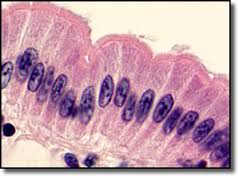
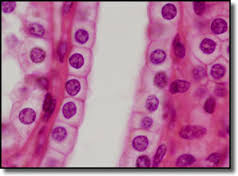
What type of epithelial tissue is in the picture?

a)

Squamous

b)

Cuboidal

c)

Columnar

d)

Transitional

8.

What type of epithelial tissue is in the picture?

a)

Squamous

b)

Cuboidal

c)

Columnar

d)

Transitional

9.

Which of the following projects a picture of a cuboidal epithelial tissue?

a)
b)
c)
d)
10.

The cells present in bone are called....

a)

Red blood cells

b)

Platelets

c)

Monocytes

d)

Osteocytes

11.

The connective tissue that connects bones at the joints is...

a)

Cartilage

b)

Bone

c)

Ligament

d)

Both cartilage and bone

12.
What is the correct order of organization
a)
tissues-cells-organs-organ systems-organism
b)
cell-tissue-organs-organ systems-organism
c)
organism-cells-tissues-organ systems-organism
d)
tissues-cells-organs-organ sytems-organism
13.

This name means that there are multiple layers of cells

a)

Simple

b)

Stratified

c)

Columnar

d)

Pseudostratified

14.

Which of the following is NOT a function of epithelial tissues?

a)

covering exposed surfaces

b)

lining internal passageways

c)

producing glandular secretions

d)

contracting to produce movement

15.

Which connective tissue is shown on the picture?

a)

Ligament

b)

Tendon

c)

Bone tissue

d)

Cartilage

16.

This type of muscle has no striations and is involuntary, which means that we cannot consciously control it.

a)

skeletal

b)

smooth

c)

cardiac

17.
Nervous tissue
a)
Tissue that is responsible for lining, covering, and glandular tissue
b)
Tissue responsible for protecting, supporting, and binding together other body tissues
c)
Tissues that contracts and shortens to produce movement
d)
Tissue that receives and conducts electrochemical impulses from one part of the body to another
18.
Identify the part of the neuron
a)
axon
b)
axon terminal
c)
dendrite
d)
Node of Ranvier
19.
This tissue carries nutrients, waste, respiratory gases, and many other substances throughout the body.
a)
Bone
b)
Cartilage
c)
Blood
d)
Adipose
20.

Label A,B,C

a)

A-Striated, B-Smooth , C-Cardiac

b)

A-Cardiac, B-Striated , C-Smooth

c)

A-Striated, B-Cardiac , C-Smooth

d)

A-Smooth, B-Cardiac , C-Striated

21.

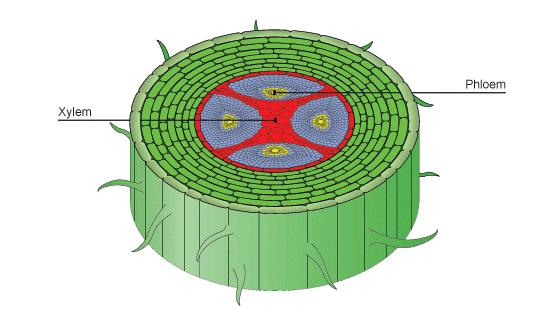
Specific type of plant tissue that transports water and minerals from the roots, through the stems, to leaves

a)

vascular plant

b)

nonvascular plant

c)

xylem

d)

phloem

22.

Specific type of plant tissue that transports food (sugar) made in the leaves to the entire plant

a)

vascular plant

b)

nonvascular plant

c)

xylem

d)

phloem

23.

Other than transporting water, what is a function of xylem?

a)

making food

b)

transporting food

c)

helping support the plant

d)

catching light

24.

The flexibility in plants is due to a tissue called

a)

parenchyma

b)

chlorenchyma

c)

collenchyma

d)

sclerenchyma

25.

Sieve tubes and companion cells are present in

a)

xylem

b)

phloem

c)

cambium

d)

cork

26.

The size of the stem increases in the width due to

a)

apical

b)

intercalary

c)

lateral

d)

vascular bundle

27.

Xylem and phloem are examples of

a)

epidermal tissue

b)

connective tissue

c)

protective tissue

d)

vascular tissue

28.

A tissue whose cells are capable of dividing and re-dividing is called

a)

complex tissue

b)

permanent tissue

c)

connective tissue

d)

meristematic tissue

29.

The only dead cells in phloem

a)

companion

b)

sieve

c)

phloem fibres

d)

phloem parenchyma

30.

Packaging tissue

a)

parenchyma

b)

collenchyma

c)

xylem

d)

phloem

31.

The nuclei of meristematic cells are

a)

small

b)

large

c)

medium sized

d)

no nucleus

32.

Which of the following is an undifferentiated embryonic tissue found in the active growth regions of plants such as tips of roots and stems?

a)

Parenchyma tissue

b)

Collenchyma tissue

c)

Meristematic tissue

d)

Permanent tissue

33.
What is a tissue
a)
A group of cells that share a common goal
b)
a tissue that has a function
c)
A group of cells that share a common function, structure or both
d)
A group of cells
34.

What type of ground tissue is this?

a)

Parenchyma

b)

Schlerenchyma

c)

Collenchyma

35.

What type of ground tissue is this?

a)

Parenchyma

b)

Collenchyma

c)

Schlerenchyma

36.
What type of cells give the edge of this celery flexible support?
a)
Parenchyma
b)
Sclerenchyma
c)
Collenchyma
37.
What type of cells are shown here? Note:  These are alive at maturity.
a)
Parenchyma
b)
Sclerenchyma
c)
Collenchyma
38.
which tissue provide support and mechanical strength to the plant?
a)
parenchyma tissue
b)
sclerenchyma tissue
c)
xylem tissue
d)
collenchyma tisssue
39.
which of this function not belongs to parenchyma tissue?
a)
carries out photosynthesis 
b)
stores food materials such as starch
c)
absorption of water and mineral
d)
provides support to the plants
40.
which of this tissues support the young plants and woody plants?
a)
collenchyma tissue
b)
parenchyma tissue
c)
sclerenchyma tissue
d)
xylem tissue
41.
This tissue carries nutrients, waste, respiratory gases, and many other substances throughout the body.
a)
Bone
b)
Cartilage
c)
Blood
d)
Adipose
42.
Commonly known as fat. Forms the subcutaneous layer beneath skin.
a)
Blood
b)
Bone
c)
Cartilage
d)
Adipose
43.
Attach muscles to bones
a)
Tendons
b)
Ligaments
44.
This type of dense connective tissue connects bone to bone at joints 
a)
Tendons
b)
Ligaments
45.

Which type of tissue supports and protects body structures as well as contains inorganic calcium salts?

a)

areolar

b)

hyaline cartilage

c)

bone

d)

dense irregular

46.

The blood cells responsible for clotting are

a)

erythrocytes (red blood cells).

b)

leukocytes (white blood cells).

c)

thrombocytes (platelets).

d)

chondrocytes.

47.

Blood plasma is?

a)

The white cells in the blood

b)

Pale yellow fluid

c)

Platelets

d)

Substance they use to clone people

48.
a)

Reticular

b)

Blood

c)

Adipose

d)

Loose

49.
a)

blood

b)

Hyaline Cartilage

c)

bone

d)

Adipose

50.
Which of the following is NOT a type of connective tissue?
a)
Bone
b)
Cartilage
c)
Skin
d)
Blood
51.
Which of the following is not one of the four tissue types? 
a)
Blood
b)
Connective
c)
Epithelial
d)
Nervous 
52.
Where is epithelial tissue found?
a)
glands
b)
covering body surfaces
c)
lines organs
d)
all of the above
53.
Which tissue is this?
a)
Simple Squamous
b)
Stratified Squamous
c)
Simple cuboidal
d)
Pseudostratified columnar
54.
Identify:
a)
Columnar
b)
Cuboidal
c)
Pseudostratified
d)
Transitional
55.
Identify:
a)
Pseudostratified
b)
Smooth Muscle
c)
Transitional
d)
Stratified Squamous
56.
Identify:
a)
Smooth Muscle
b)
Columnar
c)
Transitional
d)
Pseudostratified
57.
Identify:
a)
Columnar
b)
Cuboidal
c)
Transitional
d)
Simple Squamous
58.
Identify:
a)
Pseudostratified
b)
Simple cuboidal
c)
Transitional
d)
Simple Squamous
59.
Identify:
a)
Smooth Muscle
b)
Columnar
c)
Transitional
d)
Pseudostratified
60.
Identify:
a)
Smooth Muscle
b)
Columnar
c)
Transitional
d)
Pseudostratified