

wayground logo

Free Printable Worksheets

NEW

Font size

S
M
L
XL
Worksheets

Cell Theory

Total questions: 18

Worksheet time: 11mins

Name
Class
Date
1.

Who would have say;


“Look at these tiny organisms under my microscope! I am going to call them animalcules.”

a)

Zacharias Janssen

b)

Robert Hooke

c)

Anton van Leeuwenhoek

d)

Rudolph Virchow

2.

Who would have say;


"These spaces in this cok look like little cells."

a)

Zacharias Janssen

b)

Robert Hooke

c)

Theodore Schwann

d)

Anton van Leeuwenhoek

3.

Who would have say;


"Hey son! Come and see my new invention. I am going to call it a microscope."

a)

Zacharias Janssen

b)

Robert Hooke

c)

Anton van Leeuwenhoek

d)

Matthias Schleiden

4.

Who would have say;


"Cells do not magically appear. Cells come from pre-existing cells."

a)

Zacharias Janssen

b)

Theodore Schwann

c)

Matthias Schleiden

d)

Rudolph Virchow

5.

Cells are made from other cells.


Which one is not related with that statement?

a)

cells come from pre existing cells.

b)

Cells divide to make new cells.

c)

Cell respond and produce energy.

6.

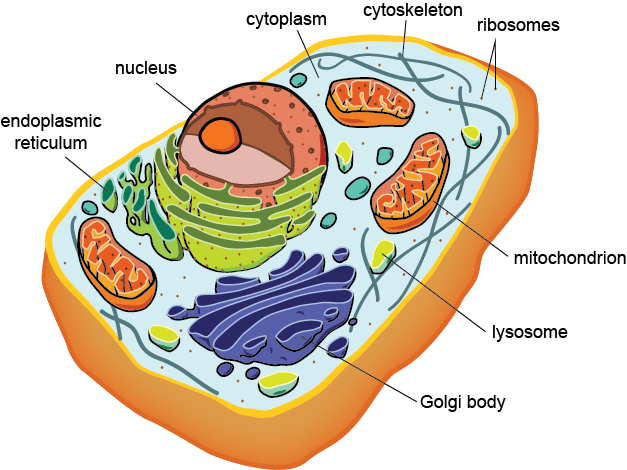
What is the first thing that the cell theory states?

a)

All living things are composed of cells.

b)

Cells are the basic unit of structure and function in living things.
c)

All cells are produced from other cells.

7.

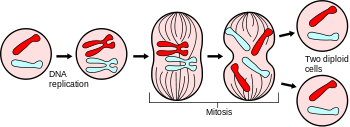
What is the third(last) thing that the cell theory states?

a)

All living things are composed of cells.

b)

All cells are produced from other cells.

c)

Cells are the basic unit of structure and function in living things.
8.
Which of the following statements is not part of the cell theory?
a)
Cells are the basic unit of structure and function in all living things.
b)
All cells are produced from other cells.
c)
Only animal cells are composed of cells.
d)
All living things are composed of cells.
9.
What structures distinguish a plant cell from an animal cell?
a)
Plant cells have cell walls and ribosomes.
b)
Plant cells have cell walls and chloroplasts.
c)
Plant cells have chloroplasts and ribosomes.
d)
Plant cells have chloroplasts and mitochondria.
10.
When cells are damaged, new cells are created by cell division. How does the cell theory support this fact?
a)
It states that all cells have a nucleus which divides.
b)
It states that all living things are made up of one or more cells.
c)
It states that cells come from previously existing cells.
d)
 It states that the basic units of structure and function are cells.
11.
Which of the following statements is not part of the cell theory?
a)
Cells are the basic unit of structure and function in all living things.
b)
All cells are produced from other cells.
c)
Only animal cells are composed of cells.
d)
All living things are composed of cells.
12.
Which scientist did NOT contribute to the cell theory?
a)
Anton Van Leeuwenhoek
b)

Robert Hooke
c)
Albert Einstein 
d)

Matthias Schleiden
13.
Who looked at cork and named the cell?
a)
Robert Hooke
b)
Van Leeuwenhoek
c)
Robert Brown
d)
Francesco Redi
14.
The ___ is the basic unit of sturucture and function of organisms
a)
atom
b)
cell
c)
matter
d)
all other answers are correct
15.
Robert Hooke, Anton van Leeuwenhoek, Theodor Schwann, Rudolf Virchow, and Matthias Schliden were all responsible for what theory?
a)
The Theory of Gravity
b)
The Theory of Relativity
c)
The Cell Theory
d)
The Theory of Continental Drift
16.
Which of the following is NOT a cell theory.
a)
All non-living things are made of cells
b)
All cells come from pre-existing cells
c)
Cells are the basic unit of structure and function of all living things
17.
Which of the following is NOT one of the basic points of Cell Theory?
a)
All living things are made of cells.
b)
The cell is the smallest living thing that can perform all the functions of life.
c)
Cells are too small to see without a microscope.  
d)
All cells must come from pre-existing cells.
18.
Cells are often called "the ____ of life."
a)
bread
b)
road map
c)
building blocks
d)
meaning
