
 Worksheets
From Cells to Organisms
Total questions: 39
Worksheet time: 25mins
Name
Class
Date
1.

What tool do you use to view the cells?
a)
metric ruler
b)
centrifuge
c)
microscope
d)
telescope
2.
Rocks are not living because
a)
they never move
b)
they aren't needed for humans
c)
they are not made of cells
d)
they don't break down
3.
What is the basic structural and functional unit of all living things?
a)
atom
b)
cell
c)
molecule
d)
human
4.
An organism made of one cell is called
a)
unicellular organism
b)
multicellular organism
5.

What is one way in which all living things on Earth are alike?
a)
All living things have hair.
b)
All living things are made of cells and come from other cells.
c)
The cells of all living things have chloroplast.
d)
All living things can move.
6.
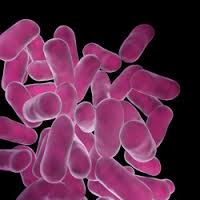
How are unicellular organisms different from multicellular organisms?
a)
There are no differences.
b)
They are made of many cells.
c)
They are only classified as prokaryotes.
d)
They are made of only one cell.
7.

I am the outer most layer of an animal cell. What am I?
a)
cell wall
b)
nucleus
c)
cell membrane
d)
cell skin
8.
The site of photosynthesis
a)
ribosome
b)
mitochondria
c)
chloroplast
d)
nucleus
9.

The ___________ is the basic unit of life
a)
organ
b)
cell
c)
atom
d)
tissue
10.
When many organ systems work together it can form...
a)
organ
b)
cells
c)
organ system
d)
organism
11.

This is a example of........
a)
organ system
b)
cells
c)
organ
d)
tissue
12.

This is a example of ........
a)
cell
b)
organ system
c)
organ
d)
tissue
13.
The lungs and the kidneys are examples of
a)
cells
b)
organs
c)
tissues
d)
organ systmes
14.
Which organelle is only found in a plant cell?
a)
nucleus
b)
chloroplast
c)
mitochondria
d)
cell membrane
15.

Directs all cell activities through the DNA located there.
a)
Lysosomes
b)
Nucleus
c)
ribosomes
d)
Mitochondria
16.

Which part of the cell is often called "the brain of the cell"?
a)
nuclear membrane
b)
endoplasmic reticulum
c)
nucleus
d)
mitochondria
17.
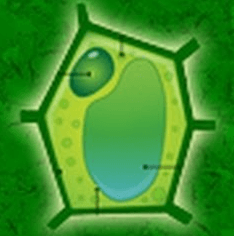
A rigid layer that lies outside the cell's membrane is...
a)
Cytoskeleton
b)
Cilia
c)
Cell Wall
d)
Flagella
18.
A group of tissues that work together to perform a similar function is called_____. (Examples include the heart, lungs or stomach)
a)
cells
b)
tissues
c)
organs
d)
organ system
19.
A group of cells that have similar functions? Examples are nervous, epithelial, muscle and connective
a)
cells
b)
tissues
c)
organs
d)
atoms
20.
Organs that work together to perform a related function is called _____________?
a)
cells
b)
tissues
c)
organ system
d)
organs
21.
Controls what enters and leaves the cell
a)
Mitochondria
b)
Cell Membrane
c)
Cell Wall
d)
Nucleus
22.

What would happen to the plant cell without the chloroplasts?
a)
There wouldn't be an organelle that performs photosynthesis
b)
There wouldn't be an organelle that serves as the resevoir for water and waste
c)
There wouldn't be an organelle that regulates what comes in and out of the cell
d)
They wouldn't be an organelle that makes necesary proteins
23.

According to cell theory, where did this cell come from?
a)
another living cell
b)
energy from sun
c)
a multicellular organism
d)
the nonliving environment
24.
Which of the following is the smallest unit of life that can carry out all life functions?
a)
the mitochondria
b)
the vacuoles
c)
the nucleus
d)
the cell
25.
What is the function of the cell nucleus found in both plant and animal cells?
a)
to produce energy
b)
to control cell activity
c)
to remove waste products
d)
to allow molecules to enter the cell
26.
What organelles are only found in PLANT cells
a)
lysosomes & centrioles
b)
cell wall & chloroplasts
c)
nucleus & nucleolus
d)
mitochondria & ribosomes
27.
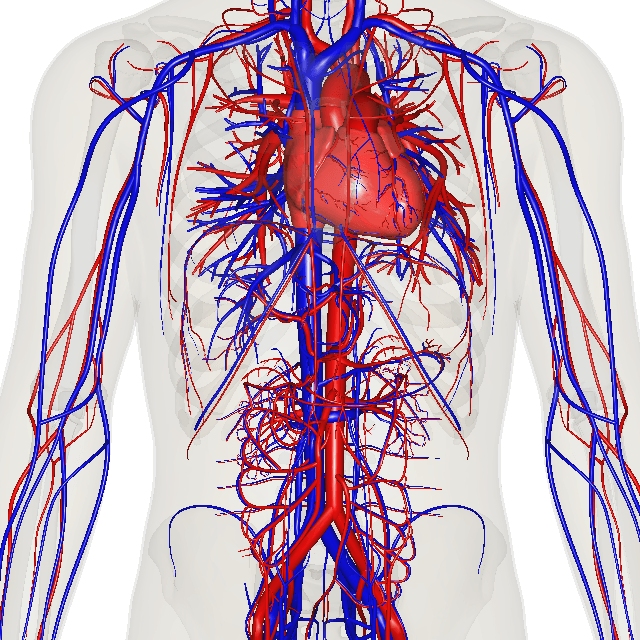
This is a example of ........
a)
organ
b)
organ system
c)
tissue
d)
cell
28.
Which level of organization is the least specialized yet the most numerous in an organism?
a)
tissue
b)
cell
c)
organ
d)
organ system
29.
What is function?
a)
Function refers to the parts of an organism like cells, tissues, organs.
b)
Function refers to the location of the cells, tissues, and organs in the body.
c)
Function refers to the jobs of the structures in an organism.
d)
Function refers to the levels of organization in an organism.
30.
Which of the following systems would allow your arms to move?
a)
excretory and digestive
b)
muscular and skeletal
c)
muscular and excretroy
d)
excretory and skeletal
31.
How many cells are needed for a unicellular organism to perform all necessary life functions?
a)
one
b)
two
c)
thousands
d)
trillions
32.
Multicellular organism function more effciently than unicellular organisms because the cells are
a)
identical
b)
smaller
c)
specialized
d)
larger
33.
What body system carries blood throughout the body?
a)
Digestive system
b)
Circulatory system
c)
Nervous system
d)
Skeletal system
34.
The activity a cell performs is its?
a)
Differentiation
b)
Function
c)
System
d)
Structure
35.
Which of the following is NOT a function of the skeletal system?
a)
Protect internal organs
b)
provide structure and support
c)
remove waste
d)
help allow movement
36.

A type of tissue that holds bones together at the joint
a)
tendons
b)
cartilage
c)
bone marrow
d)
ligaments
37.

The joint found in your shoulder and hip, that allows the most kind of movement is called a ________________ joint.
a)
hinge
b)
ball and socket
c)
gliding
d)
pivot
38.
Skeletal muscles are responsible for which of the following?
a)
Movement of the body
b)
Movement of the heart
c)
Movement of the ligaments
d)
Movement of the extremities
39.
This type of muscle tissue is found in the walls of hollow organs such as the stomach
a)
Skeletal
b)
Cardiac
c)
Smooth
100 %

