
 Worksheets
Ch 17 Quiz: Evolution
Total questions: 28
Worksheet time: 21mins
What is suggested by the similarity of early embryos of different species of vertebrates?
no evolutionary relationships between the groups
recent common ancestry
similar environments in the past
evolution from a distant common ancestor

Some organisms that share a common ancestor have features that have different functions, but similar underlying structures. These are known as
vestigial structures
analogous structures
homologous structures
fossil structures


What is an inheritable change in an organism that allows for it to survive in its environment?
homologous
vestigial
variation
adaptation
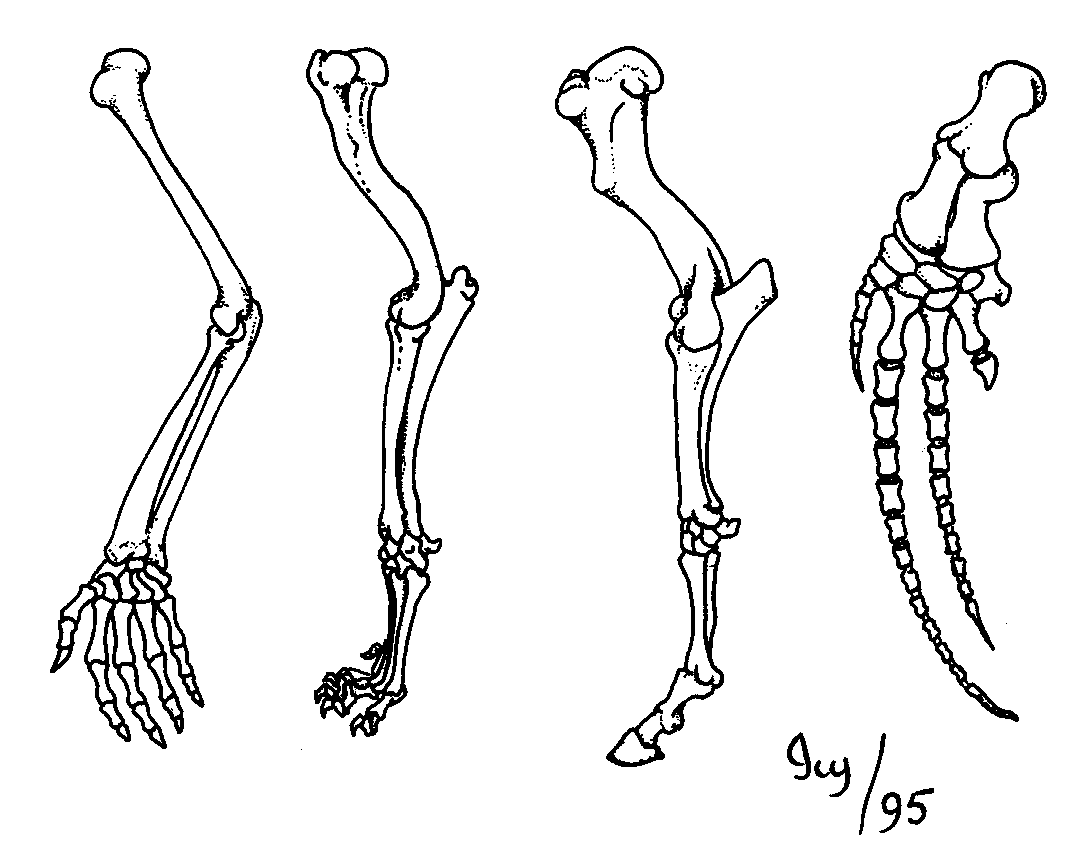
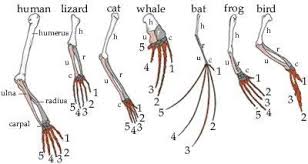
Homologous structures demonstrate
more recent common ancestor
similar underlying structure
similar function
change through use and disuse
adaptation to fill a similar niche

Study of similarities in development of various organisms to show a common ancestor
natural selection
embryology
speciation
evolution

Structures that have the same function but different structures are...
homologous structures
analogous structures
vestigial structures
embryology

What is the purpose of embryology?
to determine common ancestry
to determine the age of fossils
more closely related species share similar developmental plan
to figure out the genetic code of organisms
Lamarck's idea, incorrect, said traits an organism develops during its own lifetime will be passed on to offspring.
Inheritance of acquired characteristics or traits
artificial selection
fitness
fossil record
Organism's ability to survive and produce fertile offspring
adaptation
evolution
homologous structure
fitness
Humans selecting which animals/plants were allowed to reproduce based on the traits they possess. Most crops and livestock are produced this way.
analogous structure
artificial selection
vestigial structure
fitness
The finches of the Galapagos islands differ in what way?
size of body
location on specific islands
coloration
beak shape
Scientists that are credited with the idea that geological forces shaped the Earth and must have taken millions of years? Gave Darwin the idea that the Earth could be very old.
Hutton
Mendel
Malthus
Lamarck
Lyell
What scientist is credited with the idea that human population was growing rapidly and in the future there would not be enough food and resources?
Hutton
Lyell
Malthus
Lamarck
The ability of organisms survive to pass traits along to offspring.
Evolution
Survival of the Fittest
Extinction
Homologous
Which of the following are correct about Darwin's Voyage?
traveled to the Galapagos Islands
Published findings immediately
wrote Origin of Species
used DNA evidence in his book
saw similar species that had been changed to fit specific environments
Which are correct about the term ADAPTATION:
heritable -can be passed to offspring
created through selective use
present in DNA
can be changed during an organism's lifetime to make them more fit
organisms that have them are more likely to survive and pass them to next generation
Which of the following is correct about the tortoises Darwin observed?
they most likely share a common ancestor
they are not very closely related
they have adaptations based on the food source on each island
on the dryest island, the turtles with the longest necks survived and reproduced
the shape of their shells changed because one set turtles kept stretching for high branches throughout their lifetimes.
Which of the following was evidence Darwin used in formulating his theory:
Fossils
DNA
Biogeography
Genetics
Vestigial and Homologous Structures

