wayground logo

Free Printable Worksheets

Font size

S
M
L
XL
Worksheets

3rd 9 Week Review

Total questions: 123

Worksheet time: 2hrs 41mins

Name
Class
Date
1.
When limestone is heated and squeezed, it forms:
a)
Granite
b)
Gneiss
c)
Basalt
d)
Marble
2.
The remains of living things that died long ago are often found in what type of rock?
a)
igneous rocks
b)
sedimentary rock
c)
metamorphic rock
d)
all rocks
3.
Which of the following processes changes sedimentary rock to metamorphic rock?
a)
melting and solidification
b)
compression and cementing
c)
extrusion and intrusion
d)
metamorphism
4.
The cooled and hardened magma from volcanoes form what rocks?
a)
igneous
b)
sedimentary
c)
metamorphic 
d)
fossils
5.
What property of rock is being observed when looking for what color is left after scratching it on a ceramic plate?
a)
hardness
b)
color
c)
cleavage
d)
streak
6.
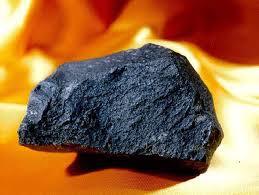
This rock formed when lava cooled very quickly on Earth's surface. What specific type of rock is it?
a)
Extrusive Igneous Rock
b)
Intrusive Igneous Rock
c)
Non-Foliated Metamorphic Rock
d)
Biochemical Sedimentary Rock
7.
What property of rock is being observed when looking for whether or not it scratches other minerals?
a)
cleavage
b)
luster
c)
hardness
d)
streak
8.
What property of rock is being observed when looking for how easily it breaks or splits evenly?
a)
cleavage
b)
luster
c)
hardness
d)
streak
9.
Classifying rocks as igneous, sedimentary, or metamorphic is based on 
a)
their age
b)
their size
c)
their hardness
d)
how they are formed
10.
Hot, molten rock inside the earth is called ...
a)
lava
b)
magma
c)
igneous rock
d)
minerals
11.
Which statement is true about the rock cycle?
a)
Magma must be weathered before it can change to metamorphic rock
b)
sediment must be compressed and cemented before it can change to sedimentary rock
c)
sedimentary rock must melt before it can change to metamorphic rock 
d)
metamorphic rock must melt before it can change to sedimentary rock
12.
Large rocks can be broken down into smaller rocks by wind and water.  These small rocks can break down into very tiny pieces called _______.
a)
minerals
b)
pebbles
c)
sediments
d)
chalk
13.
A never ending process by which rocks are changed from one type to another.  
a)
weathering and erosion
b)
rock cycle
c)
heat and pressure
d)
pressing and cementing
14.
If a mineral is not scratched by corundum, what is its hardness rating?
a)
1
b)
4
c)
5
d)
10
15.
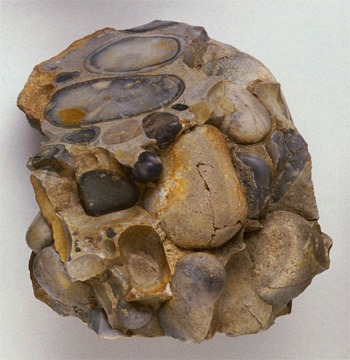
This rock formed when bits of other rocks became pressed into a solid. What type of rock is it?
a)
Sedimentary Rock
b)
Metamorphic Rock
c)
Igneous Rock
16.
Limestone formations in the desert of Death Valley, California tell you that:
a)
time has not changed in the area
b)
oceans once covered the area
c)
volcanoes once covered the area
d)
mountains once covered the area
17.
If you were a geologist, and you found eclogite and bluechist on the ocean floor, what could you deduce about the area?
a)
That it is cold
b)
That is is a subduction zone
c)
That it is a mountain range
d)
That it is volcanic
18.
Can a penny scratch fluorite?
a)
Yes 
b)
No 
19.
What is a Mineral?
a)
A nonliving solid material that has a definite chemical make up and is found in Earth's outermost layer.
b)
A measure of how easily a mineral can be scratched.
c)
The way a mineral shines, or reflects light.
20.
Another way to test hardness is...
a)
Mineral scale
b)
Moh's scale
c)
Streak scale
21.
What is a Streak?
a)
The tendency on a mineral to split easily along flat surfaces.
b)
A measure of how easily a mineral can be scratched.
c)
The color of a mineral when it is ground into a powder.
22.
The process by which water, wind, ice, and changes in temperature break down rock into fragments called sediments.
a)
Deposition
b)
Erosion
c)
Weathering
d)
Igneous Rock
23.
The process by which metamorphic rocks are formed...
a)
heat and pressure
b)
compaction and cementation
c)
melting and cooling
24.
A metamorphic rock can become ______.
a)
igneous
b)
metamorphic
c)
sedimentary
d)
all of these
25.
An igneous rock can become ______.
a)
metamorphic
b)
sedimentary
c)
igneous
d)
all of these
26.
The name rock is given when it is broken down into smaller pieces.
a)
texture
b)
weathering
c)
sediment
d)
erosion
27.
A student broke a mineral sample with the tap of a hammer. It broke along flat surfaces. Which property was the student investigating?
a)
Density
b)
Specific gravity
c)
Specific heat
d)
Cleavage
28.
When layers of sediment are packed together, it is known as:
a)
Cementation
b)
crystallizing
c)
intrusive
d)
compaction
29.
Rocks that are formed from tiny shells of marine organisms are called
a)
mudstone
b)
sandstone
c)
peat
d)
limestone
30.
Fossils are formed when an organism 
a)
lies on earth's surface for many years
b)
is quickly covered with sediment and then formed into sedimentary rock over many years
c)
turns into crystals over many years
d)
is preserved in magma
31.
According to the rock cycle, which of the following is NOT true?
a)
Igneous rocks may be squeezed and heated to form metamorphic rocks
b)
sedimentary rocks may be broken down to become igneous rocks
c)
magma may crystallize to become igneous rock
d)
metamorphic rocks may melt to become magma
32.
Two ways to describe types of igneous rocks are _____
a)
Extrusive and Intrusive
b)
Foliated and Non-Foliated
c)
Clastic and Biochemical
d)
Black and Gray
33.
What process is used to form sedimentary rocks?
a)
Lava cools and hardens to form a rock.
b)
Weathering, Erosion, Deposition, Compaction, Cementation
c)
Extreme heat and pressure from inside the Earth turn rocks into new rocks.
d)
Magma trapped under the Earth's surface cools and solidifies.
34.
This rock was formed by smaller pieces of rock that settled at the bottom of a lake millions of years ago. What type of rock is this?
a)
Sedimentary
b)
Igneous
c)
Metamorphic
35.
This rock was found near the mouth of a volcano. What type of rock is this?
a)
Sedimentary
b)
Igneous
c)
Metamorphic
36.
The process in which sediment are fused or glued together.
a)
compaction
b)
deposition
c)
organic rock
d)
cementation
37.
What is deposition?
a)
Dropping off sediment
b)
Movement of sediment
c)
Breaking down of sediment 
38.
When magma cools quickly, what kind of texture does rock have?
a)
coarse grained
b)
large grained
c)
medium grained
d)
fine grained
39.
What kind of metamorphic rock has its minerals grains arranged in planes or bands?
a)
extrustive
b)
foliated
c)
non-foliated
d)
intrusive
40.
process by which new rock is made from old rock
a)
rock 
b)
texture
c)
rock cycle
d)
composition 
41.
rock that cools at the Earth's surface
a)
non-foliated
b)
extrusive igneous rock
c)
strata
d)
intrusive 
42.
How does freezing water cause the weathering of rocks?  The freezing water—
a)
keeps the rocks in place
b)
makes the rocks last longer
c)
expands cracks and breaks rocks
d)
causes rocks to fall in landslides
43.
The process that breaks down rocks and other materials on Earth's surface is called
a)
weathering
b)
erosion
c)
soil conservation
d)
decomposition
44.
How does wind abrasion work?
a)
Sediment is blown off a surface from wind.
b)
Wind-blown sediment strikes a surface.
c)
Wind blows large chunks of rock off a surface.
d)
Sediment falls off of a surface on its own.
45.
What is mechanical weathering?
a)
Process through which rocks are physically broken into smaller pieces.
b)
Rocks are broken down through chemical changes.
c)
Rocks are worn away from acid in plant roots.
d)
Rocks broken down by machinery.
46.
Which type of climate will have faster chemical weathering?
a)
Hot and Wet
b)
Cold and Dry
c)
Hot and Cold
d)
Cold and Wet
47.
During chemical weathering, what can happen to the type of rock that has undergone chemical weathering?
a)
a new rock is produced that is larger than the original rock
b)
a new rock is produced that is the same as the original rock
c)
a new rock is produced that is different from the original rock 
d)
no new rock is created - it is just smaller in size
48.
The diagrams  shows a natural process that weathers rock.
 Which statement best explains why this process results in weathering?
a)
frozen water acts as a solute
b)
water expands when it freezes
c)
the mass of water increases when it freezes
d)
frozen water dissolves most types of rock
49.
Which of the following is an example of mechanical weathering?
a)
Acidic groundwater dissolving limestone
b)
frost wedging
c)
Paper being burned
50.
A marble statue is left exposed to the weather.  Within a few years, the details on the statue have begun to weather away.  This weathering probably is caused by...
a)
oxygen in the air
b)
carbonic acid in rainwater
c)
lichens
d)
abrasion
51.
The natural chemical or physical processes that breaks down rock on Earth's surface.
a)
weathering
b)
erosion
c)
deposition
d)
jackhammering
52.
The process by which water, ice, wind or gravity moves weathered rock and soil from one place to another.
a)
weathering
b)
erosion
c)
deposition
d)
dumptruck
53.
This type of weathering occurs when rock is physically broken down into smaller pieces of rock.
a)
mechanical weathering
b)
chemical weathering
c)
erosion weathering
d)
deposition
54.
These rocks were made smooth by wind blowing smaller rock particles across their surface.  This is an example of:
a)
ice wedging
b)
chemical weathering
c)
acid rain
d)
abrasion
55.
How is mechanical weathering different from chemical weathering?
a)
Chemical weathering happens over much shorter time frame than mechanical weathering.
b)
Chemical weathering changes the chemical composition of rocks; mechanical weathering does not.
c)
Chemical weathering occurs only in tropical climates; mechanical weathering occurs only in cool climates.
d)
Chemical weathering occurs only in the mountains; mechanical weathering occurs only on flat land.
56.
How might a weathered mountain appear different than an unweathered mountain?
a)
Weathered mountain would be taller.
b)
Weathered mountain would be rounder and less jagged.
c)
Weathered mountain would be more jagged and less rounded.
d)
Weathered mountain would have no trees.
57.
Weeds growing into the cracks in a sidewalk and the sidewalk begins to crumble is an example of:
a)
mechanical weathering
b)
chemical weathering
58.
Potholes forming in the road after a cold winter is an example of:
a)
mechanical weathering
b)
chemical weathering
59.
A metal statue slowly turning green after years of being outside is an example of:
a)
mechanical weathering
b)
chemical weathering
60.
Rocks along a riverbed that are smoothed from continuously moving water and sediment rubbing against them is an example of:
a)
mechanical weathering
b)
chemical weathering
61.
A piece of sandstone changing color (from brown to rusty red) from exposure to water and air is an example of:
a)
mechanical weathering
b)
chemical weathering
62.
The formation of stalactites and stalagmites in a cave as water mixed with carbon dioxide creates carbonic acid, which dissolves away the limestone, is an example of:
a)
mechanical weathering
b)
chemical weathering
63.
The formation of large cracks in the face of a mountain from ice wedging is an example of:
a)
mechanical weathering
b)
chemical weathering
64.
Acid rain wearing away the face of a marble gravestone or statue is an example of?
a)
mechanical weathering
b)
chemical weathering
65.
Exposure to rain and oxygen causes the metal minerals in rocks to rust and fall apart.  This is an example of:
a)
mechanical weathering
b)
chemical weathering
66.
Lichens (small green plants) growing on a large boulder release enzymes and other acids that slowly break the rock apart. This is an example of:
a)
mechanical weathering
b)
chemical weathering
67.
Roots grow into cracks of rocks and pry them apart
a)
Chemical
b)
Mechanical
68.
Oxidation produces rust on some rocks with iron.
a)
Chemical
b)
Mechanical
69.
Breaks rocks by ice freezing and thawing.
a)
Chemical
b)
Mechanical
70.
Rock particles wear away rock 
a)
Chemical
b)
Mechanical
71.
This type of weathering occurs when rocks weaken then break down due to chemical changes in the composition of the rock.
a)
mechanical weathering
b)
chemical weathering
c)
erosion weathering
d)
deposition
72.
How might a weathered mountain appear different than an unweathered mountain?
a)
Weathered mountain would be taller.
b)
Weathered mountain would be rounder and less jagged.
c)
Weathered mountain would be more jagged and less rounded.
d)
Weathered mountain would have no trees.
73.

When water enters a lake or other still water, sediment grains settle in which order?

a)

Smallest to largest

b)

Largest to smallest

74.

When water enters a lake or other still water and sediment falls to the bottom, what is that called?

a)

weathering

b)

wedging

c)

Graded bedding

75.

The amount of sediment carried and deposited by running water depends on

a)

The volume of water

b)

gradient of the land

c)

rockiness of the terrain

d)

all of the above

76.

The amount of sediment carried and deposited by running water depends on

a)

The volume of water

b)

gradient of the land

c)

rockiness of the terrain

d)

all of the above

77.

Which substance has the greatest effect on the rate at which rocks weather?

a)

nitrogen

b)

oxygen

c)

water

d)

hydrogen

78.

Root wedging is an example of which type of weathering?

a)

Mechanical weathering

b)

chemical weathering

c)

erosion

d)

mechanical and chemical

e)

chemical and erosion

79.

What force causes rocks and sediment to be moved downhill?

a)

the sun

b)

gravity

c)

earth's internal energy

d)

drought

80.

Oxidation requires which two elements to react?

a)

Iron and hydrogen

b)

Oxygen and hydrogen

c)

Iron and Oxygen

d)

Iron and Carbon dioxide

81.

The process that wears away surface materials and moves them from one location to another is:

a)

Mass movement

b)

erosion

c)

abrasion

d)

deposition

82.

The dropping of sediments by any agent of erosion is called

a)

cirque

b)

outwash

c)

deposition

d)

precipitiation

83.

A large body of flowing water is a

a)

stream

b)

river

c)

ocean

d)

channel

84.

This is what results when oxidation occurs on a metal

a)

leaching

b)

rust

c)

mechanical weathering

85.

Are the Great Smoky Mountains young or old?

a)

Young

b)

Old

86.

If a rock is flat, will it weather faster or slower than a round rock?

a)

Faster

b)

Slower

87.

Will water moving down a steep incline be carrying large pieces of sediment or small?

a)

Large

b)

Small

88.

Which order are the rocks in when looking at graded bedding?

a)

medium, small, large

b)

small, medium, large

c)

large, medium, small

d)

medium, large, small

89.

Which type of climate would weathering occur the slowest?

a)

Hot and humid

b)

cold and humid

c)

cool and dry

d)

hot and dry

e)

moderate

90.
What is the measure of the variety and number of organisms that live in an ecosystem?
a)
Biodiversity
b)
Biodifferentiation
c)
Species
d)
Ecosystem
91.
Which biome is found on the mountain above the tree line?
a)
grassland
b)
deciduous forest
c)
tundra
d)
tropical forest
92.
Which biome, because of its climate, has the largest number of species of plants and animals?
a)
tundra
b)
desert
c)
tropical rainforest
d)
pine forest
93.
One characteristic feature of tundra is that only the surface thaws in the summer and refreezes in the winter, leaving a layer of permanently frozen subsoil.  This characteristic is known as
a)
glaciation
b)
permafrost
c)
crystallization
d)
soilfrost
94.
Which type of trees is found in a temperate forest?
a)
deciduous
b)
evergreen
c)
ginko
d)
palm
95.
Which major biome is home to cacti, mesquite, white thorn, pack rats, small reptiles, and coyotes?
a)
desert
b)
taiga
c)
tundra
d)
grassland
96.
In which biome is Georgia located?
a)
tropical rainforest
b)
temperate rainforest
c)
temperate deciduous forest
d)
alpine forest
97.
Which of the following habitats probably has the greatest number of plant and animal species?
a)
the African savannah
b)
a rainforest in Brazil
c)
a temperate forest in China
d)
a temperate grassland in Kansas
98.
Which biome contains large populations of grazing herbivores, few species of birds, and deep, rich soil?
a)
taiga
b)
tundra
c)
deciduous forest
d)
grassland
99.
This biome contains mostly spruce trees and Douglas firs, which are both evergreen.  The winters are long and cold and the summers are short and rainy.  The soil is very rich.  Moose and elk live here.  This biome is classified as a
a)
taiga
b)
tundra
c)
deciduous forest
d)
temperate forest
100.
The greatest biodiversity on earth is found in the __________ biome.
a)
taiga
b)
grassland
c)
temperate deciduous forest
d)
tropical rainforest
101.
lichens, mosses, grasses, and other low-growing plants are common vegetation in this biome due to the permafrost, low rainfall, and very cold temperatures
a)
Desert
b)
Taiga
c)
Tundra
d)
Grasslands
102.
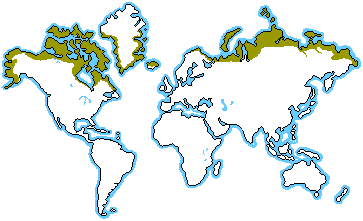
The area of the map shaded in green represents which of the following terrestrial biome
a)
Coniferous Forrest
b)
Deciduous Forrest 
c)
Desert
d)
Tundra
103.
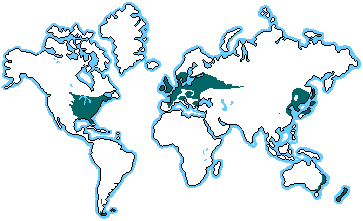
The area of the map shaded in dark blue represents which of the following terrestrial biome
a)
Coniferous Forest
b)
Deciduous Forest
c)
Desert
d)
Tundra
104.
What biome?
a)
Mountains
b)
Tundra
c)
Tropical Rainforest
d)
Temperate Forest
105.
A __________ includes all living and non-living things in an environment. 
a)
population
b)
niche
c)
abitotic
d)
ecosystem
106.
Examples of how humans negatively affect local ecosystems are
a)
Building dams, deforestation (cutting down trees), adding point sources to nearby streams to allow for run-off, building roads and structures, and salting roads.
b)
Creating laws to prohibit fishing from local streams.
c)
Planting trees and other plants to attract native species.
d)
Removing non-native species from the environment.
107.
Which of the following is NOT a factor that we use to distinguish between climate and biomes?
a)
Sunlight
b)
Latitude
c)
Topography
d)
Distance from water
108.
Where on Earth is the most direct sunlight found?
a)
The desert
b)
The tundra
c)
The equator
109.
Which area is going to have more drastic temperature changes?
a)
Albany, GA
b)
Savannah, GA
110.
Biomes are made up of many interrelated:
a)
ecosystems
b)
individuals
c)
climates
111.
What are the surface features of an area called?
a)
latitude
b)
longitude
c)
topography
d)
elevation
112.
Which BEST describes why latitudes closest to the equator have warmer climates?
a)
they are at lower elevations
b)
they receive more solar energy
c)
they are nearer to ocean currents
d)
they get more winds that carry energy in the form of heat
113.
What is the measure of distance in degrees north and south from the equator?
a)
latitude
b)
longitude
c)
elevation
d)
topography
114.
What is the height of an area above sea level?
a)
elevation
b)
topography
c)
latitude
d)
longitude
115.
Which sentence best describes how latitude and temperature are related?
a)
LOWER latitude = COLDER air temperature
b)
HIGHER latitude = COLDER air temperature
c)
HIGHER latitude = WARMER temperatures
116.
Which is not a factor that affects climate?
a)
altitude
b)
latitude
c)
lakes and oceans
d)
living organisms
117.
The average, year-after-year conditions of temperature, precipitation, winds, and cloud in an area are known as its
a)
Climate
b)
Weather
c)
global warming
d)
seasons
118.
The sun’s rays are least direct
a)
near the poles
b)
near the equator
c)
at high altitudes
d)
far from the ocean
119.
Regions that receive less than 25 centimeters of rain annually are called
a)
tundra
b)
savannah
c)
desert
d)
steppes
120.
The ______ the elevation, the ________ the temperature.
a)
higher, colder
b)
lower, worse
c)
lower, colder
d)
higher, warmer
121.
Several factors affect climate, ________ determines the amount of solar energy received, and the prevailing wind belts.
a)
longitude
b)
elevation
c)
latitude
d)
topography
122.
Bodies of water are _______ to heat and hold heat _______ than rocks and soil.
a)
quicker, less
b)
quicker, longer
c)
slower, longer
d)
quicker, longer
123.
When the Northern Hemisphere is tilted away from the Sun, the United States is in ____________________.
a)
Winter
b)
Summer