
 Worksheets
Skeletal and Muscular System
Total questions: 38
Worksheet time: 40mins
Name
Class
Date
1.
attaches bone to bone
a)
tendon
b)
ligament
2.
attaches muscle to bone
a)
tendon
b)
ligament
3.

What is the name for the connector that attaches muscle to bone?
a)
ligament
b)
tendon
c)
patella
d)
string
4.

What is the name for the connector that attaches bone to bone?
a)
ligament
b)
tendon
c)
patella
d)
string
5.
Bone formed by needlelike pieces of bone and lots of space are called
a)
Spongey bone
b)
Cartilage
c)
Compact bone
6.
The skeletal system is composed of what as well as bones?
a)
Joints, ligaments, and tendons
b)
Joints, ligaments, and cartilage
c)
Cartilage, ligaments, and tendons
d)
Ligaments and joints
7.

What do the bones create?
a)
white blood cells
b)
platlets
c)
red blood cells
d)
flying turkeys
8.

The substance inside of bones that make blood cells is called...
a)
ligaments
b)
tendons
c)
bone marrow
d)
compact bone
9.
The Skeletal System does what?
a)
Support your body
b)
Help your body move with muscles
c)
all of the above
d)
protect your organs
10.
many bones form from what?
a)
bones
b)
bone tissue
c)
Cartilage
d)
skin tissue
11.
Which muscle type is found in your stomach, bladder, and intestines?
a)
Skeletal
b)
Smooth
c)
Cardiac
d)
Straight
12.
Which muscles are involuntary?
a)
skeletal
b)
cardiac
c)
smooth
d)
smooth and cardiac
13.
Which types of muscle tissue are voluntary?
a)
Cardiac
b)
Skeletal
c)
Smooth
d)
Cardiac and Smooth
14.
Skeletal muscles are attached to the _________.
a)
Stomach
b)
Lungs
c)
Bones
d)
Involuntary Muscles
15.
Voluntary muscle is
a)
muscle that has to be told when to move
b)
muscle that moves automatically
c)
muscle that needs to be stretched regularly
d)
muscle that makes up the heart and stomach
16.
What is an example of an involuntary muscle?
a)
Heart
b)
Arms
c)
Legs
d)
Shoulders
17.
The cardiac muscle is
a)
Voluntary
b)
Involuntary
18.
What is a voluntary muscle?
a)
You have control over the muscle
b)
You have no control over the muscle
c)
Muscle works automatically
d)
Muscles fuse together
19.
What are the 3 types of muscles?
a)
Cardiac, smooth and skeletal
b)
Cardiac, skeletal, prime
c)
Flexion, extension, smooth
d)
Skeletal, smooth, stringy
20.
What type of muscle are the biceps and triceps that are located in your upper arm?
a)
skeletal
b)
cardiac
c)
smooth
d)
involuntary
21.
When you pull your arm toward your shoulder, your bicep...
a)
Contracts
b)
Extends
c)
Bunches up
d)
Starightens
22.
When you reach for an object, your triceps..
a)
extend
b)
contract
c)
flare out
d)
bend
23.
Joint type that only allows flexion and extension.
a)
Ball and Socket
b)
Hinge
c)
Condyloid
d)
Saddle
24.
Hip and shoulder have examples of this type of joint
a)
ball and socket
b)
condyloid
c)
hinge
d)
gliding
25.
This type of joint allows the your first two vertebrate to rotate as in shaking your head no
a)
condyloid
b)
gliding
c)
pivot
d)
saddle
26.
Carpals and tarsals (flat bones) are examples of this type of joint
a)
condyloid
b)
gliding
c)
hinge
d)
saddle
27.

smooth part of the bone that is hard
a)
Compact bone
b)
Spongy bone
c)
Periosteum
d)
Bone Marrow
28.
Where are blood cells made?
a)
Yellow marrow
b)
Red marrow
c)
Spongy Bone
d)
Periosteum
29.
Smooth, rubbery blue-white connective tissue that acts as a shock absorber between bones. Makes up the flexible parts of skeleton such as ears.
a)
red bone marrow
b)
periosteum
c)
cartilage
d)
ronver
30.
A group of similar types of cells that work together to do a specific job is called a/an _____.
a)
tissue
b)
organ
c)
stem cell
d)
organ system
31.
A group of different tissues working together to do a job is called a/an _____.
a)
tissue
b)
organ
c)
stem cell
d)
organ system
32.
A group of different organs working together to do a series of jobs is called a/an _____.
a)
tissue
b)
organ
c)
stem cell
d)
organ system
33.
What is the correct order of organization
a)
tissues-cells-organs-organ systems-organism
b)
cell-tissue-organs-organ systems-organism
c)
organism-cells-tissues-organ systems-organism
d)
tissues-cells-organs-organ sytems-organism
34.
The ___________ is the basic unit of life
a)
organ
b)
cell
c)
atom
d)
tissue
35.
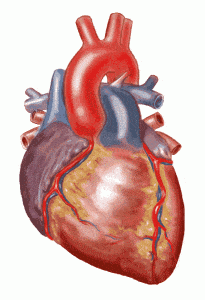
This is a example of ........
a)
cell
b)
organ system
c)
organ
d)
tissue
36.
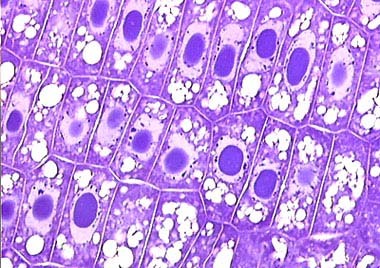
This is a example of ........
a)
cell
b)
tissue
c)
organ
d)
organ system
37.
When many organ systems work together it can form...
a)
a cell
b)
an organ
c)
an organ system
d)
an organism
38.

What kind of muscle am I?
a)
Smooth
b)
Cardiac
c)
Skeletal
100 %

