wayground logo

Free Printable Worksheets

NEW

Font size

S
M
L
XL
Worksheets

Unit Final: Evolution (A)

Total questions: 50

Worksheet time: 1hrs 20mins

Name
Class
Date
1.
During meiosis (sperm formation), a developing male pig had a change in his DNA that resulted in his coat becoming spotted.
a)
Genetic Drift
b)
Non-random mating
c)
Mutation
d)
Natural Selection
2.
Bats are common in Texas, especially in rocky regions. Bats with longer hang claws have demonstrated higher fitness because of their ability to cling to rock while resting.
a)
Adaptation
b)
Non-random mating
c)
Gene Flow
d)
Mutation
3.
Which of the following is an example of reproductive isolation?
a)
two populations of finches that cannot produce viable offspring
b)
two populations of finches that have different feather colors
c)
two populations of salamanders that live in different lakes
d)
two populations of salamanders that have different tail lengths
4.
On island chains like the one shown below, animal populations that spread from the main island to the other islands can evolve into separate species. Which of the following best explains why speciation can occur in this situation? 
a)
Predators on the main island can easily migrate to follow the populations to the other islands.
b)
The physical separation of the islands from the main island limits gene flow and interbreeding between the populations.
c)
Lack of disease on the other island enables the populations to grow and change without limits.
d)
The climatic conditions of the islands allow the populations to breed all year long and produce several generations.
5.
Which organisms are most likely to survive?
a)
the best adapted
b)
the fastest
c)
the strongest
d)
the most domesticated (tamed)
6.
Mutations within a DNA sequence are
a)
natural processes that produce genetic diversity
b)
natural processes that always affect the phenotype
c)
unnatural processes that always affect the phenotype
d)
unnatural processes that are harmful to genetic diversity
7.
Why do frogs and other organism reproduce so many eggs or offspring?
a)
so that their babies can have friends to play with
b)
the more offspring the more likely the offspring will to increase chances of survival
c)
so that they can nurture their young over a long period of time 
d)
the more offspring the less competition
8.

Which of the following is an example of natural selection?

a)

Bald Eagles are hunted until near extinction, population recovers.

b)

Small group of iguanas floats to an island, starts a new population.

c)

Red fox pups are more likely to survive in a snowy environment if they are born white.

d)

Farmer chooses seeds from largest apples to plant next year. This results in larger apples from year to year.

9.

Group of organisms all of the same species, living in the same place at the same time.

a)

gene pool

b)

population

c)

species

d)

evolution

10.

All of the genetic information found in a population.

a)

population

b)

genetic drift

c)

evolution

d)

gene pool

11.
What is the most helpful thing when looking at a fossil record?
a)
size of the fossil
b)
color of the fossil
c)
surface area of the rocks found around the fossil
d)
depths in which the fossils are found
12.
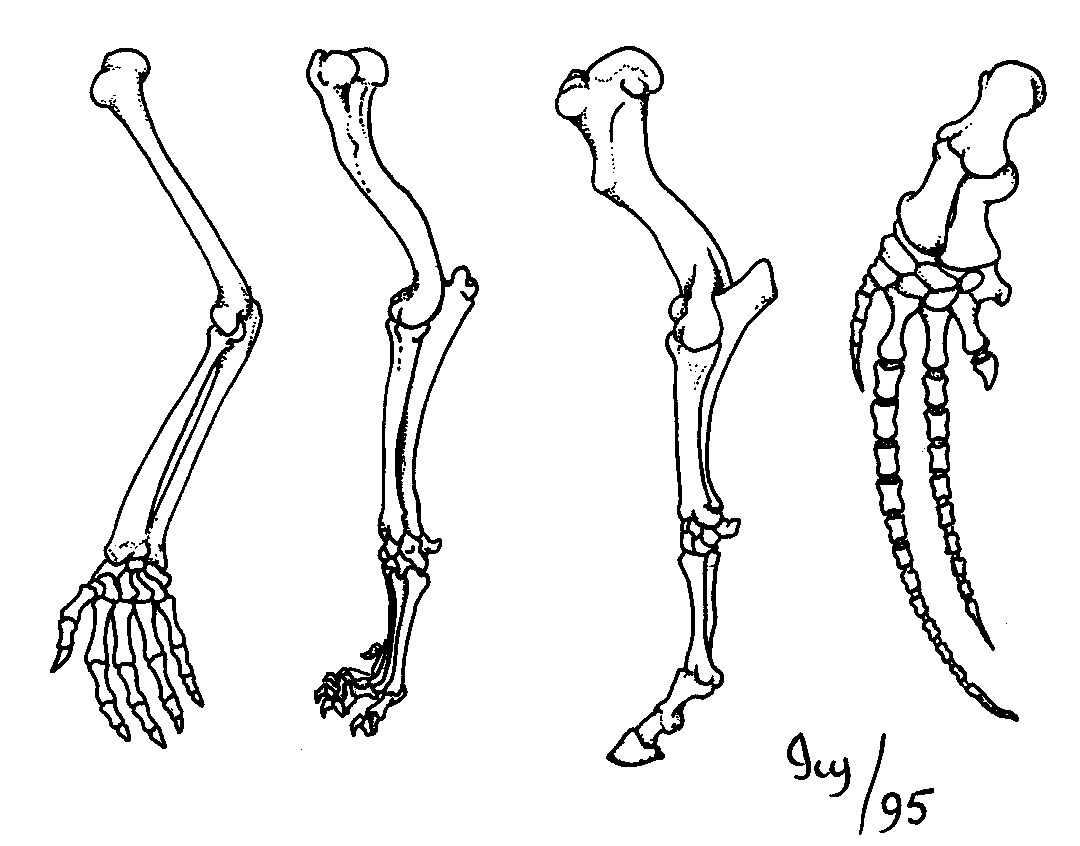
What do the similarities of the structures suggest?
a)
a common ancestor
b)
grow at different rates
c)
evolved slowly
d)
lived a long time
13.
When lions prey on a herd of antelope some antelopes are killed and same escape. Which part of Darwin's concept of natural selection might be used to describe this situation?
a)
acquired characteristics
b)
reproductive isolation
c)
survival of the fittest
d)
descent with modification
14.
Two organisms that are closely related would have ___.
a)
exactly the same DNA sequences
b)
completely different DNA sequences
c)
no proteins in common
d)
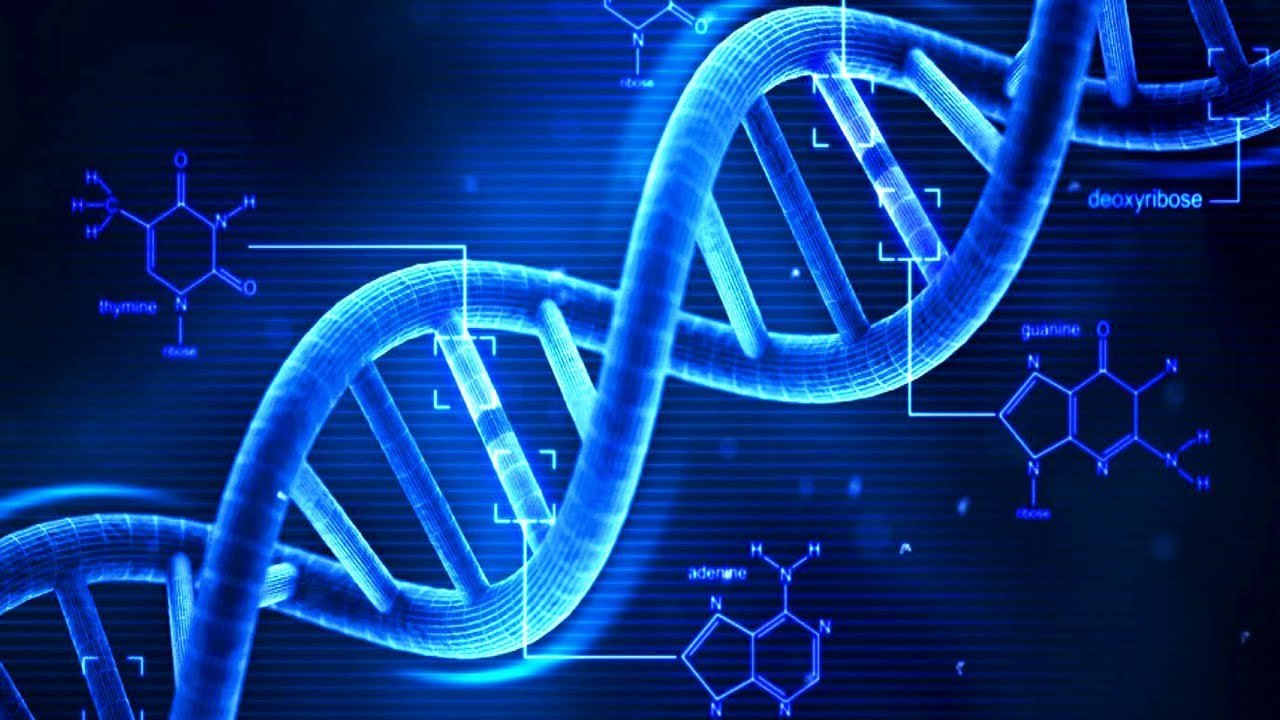
very similar DNA sequences
15.
Genetic variation can arise from a random change in the DNA of a gene. This change is called a(n) ___.
a)
mutation
b)
gene pool
c)
allele
d)
gene flow
16.
A scientist hypothesizes that if a mutation produces one bacterial cell with antibiotic resistance, after several generations a large percentage of the cells in the population will have the resistance. Which of the following best describes the mechanism by which this series of events could occur?
a)
The resistant cell uses its superior genotype to produce more offspring than other cells produce. 
b)
Proteins in the resistant cell's DNA are tougher and therefore survive longer.
c)
The resistant cell survives longer and reproduces more successfully than other cells.
d)
The resistant cell's DNA aggressively crosses over to other cells.
17.
. In any given population of organisms, there are differences between the organisms. Why is it ADVANTAGEOUS for a population to have variation? 
a)
Variation in a population provides males with a wider selection of females when mating.
b)
Variation means the organisms are better able to hide in different areas of their habitat
c)
Variation makes it easier for organisms to recognize members of their own families. 
d)
Variation increases the likelihood that at least some individuals will survive if there is a change in the environment
18.
What did Charles Darwin observe in finch populations of the Galapagos Islands off the coast of South America?
a)
different species on different islands
b)
all species on one of the islands
c)
identical species on all the islands
d)
the same species as North America
19.

Mutations are a change in what?

a)

DNA

b)

tRNA

c)

genotype

d)

phenotype

20.

What percentage of all the species that have ever lived are estimated to be extinct? _____%

a)

10%

b)

80%

c)

50%

d)

99%

21.

A place in an ecosystem where a population lives is called a _________.

a)

community

b)

habitat

c)

evolution

d)

limiting factor

22.

Populations with high diversity have _________.

a)

very few traits

b)

high number of different traits

c)

difficulty surviving

d)

very few living individuals

23.

Who came up with the theory of evolution?

a)

Charles Darwin

b)

Albert Einstein

c)

Steven Hawking

d)

Mr. Fletcher

24.

What causes living things to change over time?

a)

cloning

b)

fossil evidence

c)

natural disasters

d)

changes in the environment

25.
Living things who posses favorable traits will most likely _____________.
a)
die young
b)
go extinct
c)
pass those traits to offspring
d)
remove the trait from the gene pool
26.
Which species’ DNA is most similar to the DNA of the toothed whale? 
a)
Hippopotamus 
b)
Baleen Whale
c)
Grazing Mammals
d)
Camels
27.

The environment around Manchester, England, changed during the Industrial Revolution. How did this change affect peppered moths living in the area?

a)

Natural selection favored moths with dark wings because predators could not see them on the soot-colored trees.

b)

Natural selection favored moths with white wings that were easy for predators to see.

c)

Natural selection favored moths with white wings because predators could not see them on the soot-colored trees.

d)

Natural selection caused moths with white wings to become extinct.

28.
When an organism completely dies out, it is called.....
a)
Adaption
b)
Extinction
c)
Fossilization
d)
Mutation
29.
Remains of ancient organisms are called
a)
Extinctions
b)
Fossils
c)
Mutations
d)
Variations
30.

The white feathers of a snowy owl allow it to blend in with its environment during the winter months (snow). This is an example of a/an ________________

a)

Species

b)

Environmental Change

c)

Adaptation

d)

Variation

31.
Mutations are important because they bring about
a)
death of the organism in which they develop
b)
genetic variation needed for a population to evolve
c)
benefits for the individual, not for the population
d)
Hardey-Weinberg equilibrium within a population
32.

Similar DNA sequences between organisms illustrate

a)

natural selection

b)

common ancestry

c)

population bottlenecks

33.
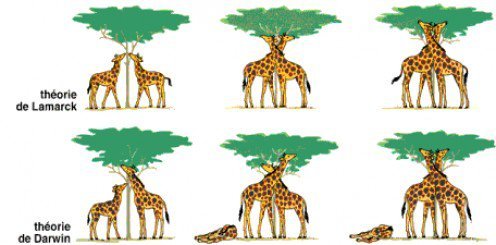
What would happen if the Giraffes never evolve?
a)
they would survive
b)
They would thrive
c)
They would become extinct
d)
They will find another source of food
34.

The ability of an organism to survive and reproduce in its specific environment

a)

diversity.

b)

evolution

c)

adaptation

d)

fitness

35.
Extinction can occur because of which of the following?
a)
All can be causes of extinction.
b)
Increased competition with other species
c)
New predators within the environment
d)
Loss of habitat and/or catastrophes
36.
Structures with the same parts have different functions; suggests that organisms share a common ancestry
a)
vestigial structures
b)
homologous structures
c)
adaptive radiation
d)
fossil
37.
Whales are aquatic mammals that contain a pelvis bone.  Even though it does not aid in its movement, the function must have been used by a common ancestor of the whale.  Thus, the pelvis is referred to as a(n)
a)
vestigial structure
b)
analogous structure
c)
homologous structure
38.
Which trait do only humans have, according to the cladogram?
a)
jaws
b)
mammary glands & hair
c)
terrestrial during all life stages
d)
opposable thumbs
39.
Which best describes these fossils?
a)
The oldest fossils can be found on the lower layers
b)
The oldest fossils can be found at the top layers
c)
The youngest fossils are always found on the bottom layers
d)
You can not tell the age of any of these fossils
40.
Individuals that are well adapted to their environment will survive and produce:
a)
Fewer mutations
b)
Stronger genes
c)
More offspring
d)
Better traits
41.
Study of embryos of various organisms to show a common ancestor because of similarities in development
a)
natural selection
b)
embryology
c)
speciation
d)
evolution
42.
Which layer is the oldest
a)
B
b)
A
c)
E
d)
C
43.
What does Darwin's theory of evolution suggest?
a)
species change over time
b)
extinct species are not related to living species
c)
different species can interbreed
d)
animals that look alike are most closely related
44.
Why are advantageous traits more likely to be passed onto offspring?
a)
Because they are more likely to survive and reproduce.
b)
Because they come from dominant alleles.
c)
Because they come from recessive alleles.
d)
Because the trait is an acquired phenotype.
45.
Why is variation SO important?
a)
It's more fun for everyone to look different
b)
It increases the chance of surving drastic environmental changes
c)
It sounds cool
d)
It is not important
46.
How many organisms are required for asexual reproduction?
a)
1
b)
2
c)
3
d)
4
47.
How many organism are required for sexual reproduction?
a)
1
b)
2
c)
3
d)
4
48.
Mutations are always good
a)
True
b)
False
49.
When comparing the offspring of sexually and asexually reproducing organisms, we would expect the genetic material (DNA) of the sexually reproducing organism to -
a)
contain fewer mutations
b)
be lesser in quantity
c)
be simpler overall
d)
show more variation
50.
Gentoo penguins will present a mate with a pebble that they find to attract a mate. Emperor penguins have a specific call and movement that they make to attract a mate. Which type of isolation do these penguins demonstrate?
a)
temporal isolation 
b)
behavioral isolation
c)
geographical isolation
d)
anatomical isolation