
 Worksheets
A Family of Planets
Total questions: 71
Worksheet time: 44mins
Name
Class
Date
1.
We call the inner planets this because they are rocky, like Earth!
a)
Terrestrial
b)
Rocky
c)
Gas Giants
d)
life
2.
How do we typically measure distances within the solar system?
a)
light-years
b)
parsec
c)
kilometer
d)
astronomical unit
3.
Why do active planets show fewer impacts than places like the moon, other than having atmospheres?
a)
fewer orbiting objects near the planet
b)
most impacts occur in oceans
c)
erosion removes evidence of impacts
d)
geological activity removes their effects
4.
How do gas giants differ from terrestrial planets
a)
they are smaller
b)
they are made of rocks and ice
c)
their atmospheres are massive
d)
they have hard surfaces
5.
What is the current theory about the origin of the moon?
a)
It was a large asteroid captured by Earth's gravity
b)
The moon formed at the same time from the same material
c)
A large body struck earth, launching material that formed into the moon later into its gravitational field in space
d)
the moon spun off of a rapidly spinning earth
6.
What gives us evidence that Mars had liquid water at one time
a)
Martian icecaps
b)
fossils of sea life found during missions
c)
the color of martian sand
d)
features that resemble dry riverbeds
7.
Planet known for its ring system
a)
neptune
b)
jupiter
c)
earth
d)
saturn
8.
largest planet in the solar system
a)
pluto
b)
venus
c)
saturn
d)
jupiter
9.
Planet has a year that is 88 Earth Days long
a)
uranus
b)
mercury
c)
venus
d)
earth
10.
The Great Dark Spot belongs to this planet
a)
Jupiter
b)
Neptune
c)
Uranus
d)
Saturn
11.
Life as we know it is here
a)
Mars
b)
Jupiter
c)
Earth
d)
Pluto
12.
Inner planet with a retrograde (clockwise) rotation
a)
Uranus
b)
Earth
c)
Mars
d)
Venus
13.
Which takes the longest to occur?
a)
Earth orbiting the sun once
b)
Moon orbiting the moon twice
c)
Earth rotating on its axis 13 times
d)
Eleven full moons are seen on Earth
14.
Venus and Jupiter are typically the brightest planets. Venus is much smaller, but is similar in brightness because
a)
it is the closest planet to Earth
b)
it is closest to the sun
c)
produces more energy than Jupiter
d)
has a larger solid surface than Jupiter
15.
Scientist observe a planet in a distant galaxy. The planet appears to have similar features as Earth. Which feature would the scientists be most interested in if they were looking for life?
a)
thick atmosphere
b)
liquid water
c)
long days
d)
active volcanoes
16.
Which of the following bodies is most likely to have many craters?
a)
a gas giant near the asteroid belt
b)
moon with icecaps and thin atmosphere
c)
a terrestrial planet with no atmosphere
d)
a terrestrial planet with a thick atmosphere
17.
What gas traps the most heat in Venus's atmosphere
a)
CO2 (Carbon Dioxide)
b)
Oxygen
c)
Argon
d)
Nitrogen
18.
What is the current classification of Pluto
a)
Planet
b)
Asteroid
c)
Moon
d)
Dwarf Planet
19.
If scientist classify an object as 0 on the torino scale, which does this classification indicate?
a)
very small chance to hit
b)
likely hit Earth
c)
very good chance to hit
d)
small chance to hit
20.
If an object has the #10 on the Torino Scale, what does that indicate?
a)
object misses Earth entirely
b)
Likely hit earth and cause minimal damage
c)
likely hit earth and cause global catastrophe
d)
likely hit earth and cause significant damage
21.
How long does it take the Sun's light to reach earth?
a)
8.3 seconds
b)
8.3 years
c)
8.3 hours
d)
8.3 minutes
22.
Why does the moon preserve almost all records of impacts it has had
a)
it is protected from damage
b)
it has no atmosphere
c)
it is not very old
d)
it has a heavy atmosphere
23.

Which of the following is in the center of the solar system?
a)
Earth
b)
Jupiter
c)
Sun
d)
Mr. T
24.

Where is the Asteroid Belt located?
a)
between Mercury and Venus
b)
between Earth and Mars
c)
between Mars and Jupiter
d)
between Jupiter and Saturn
25.

Largest mountain in Solar System?
a)
Mt. Everest
b)
Mt. Large
c)
Mt. Uranus
d)
Olympus Mons
26.
Latin name for moon?
a)
solar
b)
aqua
c)
bio
d)
luna
27.
an object that orbits a star or planet (artificial or natural)
a)
satellite
b)
planet
c)
comet
d)
black hole
28.

3?
a)
First Quarter
b)
Third Quarter
c)
Full Moon
d)
New Moon
29.

#5?
a)
First Quarter
b)
Third Quarter
c)
New Moon
d)
Full Moon
30.

Left to right
a)
Waxing
b)
Waning
31.

a)
Waxing
b)
Waning
32.

When can a solar eclipse happen?
a)
New Moon
b)
Full Moon
c)
First Quarter
d)
Third Quarter
33.

When can a lunar eclipse happen?
a)
New Moon
b)
Full Moon
c)
First Quarter
d)
Third Quarter
34.

Which of the following is the smallest?
a)
Sun
b)
Earth
c)
Mars
d)
Pluto
35.
This is the only planet in the solar system with oceans of liquid water.
a)
Mercury
b)
Mars
c)
Venus
d)
Earth
36.
Scientists have been able to find no atmosphere around this planet because it has little gravity and is closest to the sun.
a)
Mars
b)
Venus
c)
Mercury
d)
Earth
37.
The surface of this planet appears red due to rusting iron in the rocks.
a)
Mercury
b)
Mars
c)
Pluto
d)
Venus
38.
This gas giant has a large storm in its atmosphere known as The Red Spot
a)
Jupiter
b)
Saturn
c)
Uranus
d)
Neptune
39.
This gas giant has a large storm in its atmosphere known as The Red Spot
a)
Jupiter
b)
Saturn
c)
Uranus
d)
Neptune
40.
Most likely due to a massive collision, this planet rotates from top to bottom.
a)
Saturn
b)
Venus
c)
Neptune
d)
Uranus
41.
Its largest moon is Titan.
a)
Saturn
b)
Jupiter
c)
Neptune
d)
Uranus
42.
This has an extremely elliptical orbit -
a)
Pluto
b)
Neptune
c)
Uranus
d)
Saturn
43.
About how many days does it take to moon to go through a complete cycle?
a)
7 days
b)
365 days
c)
29 days
d)
20 days
44.

When the Earth is between the moon and sun, it is most likely a:
a)
new moon
b)
full moon
c)
waxing crescent
d)
waxing gibbous
45.

Approximately how much time passes between the new moon and full moon?
a)
one month
b)
two weeks
c)
3 days
d)
24 hours
46.
Changes in the moon's appearance are
a)
phases
b)
eclipses
c)
stages
d)
cycle
47.
What causes the moon's phases
a)
Where you are standing on Earth
b)
the amt of sunlight reflected onto the moon from the sun
c)
The tilt of Earth
d)
how fast the moon is moving
48.
Why do we always see the same side of the moon from Earth?
a)
because the phases change
b)
because it rotates and revolves at the same rate
c)
because half of the moon always receives sunlight
d)
The moon changes positions
49.

The Moon orbits Earth in a ________________ direction
a)
clockwise
b)
counterclockwise
c)
upwards
d)
downwards
50.
Define Gibbous
a)
Less than half of moon visible
b)
More than half of moon visible
c)
All of moon visible
d)
None of moon visible
51.
Define New Moon
a)
None of moon is visible from Earth
b)
All of moon visible from Earth
c)
Moon is 1/2 visible from Earth
d)
Moon is more than Half Visible from Earth
52.
Define Quarter Moon
a)
None of moon visible
b)
Less than Half the moon is visible
c)
More than half of moon is visible
d)
Half of the moon is visible
53.
The 1st Quarter moon is lit on the:
a)
Left Side
b)
Right Side
54.

Name the moon phase
a)
waning crescent
b)
waxing crescent
c)
waning gibbous
d)
waxing gibbous
55.
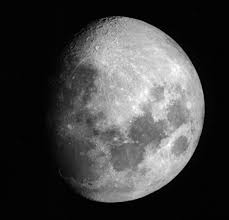
Name the moon phase
a)
waning crescent
b)
waxing crescent
c)
waning gibbous
d)
waxing gibbous
56.
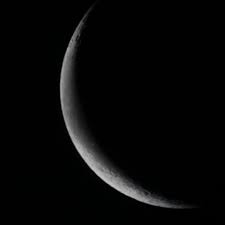
Name the moon phase
a)
waning crescent
b)
waxing crescent
c)
waning gibbous
d)
waxing gibbous
57.
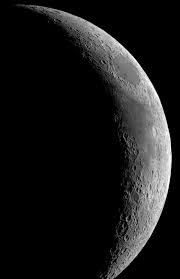
Name the moon phase
a)
waning crescent
b)
waxing crescent
c)
waning gibbous
d)
waxing gibbous
58.
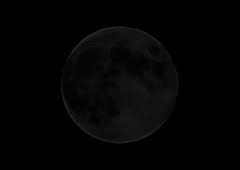
Name the moon phase
a)
First Quarter
b)
Last Quarter
c)
New Moon
d)
Full Moon
59.
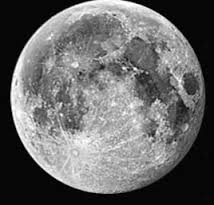
Name the moon phase
a)
First Quarter
b)
Last Quarter
c)
New Moon
d)
Full Moon
60.
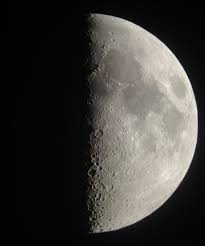
Name the moon phase
a)
First Quarter
b)
Last Quarter
c)
New Moon
d)
Full Moon
61.
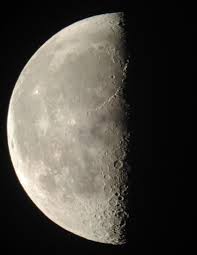
Name the moon phase
a)
First Quarter
b)
Last Quarter
c)
New Moon
d)
Full Moon
62.

Name the moon phase that would come AFTER this moon.
a)
waning crescent
b)
waxing crescent
c)
waning gibbous
d)
waxing gibbous
63.
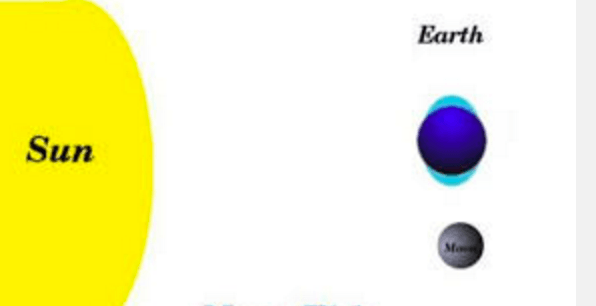
Which moon phase is shown in this diagram?
a)
new moon
b)
1st quarter
c)
full moon
d)
last quarter/3rd quarter
64.

Which moon phase is shown in this diagram?
a)
new moon
b)
first quarter
c)
full moon
d)
last quarter/3rd quarter
65.
Tides are caused by ___________
a)
wind
b)
gravitational pull of moon
c)
waves gravitation toward land
d)
rain
66.

What phase is this?
a)
Waning Gibbous Moon
b)
Waxing Gibbous Moon
c)
Waning Crescent Moon
d)
Waxing Crescent Moon
67.

What phase is this?
a)
First Quarter Moon
b)
Last Quarter Moon
c)
Waxing Gibbous Moon
d)
Waning Gibbous Moon
68.

What phase is this?
a)
Full Moon
b)
First Quarter Moon
c)
Last Quarter Moon
d)
New Moon
69.
Most places on Earth experience about how many high and low tides in 24 hours?
a)
2 high and 2 low tides
b)
4 high and 4 low tides
c)
1 high and 1 low tides
70.
What type of tide occurs during a new and full moon?
a)
Neap tides
b)
Spring tides
c)
Normal tides
71.
What type of tide occurs during the first or third quarter moon?
a)
Neap tides
b)
Spring tides
c)
Normal tides
100 %

