Wayground logo

Free Printable Worksheets

Font size

S
M
L
XL
Worksheets

East and Southeast Asia

Total questions: 82

Worksheet time: 54mins

Name
Class
Date
1.

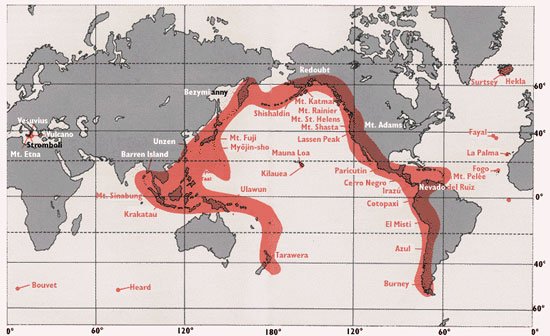
Approximately 75% of the world's volcanoes are located around the Pacific Ocean in a region called the ____________.

a)

Ring of Fire

b)

Volcano Ring

c)

Nucleus of Volcanoes

d)

Center of Fire

2.
This is the name for the chain of volcanoes around the edge of the Pacific Plate.
a)
Circle of Fire
b)
Ring of Lava
c)
Ring of Fire
d)
Circle of Magma
3.
Earthquakes under the water can cause _________________________________.
a)
tornadoes
b)
tsunamis
c)
lightening
d)
hailstorms
4.

What was the trade route between China and Eastern Europe called?

a)

The Desert Road

b)

The Spice Trail

c)

The Eastern Path

d)

The Silk Road

5.
The Silk Road refers to...
a)
A giant factory where silk is made
b)
A road made of a stringy material
c)
A religious path
d)
A series of trade routes between Asia and Europe
6.
The Silk Road refers to...
a)
A giant factory where silk is made
b)
A road made of a stringy material
c)
A religious path
d)
A series of trade routes between Asia and Europe
7.
What country is shown here? 
a)
China
b)
Mongolia
c)
Vietnam
d)
India
8.
What country is shown here? 
a)
Japan
b)
North Korea
c)
South Korea
d)
China
9.
What country is being featured? 
a)
South Korea
b)
North Korea
c)
Japan 
d)
China
10.
What country is shown here?
a)
Indian
b)
Vietnam
c)
Japan
d)
China
11.
What physical feature is shown here? 
a)
Gobi Desert
b)
Himalayan mountains
c)
Taklimakan Desert
d)
Yangtze River
12.
What physical feature is shown here?
a)
Gobi desert
b)
Korean Peninsula
c)
South China Sea
d)
Himalayas 
13.
What body of water separates China from the Korean Peninsula?
a)
Sea of Japan
b)
South China Sea
c)
Bay of Bengal
d)
Yellow Sea
14.
Not only did goods travel on the Silk Road but also _________ 
a)
New Ideas 
b)
Religions 
c)
both 
d)
none 
15.
What was gunpowder originally invented for?
a)
Making people immortal
b)
For cannons
c)
For fuel
d)
For ships
16.
What are the Four Great Inventions of China?
a)
Clocks, Phones, TV's and Watches
b)
Cars, Planes, Boats and Trains
c)
Gunpowder, Paper Making, Compass and Printing
d)
Pizza, Pasta, Cheese Burgers and Salad
17.
What is communism?
a)
Where the government owns and controls business' and property
b)
Where individuals own and control business and property
c)
Where Mr. Albert rules everything!
d)
The religious beliefs of the people Russia
18.

What is the capital of China?

a)

Shanghai

b)

Tianjin

c)

Beijing

d)

Xian

19.

Where is the Forbidden City located?

a)

Shanghai

b)

Hong Kong

c)

Beijing

d)

Xian

20.

Which of these was a former British colony in South China?

a)

Manchuria

b)

Tibet

c)

Hong Kong

d)

North Vietnam

21.

When the communists took control of the Chinese mainland, where did the Nationalist government flee?

a)

Japan

b)

Korea

c)

The Philippines

d)

Taiwan

22.

The capital of North Korea is

a)

Seoul

b)

Pyongyang

c)

Bangkok

d)

Beijing

23.

The capital of South Korea is

a)

Soul

b)

Seoul

c)

Soeul

d)

Sole

24.
This dam is the largest dam built in the world for the purpose of controlling flooding along the Yangtze River.
a)
Gobi Dam
b)
Beaver Dam
c)
Guri Dam
d)
Three Gorges Dam
25.
Based on the diagram, which monsoon season would bring rain to the region?
a)
Summer
b)
Winter
26.
Today, North Korea's only major ally is
a)
Russia
b)
South Korea
c)
Iran
d)
China
27.
This cartoon is an illustration of what?
a)
North Korea's military power compaired to the United States
b)
North Korea's nuclear program
c)
The current state of North Korea and South Korea relations 
d)
The view the North Korean people have towards the United States
28.
What are the world's highest mountains and the location of Mount Everest?
a)
Tian Shan
b)
Pamirs
c)
Himalaya
d)
Kunlun Shan
29.
This country is called the rice bowl because it produces more rice, using double-dropping, than any other country.
a)
South Korea
b)
North Korea
c)
China
d)
Japan
30.
Because much of Japan's landscape is mountainous, the majority of Japan's people live
a)
on farms along the alluvial plains of rivers 
b)
on terrances carved into mountainsides
c)
in the coastal lowlands
d)
in the subtropical rainforest
31.
Which of the following events during World War II brought the United States into the war?
a)
The D-Day invasion of Normandy
b)
Germany's invasion of Poland
c)
Japan's bombing of Pearl Harbor
d)
Japan's invasion of Russia
32.
South Korean culture has a strong __________________ influence.
a)
Japanese
b)
Western
c)
Chinese
d)
island
33.
Why was the Great Wall of China created?
a)
As a show of the Emperor's power
b)
To Stop Chinese citizens from leaving the country
c)
To connect the far districts of China for trade
d)
To protect against Mongol invaders
34.
A communist government was set up in North Korea
a)
by Kim Jong Un in 2011
b)
in the aftermath of the Korean War
c)
At the end of World War II in 1945.
d)
by Kim Jong Un's father, Kim Jong Il, in 1994
35.
Mongolia is a country surrounded by other countries. You could say it is
a)
a peninsula
b)
landlocked
c)
an archipelago
d)
crowded
36.
What conclusion can best be drawn from the information on the map?
a)
Buddhism failed to have any influence on Japan.  
b)
Buddhism was unable to spread to islands in the Pacific.
c)
Buddhism began in northern India and spread throughout much of Asia.
d)
Buddhism moved from Indonesia to India and then to Afghanistan.
37.
By the 1600s, Europeans had set up trade routes to China for silk and tea. What were these routes called?
a)
Subsaharan Trade
b)
Indian Spice Trade
c)
the Silk Road
d)
Incense Route
38.
China has a ________________ government, but a __________________ economy.
a)
communist, market
b)
command, market
c)
market, command
d)
communist, democratic
39.
Which country has the largest deposits of fossil fuels in East Asia?
a)
Japan
b)
South Korea
c)
China
d)
none of the above
40.
Which country has large amounts of fossil fuels but still cannot meet all of its energy needs?
a)
China
b)
Japan
c)
North Korea
d)
none of the above
41.
Japan is on the Ring of Fire and has to worry about which of these natural disasters?
a)
earthquakes
b)
tsunamis
c)
both of the above
d)
none of the above
42.
Why are there few trees in western China?
a)
too dry
b)
too hot
c)
too cold
d)
none of the above
43.
For many years, China was protected from foreign invasion by which of these?
a)
dragons
b)
Mongolian warriors
c)
Mrs. McDonald
d)
natural barriers like deserts, mountains, and water
44.
Buddhism was brought to China by traders from which of these countries?
a)
India
b)
United States
c)
Mongolia
d)
none of the above
45.
This government system controls all economic goods and services.
a)
capitalism
b)
communism
c)
socialism
d)
moneyism
46.
What country has the largest population in the world?
a)
United States
b)
China
c)
Japan
d)
Russia
47.
Earthquakes and volcanic eruptions are very ________ in Southeast Asia.
a)
rare
b)
seldom
c)
common
d)
never
48.
Climates in Southeast Asia are generally ______.
a)
Cold and rainy
b)
Hot and snowy
c)
hot and humid
d)
Warm and breezy
49.
 _______ is the most common livelihood in most of Southeast Asia.
a)
Farming
b)
Teaching
c)
Banking
d)
Swimming
50.
Which Southeast Asian country has the highest literacy rate?
a)
China
b)
Vietnam
c)
Laos
d)
Indonesia
51.
What type of natural disaster occurred in Indonesia in 2004, causing the deaths of more than 230,000 people?
a)
Earthquake
b)
Tsunami
c)
Volcano
d)
Tornado
52.
The Mekong River is most important to which country?
a)
Malaysia
b)
Vietnam
c)
Indonesia
d)
Phillipines
53.
What product first attracted European traders to the region of Southeast Asia?
a)
gold
b)
spices
c)
silver
d)
oil
54.
What is the most common religion in most of mainland Southeast Asia?
a)
Hinduism
b)
Christanity
c)
Buddhism
d)
Catholic
55.
What is another name for plant life?
a)
flora
b)
fauna
c)
flowers
d)
diorama
56.
What name has been given to the area bordering the Pacific Ocean?
a)
Insular area
b)
Pacific Rim
c)
Ring of Fire
d)
Fauna
57.
What is an area comprised of islands?
a)
Pacific Rim
b)
Ring of Fire
c)
Fauna
d)
Insular area
58.
What name has been given to a seismically active zone around much of the Pacific Ocean?
a)
Pacific Rim
b)
Insular area
c)
Fauna
d)
Ring of Fire
59.
What is another name for animal life?
a)
Fauna
b)
Flora
c)
Flienstones
d)
Jungle
60.
Which ocean is not currently visible on the globe?
a)
Indian Ocean
b)
Pacific Ocean
c)
Southern Ocean
d)
Atlantic Ocean
61.
Strong winds that change with the seasons bringing either wet or dry weather are called ____?
a)
Tsunamis
b)
Earthquakes
c)
Typhoons
d)
Monsoons
62.
Based on the graph, what percentage of the people in South Korea are Buddhists?
a)
1%
b)
35%
c)
23%
d)
47%
63.
In which country was the religion of Buddhism founded?  
a)
Vietnam
b)
China
c)
Japan
d)
India
64.
What is one way that limited governments are different from unlimited governments?
a)
Elections in limited governments are open to all eligible voters.
b)
News media in limited governments do not report about politics.
c)
Leaders in limited governments are restricted from spending too much.
d)
Political candidates in limited governments are from the same political party.
65.
Which of the following is likely to be found in an unlimited government?
a)
Free speech
b)
One-party rule
c)
Multi-party elections
d)
Protection of human rights
66.
What was the trade routes connecting China with Europe, India, Central Asia, Southeast Asia and North Africa called?
a)
The Silk Road
b)
The Silk Route
c)
Maritime Routes
d)
Cultural Diffusion Road
67.

Which country in East Asia listed below has historically experienced more diffusion of culture from Western nations as compared to other East Asian countries?

a)

North Korea

b)

Japan

c)

Mongolia

d)

Indoneisa

68.

Which of the following accounts for most of the cultural diffusion to East Asia throughout history?

a)

Immigration

b)

Trade

c)

Colonization

d)

Books

69.

The People’s Republic of China, the government is led by -

a)

Dictator for life

b)

Monarchy

c)

Communist party officials

d)

Government of Japan

70.

Physical barriers of the Silk Road included

a)

The Great Wall of China and rivers

b)

Mountains and deserts

c)

Mountains and the The Great Wall of China

d)

Deserts and natural disasters

71.

Taiwan is located _____________ of China.

a)

North

b)

South

c)

East

d)

West

72.

Mongolia is _______________________.

a)

landlocked

b)

surrounded by water

c)

Surrounded by deserts

d)

bigger than China

73.

The Grand Canal in China is a ______________ that was created to ________________________________

a)

modification, protect villages from flooding

b)

adaption, warn people about earthquakes

c)

adaption, create hydroelectric power

d)

modification, provide a north-south transportation route in China

74.

Which two countries have economic systems similar to the United States:

a)

China and Japan

b)

Japan and South Korea

c)

Japan and North Korea

d)

China and South Korea

75.

Which city has some of the world's tallest buildings:

a)

Hong Kong

b)

Mongolia

c)

Saigon

d)

Taiwan

76.

Financing cities in Southeast Asia has come from a variety of sources including:

a)

American investors

b)

converting to command economic principals

c)

increasing spending on education

d)

the government providing investment

77.

Hong Kong is a popular city for tourist to visit. This has helped the ________________ economy grow.

a)

Agricultural

b)

Manufacturing

c)

Wholesale

d)

Service

78.

Vietnam was colonized by the ________________.

a)

French

b)

English

c)

Dutch

d)

United States

79.

Singapore is a small island located in Southeast Asia. It's location was considered ideal because...

a)

access to multiple fresh water lakes and rivers

b)

mild climate with sandy beaches

c)

located on major shipping routes

d)

it's close to mainland China

80.

How did the physical geography of Southeast Asia contribute to the diversity of culture in the region?

a)

A series of tall mountain ranges isolated cultures

b)

A vast archipelago of thousands of islands facilitated a global trading network.

c)

A narrow peninsula connected different societies from large land masses.

d)

A large grassland plain allowed multiple empires to dominate the region.

81.

How have people adapted their homes to the environment of the region?

a)

build houses on stilts to avoid the flooding

b)

use mud bricks as building materials

c)

nomadic herders

d)

move to Siberia to avoid the tropical climate

82.

Centuries ago, travelers and traders bought ______________ from South Asia to China

a)

religion

b)

monsoons

c)

cell phones

d)

silk