wayground logo

Free Printable Worksheets

Font size

S
M
L
XL
Worksheets

Atoms and Elements Test Review

Total questions: 40

Worksheet time: 31mins

Name
Class
Date
1.
The positive particles of an atom are 
a)
electrons 
b)
positrons 
c)
neutrons 
d)
protons 
2.
Particles in an atom that are neutral and have no charge are 
a)
negatrons 
b)
electrons 
c)
neutrons 
d)
protons 
3.
True or False? Neutrons have a negative charge
a)
True
b)
False
4.
What is the atomic number for an element with three protons?
a)
2
b)
1
c)
3
d)
6
5.
A particle that moves around the nucleus is a(n)...
a)
Proton
b)
Neutron
c)
Electron
d)
Quark
6.
In the modern periodic table elements are arranged by:
a)
atomic mass
b)
atomic number
c)
valence electrons
d)
number of isotopes
7.
What does the 1.00794 stand for?
a)
Hydrogen
b)
atomic number
c)
atomic mass
d)
atomic explosion
8.

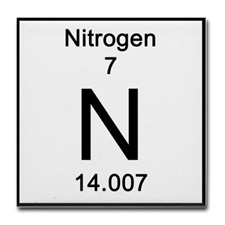
What is the number of protons that the element in this image contains?

a)

14

b)

7

c)

15

d)

18

9.
The first energy level can hold up to how many electrons?
a)
8
b)
4
c)
2
d)
5
10.
The atomic number of an elements is the total number of which particles in the nucleus?
a)
neutrons
b)
protons
c)
electrons
d)
protons and electrons
11.
The particles that are found in the nucleus of an atom are
a)
neutrons and electrons
b)
electrons only
c)
protons and neutrons
d)
protons and electrons
12.
Which of the following is a positively charged subatomic particle found in the nucleus of an atom?
a)
Electron
b)
Proton
c)
Neutron
d)
Quark
13.
Most of the mass in an atom is concentrated in the...
a)
electrons
b)
nucleus
c)
protons
d)
empty space
14.
What are the 3 particles that make-up the atom?
a)
protons, neutrons, and isotopes
b)
neutrons, isotopes, and electrons
c)
positives, negatives, and electrons
d)
protons, neutrons, and electrons
15.
Which one of these is NOT located in the element square on the Periodic Table?
a)
Atomic Number
b)
Atomic Mass
c)
Room Temperature
d)
Chemical Symbol
16.
What is the atomic number?
a)
the number of protons
b)
the number of protons and neutrons
c)
the number of neutrons
d)
the number of protons and electrons
17.
What is the mass number?
a)
the number of protons
b)
the number of protons and neutrons
c)
the number of neutrons
d)
the number of protons and electrons
18.
Atoms are mostly filled with?
a)
electrons
b)
empty space
c)
protons
19.
An atoms overall charge is 
a)
positive 
b)
depends on its mood 
c)
neutral 
d)
negative 
20.
The subatomic particle with a negative charge is the
a)
electron
b)
proton
c)
neutron
d)
nucleus 
21.
If the number of protons equal the number of _____, the atom will have no charge
a)
protons
b)
neutrons
c)
electrons
d)
nucleus
22.

If an atom has 9 protons and 10 neutrons, what is its ATOMIC NUMBER?

a)

9

b)

10

c)

19

d)

1

23.

Which of the following would you use to determine the number of neutrons?

a)

atomic mass - # of protons

b)

atomic mass - # of neutrons

c)

atomic number - # of protons

d)

atomic mass + electrons

24.

Magnesium has an atomic number of 12 and an atomic mass of 24. How many electrons does it have?

a)

24

b)

12

c)

36

d)

11

25.

Why are the number of protons equal to the number of electrons?

a)

so the atom has a positive charge

b)

so the atom has a negative charge

c)

so the atom has a neutral (zero) charge

d)

so the atom is heavy

26.
What is the atomic number for an element with three protons?
a)
2
b)
1
c)
3
d)
6
27.
Which statement about the atomic nucleus is correct?
a)
The nucleus is made of protons and neutrons and has a negative charge
b)
The nucleus is made of protons and neutrons and has a positive charge
c)
The nucleus is made of electrons and has a positive charge
d)
The nucleus is made of electrons and has a negative charge
28.
Anything that has mass and takes up space is called
a)
heterogeneous
b)
homogeneous
c)
matter
d)
density
29.
How many Hydrogen atoms are in Water (H2O)
a)
1
b)
2
c)
3
d)
4
30.
Which particle has a similar mass to a proton?
a)
Electron
b)
Neutron
c)
Photon
d)
Marble
31.
The smallest part of an element is known as the 
a)
Periodic Table
b)
Atom
c)
Group
d)
Period
32.

A substance that cannot be broken down into anything simpler is _____________________.

a)

an element

b)

a compound

c)

atoms

d)

matter

33.

Which is the correct formula for:

three hydrogen (H)

one sulfur (S)

four oxygen (O)

a)

H3SO4

b)

HSO4

c)

H4S3O

d)

H2O

34.

How many Aluminum are in Al2O3?

a)

3

b)

2

c)

5

35.
If an atom has 12 positively charged subatomic particles, which of the following must it also have to be considered a neutral atom?
a)
12 neutrons
b)
12 electrons
c)
12 protons
d)
24 protons and neutrons
36.
Beryllium has how many protons?
a)
4
b)
9.0122
c)
2
d)
13.0122
37.
The symbol for Carbon is
a)
6
b)
12.011
c)
C
d)
Ca
38.
If an atom has 10 protons, 10 neutrons, and 10 electrons, what is the mass of the atom?
a)
10
b)
20
c)
30
39.

Where on the periodic table can you find the most reactive metals?

a)

All the way to the left

b)

In the middle

c)

All the way to the right

d)

Below the table

40.

Elements that have properties of both metals and nonmetals are called...

a)

Alkali earth metals

b)

Noble gases

c)

Metalloids

d)

Transition metals