wayground logo

Free Printable Worksheets

Font size

S
M
L
XL
Worksheets

Quiz - Albedo and Water Cycle

Total questions: 60

Worksheet time: 1hrs 25mins

Name
Class
Date
1.
What has the highest albedo?
a)
the oceans
b)
 glacial ice
c)
the ground
d)
roads
2.
What heats faster, land or water?
a)
Land
b)
Water
3.

Why does land heat up and cool down faster than water?

a)

Water has a higher albedo to reflect the heat.

b)

Water does not heat up fast, but holds heat well.

c)

Land has a lower specific heat and does not take as much energy to heat.

d)

All are correct.

4.
Albedo can best be described as...
a)
the temperature at the equator
b)
the amount of solar radiation absorbed
c)
the amount of solar radiation reflected
d)
the air pressure during El Nino
5.
Melting ice caps will cause the poles to have a ____________ albedo.
a)
higher
b)
lower
c)
same
6.
If the ice caps continue to melt, then there is less albedo at the poles.  This process will continue to melt more ice and have less albedo.  This is an example of a...
a)
fruit loops
b)
loop di loop
c)
negative feedback loop
d)
positive feedback loop
7.
Which would you expect to have the highest albedo?
a)
dirt
b)
sand
c)
ice
d)
water
8.
Currently, about 10% of Earth is covered with ice year-round. If this ice melts, what could happen to Earth’s temperature?
a)
Increase
b)
Decrease
c)
Remain the Same
d)
Not enough information 
9.
Which type of surface would have the highest albedo effect?
a)
Forest
b)
Snow
c)
Water
d)
Rock
10.

Which has a lower albedo, an asphalt parking lot or a snow-covered field?

a)

Asphalt parking lot

b)

Snow-covered field

c)

They have the same albedo

d)

More information is needed to answer this question

11.

If you want to keep your house cool all year, should you design the house roof to have a high or a low albedo?

a)

High

b)

Low

12.

Rank the following from low albedo to high albedo.

(1) Ocean

(2) Sand

(3) Ice

(4) Asphalt

a)

1, 2, 3, 4

b)

3, 2, 4, 1

c)

4, 3, 2, 1

d)

4, 1, 2, 3

13.
Describes how water moves in different forms around the earth 
a)
water cycle 
b)
hydrosphere
c)
evaporation
d)
the sun 
14.
Any type of liquid or solid water that falls to earth's surface
a)
evaporation
b)
condensation
c)
precipitation
d)
runoff 
15.
Process of water vapor changing into a liquid
a)
evaporation
b)
condensation
c)
precipitation
d)
transpiration 
16.
Process of liquid water changing into a gas
a)
evaporation
b)
condenstaion
c)
precipitation
d)
transpiration 
17.
Evaporation of water vapor from plants 
a)
infiltration
b)
condenstaion
c)
precipitation
d)
transpiration 
18.
Water that is beneath earth's surface 
a)
groundwater 
b)
infiltration
c)
runoff
d)
transpiration 
19.
Rain, snow, sleet, and hail are all examples of what? 
a)
evaporation
b)
condenstation
c)
precipitation
d)
infiltration 
20.
Liquid precipitation that is not absorbed into the ground 
a)
groundwater
b)
condenstaion
c)
infiltration 
d)
runoff 
21.
The energy source that allows the water cycle to occur
a)
batteries
b)
the sun
c)
solar panels 
d)
gasoline 
22.
The first step in the water cycle 
a)
evaporation
b)
condensation 
c)
precipitation
d)
there is no first step 
23.
How much new water does the water cycle produce each day? 
a)
1 gallon 
b)
100 gallons 
c)
1,000,000 lagoons 
d)
none 
24.
Clouds form through 
a)
precipitation
b)
condensation
c)
evaporation
d)
infiltration 
25.
One morning, Jane notices drops of water on the outside of a window. Later in the day, she notices that the drops have disappeared. What most likely caused the drops to disappear? 
a)
The water condensed on the plants around the house.
b)
Wind blowing on the window turned the water into vapor.
c)
Energy from the sun caused the water to evaporate.
d)
The water cooled enough to turn into water vapor.
26.
Which best explains why runoff is important?
a)
It returns water to other locations on Earth. 
b)
It increases the chance of flooding.
c)
It makes evaporation occur faster. 
d)
It increases condensation.
27.
What percentage of the Earth’s water is fresh?
a)
97%
b)
2.3%
c)
<1%
d)
3%
28.
Allows water to move through narrow spaces or pores
a)
surface tension
b)
universal solvent
c)
water cycle
d)
capillary action
29.
Molecules on the surface of water cause a tightness almost giving it water a skin.
a)
surface tension
b)
universal solvent
c)
capillary action
30.
What are the 3 states of matter?
a)
solid, freezing, thawing
b)
solid, liquid, gas
c)
Georgia, Florida, South Carolina
31.
Water is known as ________ because so many substances can dissolve in it.
a)
liquid
b)
capillary action
c)
changing state
d)
universal solvent
32.
The sum total of all the water on earth and in its atmosphere is known as
a)
Biosphere
b)
Atmosphere
c)
Hydrosphere
d)
Ionosphere
33.
___________________ is the movement of water into the ground due to the pull of gravity.
a)
runoff
b)
infiltration
c)
evaporation
d)
precipitation
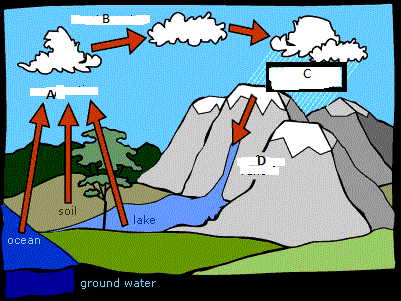
34.
What is A?
a)
Evaporation
b)
Condensation
c)
Precipitation
d)
Runoff
35.
What is C?
a)
Evaporation
b)
Condensation
c)
Precipitation
d)
Runoff
36.
What is it called when plants give off water vapor as a waste product?
a)
condensation
b)
evaporation
c)
sublimation
d)
transpiration
37.
When water soaks the ground it becomes groundwater through what process?
a)
Runoff
b)
Percolation
c)
Transpiration
d)
Sublimation
38.
This process explains why you can see your breath in the winter time but not in the summer time
a)
evaporation
b)
melting
c)
freezing
d)
condensation
39.
Deforestation affects percolation because
a)
the liquid water solidifies and then the solid water sublimates
b)
the water vapor condenses into visible droplets
c)
without plant roots, there is nothing to hold onto the water 
d)
transpiration levels increase
40.
The melting of icecaps and glaciers causing a rise in the Earth's temperature, which causes more melting. Which type of feedback loop is this?
a)
Positive
b)
Negative
41.
The melting of ice caps and glaciers will affect the following
a)
global temperatures
b)
ocean currents
c)
habitat
d)
all of them!
42.
Large bodies of water do not quickly fluctuate in temperature. Why?
a)
Water is a solvent.
b)
Water has a high heat capacity.
c)
Water acts as a buffer.
d)
Water is non-polar.
43.
What two elements make up water?
a)
Helium and oxygen
b)
Hydrogen and oxygen
c)
helium and carbon
d)
oxygen and carbon
44.
What word describes when water is attracted to other substances?
a)
cohesion
b)
adhesion
c)
capillary action
d)
surface tension
45.
Why does water move from the roots to the leaves of plants?
a)
Water is pushed by solutes
b)
Capillary action pulls the water molecules like a chain
c)
Water is pulled by gravity
d)
Water’s cohesion causes it to “pull” towards the leaves
46.
The attraction that causes water and other liquids to form drops on thin films is called ________________. This is also water’s ability to be attraction to other water molecules.
a)
adhesion
b)
capillary action
c)
cohesion
d)
surface tension
47.

What property of water helps to moderate earth's temperature?

a)

adhesion

b)

cohesion

c)

specific heat capacity

d)

heat of vaporization

48.
Why does ice float?
a)
As water freezes, it expands and its density decreases.
b)
As water freezes, it takes up more hydrogen from the atmosphere, causing it to have a greater buoyancy.
c)
As water freezes, air becomes trapped between the hydrogen bonds of water molecules.
d)
As water freezes, it takes up more oxygen from the atmosphere, causing it to have a greater buoyancy.
49.

What property allows the water molecules to stick to the surface of this plant?

a)

cohesion

b)

adhesion

c)

solution

d)

polar molecule

50.
Water droplets take a spherical shape (as pictured) because of ____________
a)
adhesion
b)
cohesion
c)
capillary action
d)
solubility
51.
The fact that ice floats on liquid water is due to the fact that water's solid is ___________ than it's liquid form
a)
less polar
b)
more polar
c)
less dense
d)
more dense
52.
When liquid water changes to water vapor, it is called...
a)
evaporation
b)
condensation
c)
precipitation
d)
water cycle
53.
When water vapor changes to liquid water, it is called ...
a)
evaporation
b)
condensation
c)
precipitation
d)
water cycle
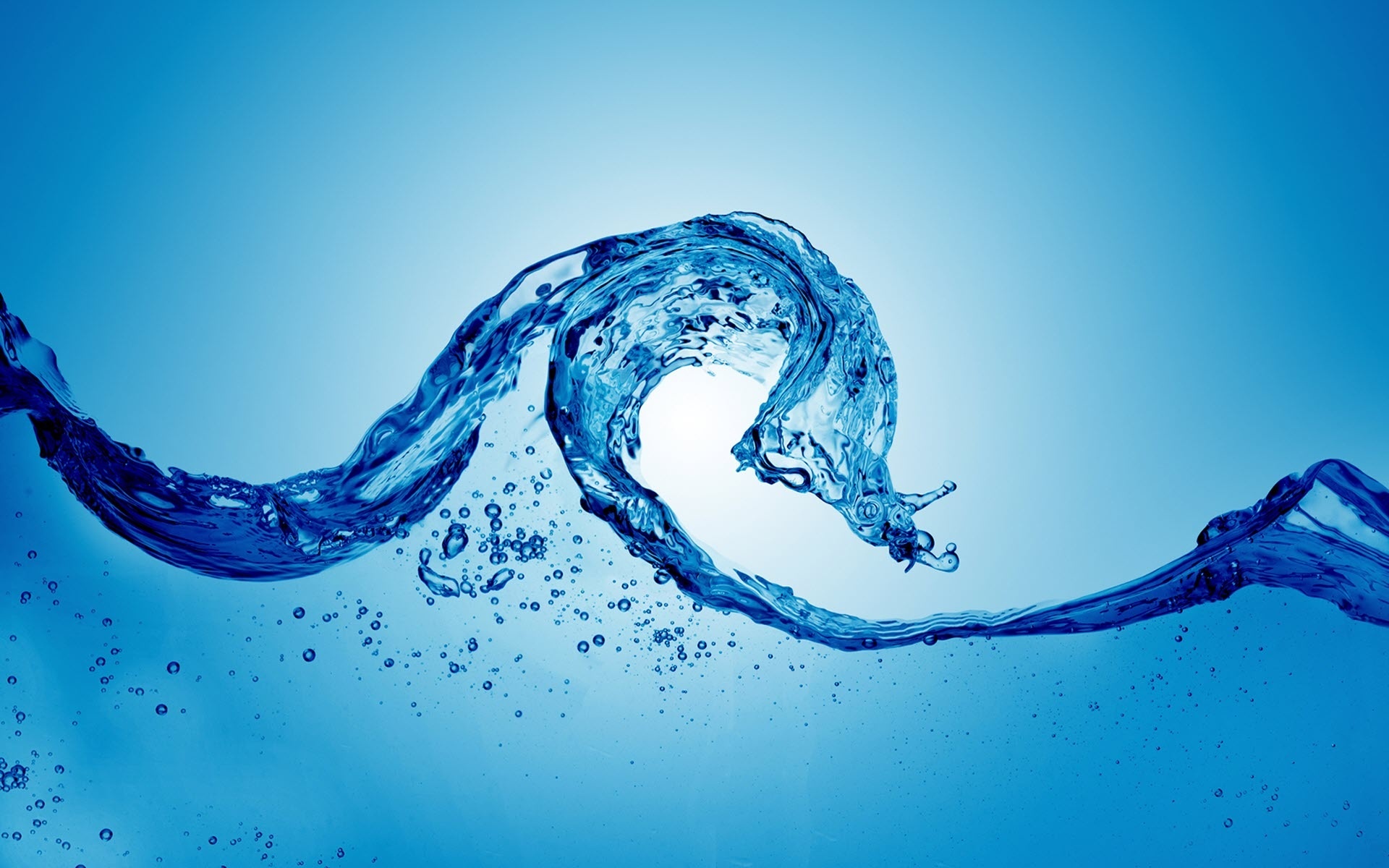
54.
What property of water is shown in the picture?
a)
capillary action
b)
surface tension
c)
evaporation
d)
universal solvent
55.
Which characteristic makes water require a lot of energy to change temperature?
a)
Cohesion
b)
Adhesion
c)
High Specific Heat
d)
Universal Solvent
56.
What is the property that makes water molecules attracted to water molecules?
a)
Cohesion
b)
Adhesion
c)
Universal Solvent
d)
Changes Density
57.
Water molecules are attracted to other kinds of molecules because of the property.
a)
Cohesion
b)
Adhesion
c)
Surface Tension
d)
Universal Solvent
58.
Water is a universal solvent because it...
a)
It can be found anywhere
b)
It freezes when it gets cold
c)
floats when frozen
d)
Dissolves most substances
59.
How much of the planet is water?
a)
25%
b)
50%
c)
70%
d)
90%
60.
Water is crucial for all forms of life.
a)
True
b)
False