wayground logo

Free Printable Worksheets

NEW

Font size

S
M
L
XL
Worksheets

Space

Total questions: 54

Worksheet time: 33mins

Name
Class
Date
1.

__________holds all of the planets in orbit around the sun.

a)

Force

b)

Motion

c)

Weight

d)

Gravity

2.
The sun and everything that revolves around it.
a)
solar system
b)
galaxy
c)
universe
d)
rotation
3.
The imaginary line running through the center of Earth.
a)
axis
b)
moon
c)
constellation
d)
orbit
4.
The closest star to the Earth.
a)
Sun
b)
moon
c)
Venus
d)
siriu
5.
What causes Earth's seasons?
a)
the tilt of Earth's axis
b)
Earth's rotation
c)
the revolution of the Moon
d)
Earth's distance from the Sun
6.
The rotation of Earth on its axis causes the pattern of _____.
a)
night and day
b)
constellations
c)
Earth's seasons
d)
the phases of the moon
7.
It takes Earth _________ to make one complete rotation on its axis.
a)
24 hours
b)
365 days
c)
28 days
d)
24 days
8.
It takes about _____________ for the moon to go through all of its phases.
a)
28 days
b)
365 days
c)
24 hours
d)
24 days
9.
What is a saying to remember the order of the planets?
a)
my very excellent mother just served us nachos
b)
my very excellent mother just served us no pizza
c)
In a galaxy far, far, away
d)
my excellent mother gave us spam
10.
It takes Earth _____________ to make one revolution or orbit around the Sun.
a)
365 days
b)
365 hours
c)
28 days
d)
24 hours
11.
If it is winter in the Northern Hemisphere, what season is it in the Southern Hemisphere?
a)
Spring
b)
Fall
c)
Winter
d)
Summer
12.
Our planets in the solar system orbit the: 
a)
Moon
b)
Sun
c)
Sky
d)
Earth
13.
What is the unit of measurement used to measure the distance of galaxies or stars?
a)
light year
b)
centimeter
c)
millimeter
d)
grams
14.

At position A, which hemisphere would have summer?

a)

Northern hemisphere

b)

Southern hemisphere

15.
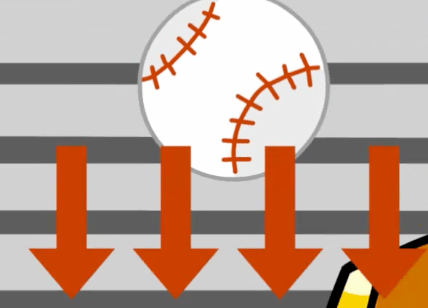
Why a ball falls to the ground?
a)
Earth's force of gravity is GREATER than the ball's, so the ball gets attracted to the ground. 
b)
Earth's force of gravity is LESS than the ball's, so the ball gets attracted to the ground. 
16.
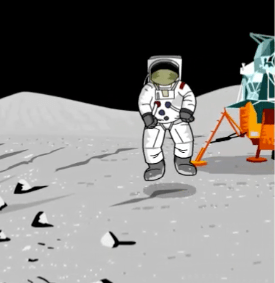
Why can astronauts jump and float a little on the Moon?
a)
Because the Moon's gravity is NOT that STRONG.
b)
Because the Moon's gravity is VERY STRONG. 
17.
Gravity is a _______.
a)
force that pulls everything  DOWN
b)
force that pulls objects together
c)
BOTH answers
d)
None of them.
18.
Objects with GREATER mass have a ______ force of gravity.
a)
STRONGER
b)
NOT TO STRONG
19.

The phases of the moon you see depends on

a)

Where you are on Earth's surface

b)

How much of the sunlit side of the moon faces Earth

c)

How much of the moon's surface is lit by the sun

d)

whether or not an eclipse is occurring

20.

A __________ is a chunk of ice & dust that has a bright head & a long narrow tail.

a)

asteroid

b)

planet

c)

meteoroid

d)

comet

21.
The ______is between the orbits of Mars & Jupiter.
a)
solar system
b)
asteroid belt
c)
terrestrial planets
d)
photosphere
22.
The four terrestrial planets are known for their _________
a)
hot temps
b)
deep atmospheres
c)
rocky surfaces
d)
large size
23.

A force of attraction between any two objects is called _____________.

a)

static electricity

b)

rotation

c)

gravity

d)

orbit

24.
When the Moon appears completely dark with no lit part visible from Earth, it is called _____________. 
a)
full moon
b)
waning gibbous moon
c)
old moon
d)
new moon
25.

What is the name of the event called when the Moon moves into Earth's shadow and is no longer reached by direct sunlight?

a)

solar eclipse

b)

lunar eclipse

c)

full moon

d)

cresent moon

26.
One kind of  _______ is the crescent Moon.  
a)
axis
b)
asteroid
c)
phase
d)
space probe
27.
Earth and the other planets closest to the Sun are made mostly of _______
a)
gas
b)
metal
c)
water
d)
rock
28.

For a solar eclipse to occur,

a)

the sun must be directly between Earth and the moon.

b)

The moon must be directly between Earth and the Sun

c)

the moon must be directly behind Earth

d)

Earth must be directly between the sun and the moon

29.
The rise and fall of ocean water that occurs every 12.5 hours or so. Is caused by the moon's gravity pulling on different parts of the Earth is a 
a)
tide
b)
wave
c)
wind
d)
gravitational pull
30.

Sunlight hits Earth’s surface most directly at the _______. Because of this, this particular area doesn't experience seasons.

a)

north pole

b)

south pole

c)

equator

31.

What are the reasons for the seasons?

a)

Earth's tilt and rotation.

b)

Earth's rotation and revolution.

c)

Earth's tilt and revolution.

d)

Earth's tilt and resolution

32.
The sky darkens at midday and the Sun seems to disappear. Minutes later, the Sun reappears and the daylight returns. The best explanation for this is...
a)
a partial solar eclipse is occurring
b)
the Moon has created a lunar eclipse
c)
the Sun has created a lunar eclipse
d)
the Moon has created a solar eclipse
33.
During a total lunar eclipse, what phenomenon is occurring?
a)
the Earth passes through the Moon's umbra
b)
the Moon passes through Earth's umbra
c)
the Earth passes through the Moon's penumbra
d)
the Moon passes through Earth's penumbra
34.
In the summer of 2017, parts of the U.S. experienced total darkness in the middle of the day.  What caused this?
a)
the Moon's umbra passing over the U.S.
b)
the Earth's penumbra passing over the Moon
c)
the Moon's penumbra passing over the U.S.
d)
Earth's umbra passing over the Moon
35.
When the Earth is closest to the Sun and the northern hemisphere is tilted away from the Sun, we will be experiencing what season?
a)
Summer
b)
Fall (Autumn)
c)
Winter
d)
Spring
36.
Telescopes like the Hubble Space Telescope are put into orbit around the Earth because...
a)
heavy rainfall and pavement radiation from Earth affecting images
b)
air traffic and magnetic interference from Earth distorting images
c)
light pollution and atmospheric interference from Earth distort images
d)
carbon dioxide and human overpopulation from Earth affect images
37.
What tool would you use to study stars and space?
a)
microscope
b)
oscilloscope
c)
telescope
d)
nanoscope
38.
Which of the following is true?
a)
The sun is not a star
b)
The sun is bigger than most stars
c)
The sun is made of helium and hydrogen
d)
The sun has a solid surface
39.
Why does the sun appear to be the largest star in the sky?
a)
It is far away
b)
It is very big
c)
It is the closest star to earth
d)
It is a planet
40.
How many planets are there?
a)
6
b)
7
c)
8
d)
9
41.
Fill in the blanks.
The sun rises in the ______ and sets in the ___________.
a)
north, south
b)
south, north
c)
east, west
d)
west, east
42.

All planets have moons except

a)

Mercury and Venus

b)

Earth and Saturn

c)

Mars and Jupitaer

d)

Uranus and Pluto

43.

Which of the following is not an inner planet?

a)

Mars

b)

Earth

c)

Venus

d)

Neptune

44.

The inner and outer planets are separated by the

a)

meteor shower

b)

asteroid belt

c)

milky way

d)

Earth

45.

Which of the following is not an outer planet?

a)

Mars

b)

Jupiter

c)

Saturn

d)

Neptune

46.

True or False

All the planets travel in an elliptical orbit.

a)

True

b)

False

47.

A celestial body of ice, dust, and rock with an elongated tail and elliptical orbit.

a)

asteroid

b)

comet

c)

meteor

48.
A natural chunk of rock or dust existing outside of Earth's atmosphere. 
a)
meteoroid
b)
meteorites
c)
comet
d)
asteroid
49.
Which planet is the largest in the solar system and has a Great Red Spot?
a)
Jupiter
b)
Mars
c)
Mercury
d)
Saturn
50.
Which of the following statements is correct?
a)
The outer planets are warmer than the outer planets.
b)
The outer planets are smaller than the inner planets
c)
The outer planets are made of gas.
d)
The outer planets have rocky surfaces.
51.
Which is the correct order of the inner planets?
a)
Jupiter, Saturn, Uranus, Neptune
b)
Mercury, Venus, Earth, Mars
c)
Mercury, Earth, Mars, Venus
d)
Jupiter, Mars, Uranus, Neptune
52.
What is one characteristic of Saturn?
a)
It would sink in water.
b)
it has a very large volcano.
c)
It has a large system of rings.
d)
It is tilted much more on its axis than other planets.
53.
Which planet has an atmosphere made mostly of poisonous gases?
a)
earth
b)
Mercury
c)
Venus
d)
Mars
54.
Which planet rotates on its side as seen from Earth?
a)
Earth
b)
Venus
c)
Uranus
d)
Neptune