
 Worksheets
Week 24 Review
Total questions: 55
Worksheet time: 42mins
Name
Class
Date
1.
How many Hydrogen are in 4H2O?
a)
6
b)
8
c)
2
d)
4
2.
2H2 + O2 ----> 2H2O What is the product?
a)
------>
b)
2H2O
c)
2H2+ O2
3.
Number of N in (NH₄)₂CrO₄
a)
1
b)
2
c)
8
d)
16
4.
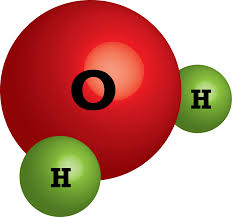
How many atoms of Hydrogen are in this compound
a)
1
b)
2
c)
3
d)
4
5.

What does the 1.00794 stand for?
a)
Hydrogen
b)
atomic number
c)
atomic mass
d)
atomic explosion
6.
an atom with atomic number 6 would have how many protons
a)
6
b)
12
c)
3
d)
cannot be determined
7.
the central region of an atom where its neutrons and protons are is its
a)
nucleus
b)
electron cloud
c)
core
d)
center
8.

What is the atomic mass?
a)
12
b)
6
c)
C
d)
18
9.

How many protons are in Carbon?
a)
12
b)
18
c)
6
d)
2
10.
bubbles forming is an example of a...
a)
physical change
b)
chemical change
11.
Most of the mass in an atom is concentrated in the...
a)
electrons
b)
nucleus
c)
protons
d)
empty space
12.
What does the nucleus consist of?
a)
Protons + Electrons
b)
Neutrons + Electrons
c)
Atoms
d)
Protons + Neutrons
13.

What's a valence electron?
a)
electrons in the second energy level
b)
electrons in the outermost energy level
c)
the atomic number
d)
electrons in the first level
14.
Which of the following has a full valence shell?
a)
Oxygen
b)
Neon
c)
Barium
d)
Carbon
15.
Which elements have the most similar chemical properties?
a)
K and Na
b)
K and Ca
c)
K and Cl
d)
K and S
16.
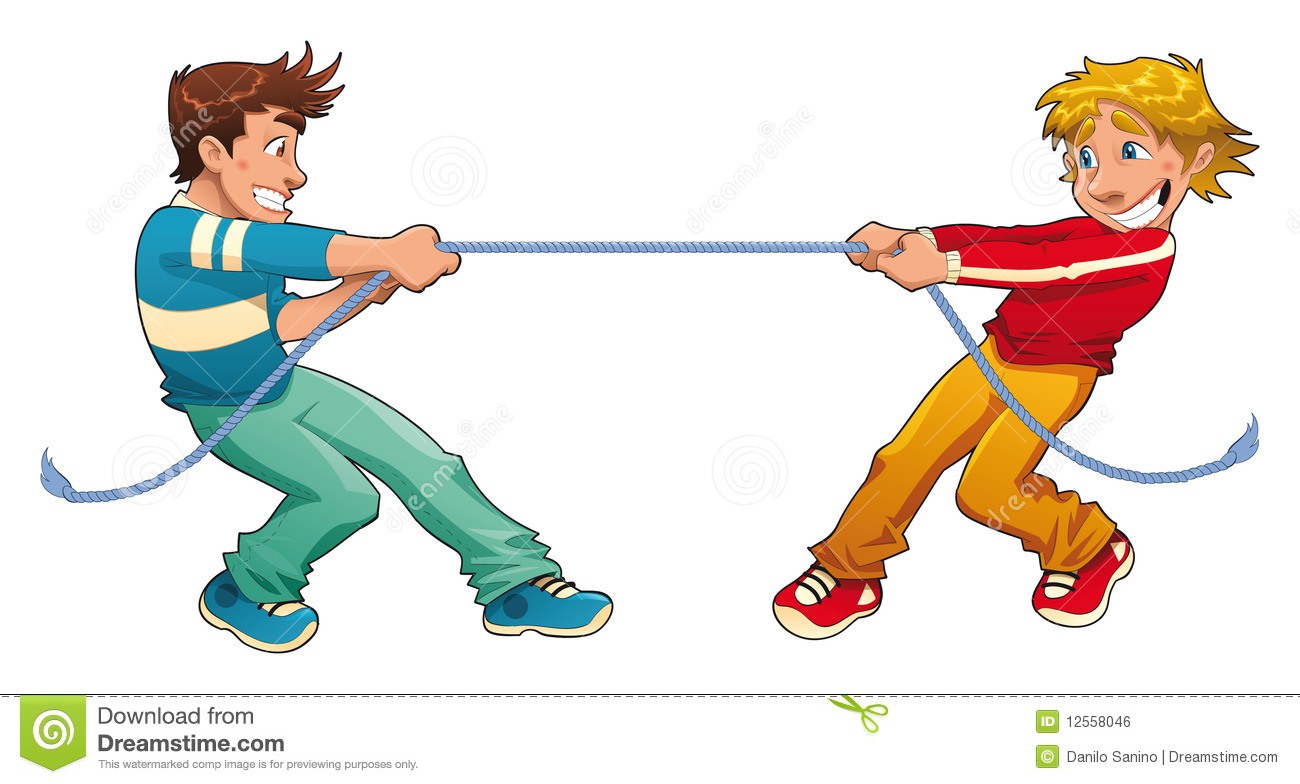
If these boys are pulling with the same amount of force. What will happen?
a)
The boy in blue will win.
b)
They will not move at all.
c)
The boy in red will win.
d)
Both will fall down.
17.

According to the graph how far does the person travel in the first 5 seconds?
a)
2 m
b)
10 m
c)
0 m
d)
5 m
18.

Which runner won the race?
a)
A
b)
B
c)
C
d)
It was a tie
19.

What is the net force?
a)
5000 N right
b)
4000 N right
c)
40 N left
d)
4000 N left
20.
What is the formula for force?
a)
F=M/A
b)
F=A/M
c)
F=M*A
d)
F=M*F
21.
If a 10 kilogram object accelerates suddenly at 15 m/s^2, how much force was applied to the object?
a)
150 Newtons
b)
15 Newtons
c)
150 kilograms
d)
100 kilograms
22.
If an object was accelerating at 10 m/s^2, and a force of 10 newtons was required to accelerate it, what was the object's mass?
a)
1 kilogram
b)
10 kilograms
c)
2 kilograms
d)
5 kilograms
23.

What happens when the area in which you live tilts away from the sun?
a)
It is summer.
b)
It is spring.
c)
It is winter.
d)
It is fall.
24.
What is the longest day of the year?
a)
winter solstice
b)
summer solstice
c)
fall equinox
d)
spring equinox
25.

Why is the Equator warmest?
a)
Because it is closest to the sun.
b)
Because it receives the most direct sunlight
c)
Because no clouds form here.
d)
Because it is far from the sun
26.
Why do we experience the changing of the season on the earth?
a)
distance from the sun
b)
rotation of the earth
c)
change in solar output
d)
tilt of the earth's axix
27.
When the moon is in between the earth and the sun it is a
a)
New Moon
b)
Full Moon
c)
First Quarter
d)
Third Quarter
28.

Which moon phase is seen from Earth at position #4?
a)
A
b)
B
c)
C
d)
D
29.

What moon phase comes before and after?
a)
before - waxing gibbous
after - 3rd quarter
after - 3rd quarter
b)
before - waxing gibbous
after - waning gibbous
after - waning gibbous
c)
before - waning gibbous
after - waxing gibbous
after - waxing gibbous
d)
before - 3rd quarter
after - 1st quarter
after - 1st quarter
30.

On December 7th there was a 1st quarter moon. When will a 3rd quarter moon start?
a)
December 10th
b)
December 14th
c)
December 17th
d)
December 21st
31.

There is a full moon on December 13th. When will the full moon occur in January?
a)
January 1st
b)
January 7th
c)
January 13th
d)
January 27th
32.
Which way does the moon revolve?
a)
clockwise
b)
counter clockwise
c)
some times it changes direction
d)
it doesn't revolve
33.

_____ have the longest wavelengths and lowest frequencies of all electromagnetic waves.
a)
microwaves
b)
radio waves
c)
gamma rays
d)
ultraviolet
34.

The shortest wavelength in visible light is______.
a)
violet
b)
red
c)
blue
d)
yellow
35.

Cell phones use_____________waves.
a)
Microwaves
b)
Gamma
c)
XRays
d)
Radio
36.

In the diagram given, what happens as we move to the left?
a)
Stars Get Larger
b)
Stars get Colder
c)
Stars get hotter
37.

Which star is the coldest?
a)
Yellow Star
b)
Red Star
c)
Orange Star
d)
Blue Star
38.
Which category is our Sun located in?
a)
White Dwarfs
b)
Supergiants
c)
Main Sequence
d)
Giants
39.
Compared to the rest of the stars, our sun is considered...
a)
Extremely Large and Cold
b)
Small with a medium temperature
c)
Medium size with medium temperature
40.

As a whole, Giants are considered hotter than White Dwarfs.
a)
True
b)
False
41.
A sled slides down a hill, reaches the level surface and eventually comes to a stop. The fact that the sled ultimately stops is best explained by _?__
a)
An unbalanced force would be required to keep the sled moving forward at constant speed
b)
The presence of an unbalanced force (e.g. friction) can cause a moving object to stop
c)
The presence of inertia causes it to stop
d)
The natural tendency of any object is to ultimately stop
42.
Inertia is the tendency of an object to resist a change in its ___________.
a)
temperature
b)
shape
c)
size
d)
motion
43.

Which best explains why we are able to accelerate forward when starting to run?
a)
As one leg moves backward, it provides an equal and opposite force for the other foot to move forward.
b)
No acceleration takes place. Runners are always at a fixed velocity.
c)
The striking foot pushes backward against the ground. The friction with the ground provides an equal and opposite force forward.
d)
The runner's upper body quickly leans forward, causing the entire body to begin accelerating forward
44.
All of the following are evidence of continental drift EXCEPT:
a)
similar rock layers on separate continents
b)
similar fossils on separate continents
c)
artifacts left by early humans
d)
tree fossils found in places trees do not grow
45.
The movement of Earth's crust along plate boundaries produces
a)
earthquakes
b)
volcanoes
c)
mountains
d)
All of these options.
46.
Which of these is NOT a sign that a chemical change has occurred?
a)
A change in state of matter
b)
An unexpected color change
c)
A temperature change
d)
The formation of a precipitate
47.
The Law of Conservation of Mass states
a)
that matter exists in all states and reacts the same
b)
that matter can only be changed into new substances by introducing a catalyst
c)
that matter exists in the same state throughout any chemical change
d)
that matter cannot be created or destroyed and that the mass of the products must equal the mass of the reactants
48.
How many Al atoms are in this compound? 4Al2O3
a)
2
b)
8
c)
6
d)
4
49.
Which of the following IS a physical change?
a)
Getting a haircut
b)
Rusty metal
c)
sour milk
d)
A compound
50.
How many Valance electrons does Iodine Have?
a)
6
b)
16
c)
7
d)
17
51.
The noble gases have how many valence electrons?
a)
1
b)
2
c)
7
d)
8
52.
Membership in a family is based on the number of
a)
electrons
b)
valence electrons
c)
protons
d)
neutrons
53.
The atomic number tells you what?
a)
number of electrons
b)
number of protons
c)
number of neutrons
d)
both electrons and protons in an atom.
54.
If an element is non-reactive and has a full valence level it would be located in column
a)
11
b)
18
c)
8
d)
1
55.
If an element reacts violently when placed in water, is a metal, and is very soft it would be classified as belonging to
a)
the carbon family (group 14)
b)
the halogen family (group 17)
c)
the alkali family (group 1)
d)
the noble gas group (group 18)
100 %

