wayground logo

Free Printable Worksheets

NEW

Font size

S
M
L
XL
Worksheets

Earth Science Review

Total questions: 50

Worksheet time: 55mins
Name
Class
Date
1.
Which type of rock results from melting and cooling of magma?
a)
Igneous
b)
Metamorphic
c)
Sedimentary
d)
Extrusive
2.
Which type of rock forms from extreme heat and pressure?
a)
Igneous
b)
Sedimentary
c)
Organic
d)
Metamorphic
3.
A metamorphic rock changes into an igneous rock by what two processes?
a)
Melting and cooling
b)
Extreme heat and pressure
c)
Compaction and cementation
d)
Weathering and erosion
4.
Wind, water, and ice breaking down rock is called
a)
Erosion
b)
Deposition
c)
Compaction
d)
Weathering
5.
The process in which dissolved minerals crystallize and glue sediment together.
a)
compaction
b)
deposition
c)
organic rock
d)
cementation
6.
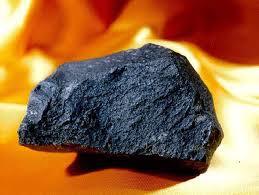
This rock was found near the mouth of a volcano. What type of rock is this?
a)
Sedimentary
b)
Igneous
c)
Metamorphic
7.
What are the 3 major types of rocks?
a)
Igneous, Metamorphic, Sedimentary
b)
Metamorphic, Igneous, Cementation
c)
Brown, Red, Gray
d)
Streak, Hardness, Breakage
8.
A fossil is ____.
a)
a dead rotten animal
b)
the remains of things that lived a long, long time ago
c)
a plant that dried up
9.
According to the law of superposition, which layer is the youngest?
a)
A
b)
B
c)
C
10.
Who is the scientist who proposed Continental Drift Theory?
a)
Albert Einstein
b)
Alfred Wegener
c)
Isaac Newton
d)
John Dalton
11.
What causes the continents to move?
a)
Magma
b)
Tectonic Plates
c)
Earthquake
d)
All of the choices
12.
What drives tectonic plate movement? 
a)
gravity
b)
coriolis effect
c)
convection currents
d)
the earth's magnetic core
13.
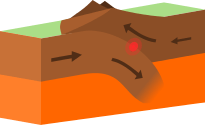
What type of plate boundary is this?
a)
Plate
b)
Divergent
c)
Convergent
d)
Transform
14.
What type of event will occur at this boundary?
a)
Earthquake
b)
Volcano Eruption
c)
Tornado
d)
Mountain Building
15.

Oceanic Ridges are formed by _______ plate boundaries

a)
Convergent
b)
Transform
c)
Plate
d)
Divergent
16.

Islands can form from magma which is pushed up at a __________ plate boundary

a)

Divergent

b)

Convergent

c)

Transform

17.
Mountains are created when....
a)
Two continental plates collide
b)
Two oceanic plates pull apart
c)
An Oceanic plate subducts under a Continental Plate
d)
Two continental plates pull apart
18.
The volcanoes on the Hawaiian Islands form due to which of the following?
a)
Divergent Boundary
b)
Hot Spot
c)
Subduction Boundary
d)
Transform Boundary
19.

What is Magma when it reaches the surface of Earth?

a)

Lava

b)

Magma

c)

Pyroclastic flow

d)

None of these

20.
Volcanoes are found...
a)
on land
b)
under water
c)
on islands
d)
all of the above
21.
What is the best explanation for why oceanic crust is subducted by continental crust?
a)
The oceanic crust is cooler than continental crust.
b)
Continental crust is denser than oceanic crust.
c)
Oceanic crust is denser than continental crust.
d)
The oceanic crust is hotter than continental crust.
22.

When an oceanic plate converges with a continental plate what is formed?

a)

Trench

b)

Subduction zone

c)

Volcanic Arc

d)

All of these

23.
A tsunami is caused by______
a)
lots of rain
b)
a meteorite 
c)
a tornado
d)
an earthquake
24.

Earth's plates . . .

a)

are constantly moving and changing the face of the earth

b)

Never move

c)

Move seldom and very fast

d)

Move when in the mood to move

25.
What is / are sign(s) that a volcano may erupt soon?
a)
Earthquake activity in the area
b)
Changes in the shape of the volcano
c)
Different amounts of gas being produced
d)
All of these are signs
26.
Where are most volcanoes found?
a)
Southern Hemisphere
b)
Ring of Fire
c)
Mid-Atlantic Ridge
d)
Hot Spots
27.
Which parts of the environment can humans affect?
a)
air
b)
food
c)
soil and water
d)
all of the above
28.

Many uses of land, including logging, mining, and farming, expose the soil, which can lead to

a)

erosion.

b)

nutrient depletion.

c)

development.

d)

crop rotation.

29.

Most of Earth's water (about 97 percent) is

a)

freshwater in lakes and rivers.

b)

salt water in the oceans.

c)

in the form of snow or ice.

d)

in the clouds.

30.

How have the Everglades been affected by urbanization and development?

a)

Water flow has remained about the same.

b)

Habitats and wildlife have greatly declined.

c)

Water quality and drainage has improved slightly.

d)

Its ability to absorb flood waters has improved.

31.

When humans clear forested areas, this is called...

a)

deforestration

b)

dewooding

c)

forestation

d)

slash & burn

32.
What layer is a semisolid and acts like a plastic?
a)
Lithosphere
b)
Mantle
c)
Asthenosphere
33.
The lithosphere combines what two layers?
a)
Athenosphere & Crust
b)
Crust & Upper Mantel
c)
Mantel & Athenosphere
34.
What happens to temperature as we move from the crust to the inner core?
a)
Decreases
b)
Increases
35.
This layer of Earth is solid Iron and Nickel
a)
Outer Core
b)
Mantle
c)
Inner Core
d)
Crust
36.
Identify layer  #20.
a)
mantle
b)
asthenosphere
c)
inner core
d)
outer core
37.
Scientists determine what Earth’s interior looks like by using:
a)
Volcanoes
b)
Seismic Waves
c)
Continental Drift
d)
Convection Currents
38.
Which layer of the earth has the lowest temperature?
a)
Crust
b)
Mantle
c)
Outer Core
d)
Inner Core
39.
What is the correct order (starting from the surface) of Earth's layers?
a)
crust, outer core, inner core, mantle
b)
mantle, outer core, inner core, crust
c)
crust, mantle, outer core, inner core
d)
outer core, inner core, crust, mantle
40.
Earth's magnetic field results from movements in the
a)
mantle
b)

outer core only

c)

inner core and outer core

d)
crust
41.
Which layer of Earth is made up of tectonic plates?
a)
outer core
b)
inner core
c)
asthenosphere
d)
lithosphere
42.

1. What is one of the greatest threats to biodiversity on Earth?

a)

habitat destruction

b)

loss of drinking water

c)

decrease in food supply

d)

pollution

43.

1. Why might an introduced animal species overrun native species in an ecosystem?

a)

. Its population size is smaller than those of native species.

b)

. It is more energy efficient, so it eats less food.

c)

It is a predator of the native species.

d)

It often has no natural enemies

44.
Most water pollution is the result of
a)
human activities.
b)
drought.
c)
volcanic eruptions.
d)
storms.
45.
What long-term impact could the destruction of large areas of forests have on Earth?
a)
decreased rates of erosion
b)
increased atmospheric carbon dioxide levels
c)
decreased amounts of acid rain
d)
increased atmospheric oxygen levels
46.
Which organism would have the greatest concentration of pollution?
a)
zooplankton
b)
large fish
c)
fish-eating birds of prey
d)
small fish
47.
All of the following are examples of environmental changes that can be caused by humans except - 
a)
clearing land for housing developments
b)
pesticides
c)
volcanic eruption
d)
pollution
48.

Spreading fertilizer on your lawn may be good for your grass but it can be bad for the environment because

a)

it can lead to pollution of nearby soil from animals walking through your grass.

b)

it can lead to pollution from runoff into nearby water sources.

c)

it could seep through the grass into your pipes and into your houses drinking water.

d)

it can pollute the air.

49.

As the human population grows, the demand for natural resources stays the same.

a)

true

b)

false

50.

I can personally make a difference in the environment.

a)

True

b)

False