
 Worksheets
Chapter 4 Test
Total questions: 50
Worksheet time: 2hrs 39mins
Which arrow points to the protons?
Which arrow points to the neutrons?
Which arrow points to the electrons?
Drag the correct response to the appropriate box on the chart.
Same mass as a neutron
Same mass as a proton
much less mass then protons and neutrons
Nucleus
Nucleus
Electron Cloud
Positive
Negative
Neutral/No charge
These are the SMALLEST subatomic particles
Proton
Neutron
Electron


Where is the element's atomic NUMBER located?
the top
the bottom
the top + the bottom
the number of protons + the number of neutrons

Where is the element's atomic MASS located?
at the top
at the bottom
the top number + the bottom number
the number of protons + the number of neutrons
Generally, the number of neutrons ____ the number of protons in an atom.
=
<
>
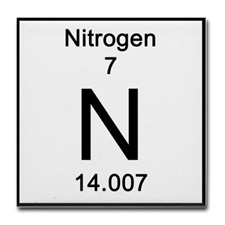


Vertical columns ae called groups in the Periodic Table.
T
F
The group number of an atom is equal to the number of outermost shell electrons in the atom.
T
F
an arrangement of the elements according to their atomic numbers so that elements with similar properties are in the same column and properties repeat from row to row
Periodic Table of Elements
Atomic Theory
Isotopes
Subatomic Particles
An element has the mass number 12 and atomic number 6. The number of neutrons in it is:
6
10
4
8
If an atom has 10 electrons, how many protons does it have?
0
1
10
5
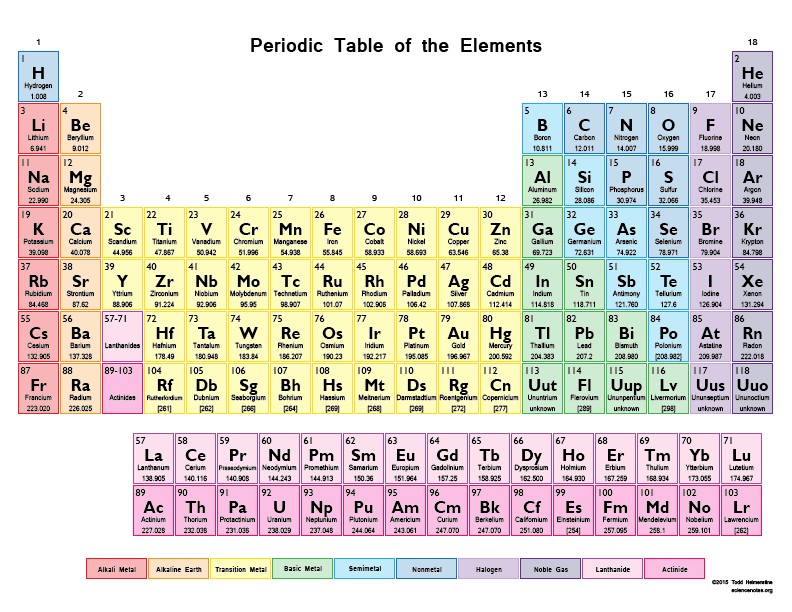
How many protons are in a sodium atom, Na? (tap to enlarge the periodic table)
Sodium has 1 proton.
Sodium has 3 protons.
Sodium has 11 protons
Hydrogen (H) is the lightest element so its atomic number is 1
true
false
Nearly everything on Earth is made from element(s) on the periodic table.
true
false
How many electrons does the first shell hold?
1
2
4
8
How many electrons can be in the 2nd energy level hold?
1
2
4
8
If both protons and neutrons are found in the nucleus, why is it positive?
The reason it is positive is because neutrons have a positive charge and protons have a negative charge.
The reason it is positive is because neutrons have a negative charge and protons have a positive charge
The reason it is positive is because neutrons have no charge and protons have a positive charge.
The reason it is positive is because neutrons have no charge and protons have a negative charge

How many Protons are in Magnesium?
24.305
24
12
6
Match the Following
Element
A substance that cannot be broken down into simpler substances by chemical means.
Atom
The smallest unit of an element that keeps the element’s chemical properties.
Nucleus
The dense center of an atom containing protons and neutrons.
Proton
Positively charged particles found in the nucleus of an atom.
Neutron
Particles with a neutral charge found in the nucleus of an atom.

How many electron shells does the pictured atom have?
1
2
3
4

How many valence electrons does the pictured atom have?
20
3
2
4
What is a Lewis Dot Structure?
It shows all of the particles in the atom.
Contains protons and neutrons
Only shows the element symbol and it's outer most electron shell
Contains protons and electrons
Generally, atoms form bonds so that _______________.
Each atom loses its electrons
Each atom has a stable electron configuration
Each atom has an unstable electron configuration
Each atom gains electrons

What type of bonding does this picture show?
Ionic
Covalent
In which type of bond are electrons transferred?
ionic
covalent

Is this atom stable or unstable?
Stable
Unstable

Is this atom stable or unstable?
Stable
Unstable

How many valance electrons does this atom have?
1
2
5
8

How many valance electrons does this atom have?
1
2
3
4
(a) is the build up of electrical charges on the two objects that are rubbed together.

In the electrolysis of water, which gas fills up more of the test tube?
Hydrogen
Helium
Oxygen
H2O

