
 Worksheets
Unit 2, LC 2 Test Review
Total questions: 53
Worksheet time: 49mins
Finding fossils of coral along a highway is evidence that
the road was once underwater
coral used to live on land
in the past, the area was underwater
coral was used to build the road
Fossils can be used to
identify past environments
identify past geologic events
identify past climates
all of the above

Homologous Structures help us to understand that
Many species are no longer alive.
Some species share a common ancestor
All organisms share similar bones.

The data in the diagram is evidence that —
a new species of horse suddenly appeared
horses slowly developed over time
horses have similar stages of rapid embryological development
horses have a common ancestry with other hooved animals

These limbs provide evidence of common ancestry because they —
have the same basic structure
perform the same function
are the same size
are parts of mammals

The fact that both these mammals incubate their immature offspring in a pouch provides evidence that they —
belong to the same species
must range great distances to eat
have very similar skeletal structures
are descended from a common ancestor

Which statement is best supported by the observable structures of the different humerus
The primates lived in similar environments.
The primates shared a common ancestor.
The primates interbreed with similar organisms in a population.
The primates had diets that consisted of similar types of foods.


What are the different types of evidence for evolution?
fossils
DNA similarities
similarities in embryos
similarities in anatomy
all of the above

complex life forms are in the newest rocks.
true
false

3. What type of animal does the fossil in the picture look like?


6. If a fern fossil is found in a rock layer lower than a fossil of a small fish, the fern is probably older.
true
false
9. A fossil with fins shows that the animal most likely could _____.
walk
fly
move through water
et meat
Homologous structures


Same/Similar structures
Homologous Structures
Analogous Structures
Molecular Structures
Embryonic Homologous


The pelvic bone of whales is not needed for movement within the water. This is an example of a(n) ______________ structure.
vestigial
analogous
homologous

What has the fossil record shown scientists?
There are many similarities between species.
Modern animals have been on Earth for years.
Mammals have been around for the longest amount of time.
Groups of animals have always been different.
How do fossils support the idea that living things evolved over time?
Simple life forms are in the oldest rocks.
Simple life forms are in the newest rocks.
Fossils do not support the theory of evolution.
Complex life forms are in the oldest rocks.
In its earliest stage of development, an organism is called a(n) _______________.
embryo
vestige
vertebrate
digit
Homologous structures are derived from a body part of a (a) ancestor.
______________ means serving little or no useful purpose.
Homologous
Vestigial
Pharyngeal
Analogous

This image shows the early embryonic development of three organisms. The striking similarities of the three organisms shown indicate -
the three organisms all contain a mutated sequence of DNA.
the three organisms are all the same species.
the three organisms are closely related.
the three organisms most likely share a common ancestor.
Though the leaves of flowers and cacti appear very different, their leaves are homologous because -
the basic function is different as well.
they have a similar basic structure.
the leaves fall from both plants.
they serve no useful purpose.
What is comparative anatomy?
The science dealing with the structure of animals and plants
The science of life or living matter in all its forms and phenomena
The study of the functions and activities of living organisms and their parts, including all physical and chemical processes
The study of evolutionary relationships between homologous structures
Embryonic development in some organisms looks very similar. Many scientists believe these similarities indicate -
that the organism may share a common ancestor.
that the organisms share homologous chromosomes.
that the organisms have analogous structures.
that no evolution has occurred.
_________________ structures are structures that do not show common ancestry even though they might be superficially similar.
Homologous
Mutated
Vestigial
Analogous

The ___________ states that older rocks are in deeper layers and rock layers on the top are younger.
Law of Conservation
Law of Old Rocks
Law of Superposition
Law of Young Rocks
Wisdom teeth is an example of ________________________.
Homologous structures
Vestigial structures
Analogous structures

Which statement provides the best evidence that Ambulocetus natans is an ancestor of Basilosaurus isis?
Homologous structures occur in each fossil.
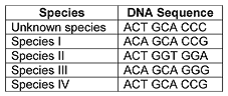
Similar nitrogenous bases are found in the DNA of each fossil.
The fossils were found in different locations.
The youngest fossil is larger than the older fossils.


What type of evidence is shown in the image above?
Fossils
Vestigial structures
Homologous Structures
DNA

body parts in organisms that have the same functions, but have different structures
analagous structures
homologous structures
vestigal structures
What is equivalent structures in different organisms that do not come from a common ancestor, but perform the same function?
Analogous Structures
Homologous Structures
Vestigial Structures
Dichotomous Key

How can evolutionary relationships among organisms be determined by comparing embryonic development?
Embryos retrace their ancestral stages during embryonic development.
Embryos of more closely related organisms show greater similarities in development.
Embryos that develop inside eggs lack similarities to placental mammals.
Both fish and humans have a two chambered heart in an early stage of development.

