Worksheets
STAAR Review
Total questions: 55
Worksheet time: 2hrs 51mins

What is the total number of protons, neutrons, electrons in a Flourine, F, atom that has a mass number of 19?
19
25
9
28
Which statement correctly describes the location and charge of the electrons in an atom?
The electrons are inside the nucleus and has no charge
The electrons are outside the nucleus and has no charge
The electrons are inside the nucleus and has a negative charge
The electrons are outside the nucleus and has a negative charge
A mid-ocean ridge is located at the boundary of two tectonic plates. Which diagram correctly models the relative plate motion on each side of a mid-ocean ridge?


The photograph shows mountains in the Andes range in South America. Which statement describes the geologic process that is most likely responsible for the formation of these mountains?
They are along a transform plate boundary that is no longer active, so erosion is creating deep valleys.
They are along a transform plate boundary in which plates are currently moving side by side, causing earthquakes and faults
They are along a plate boundary in which plates are currently converging, causing uplift and steep slopes.
They are along a plate boundary in which plates diverged in the distant past, allowing new rock to build up.

The picture shows an aerialist walking on a tightrope and holding a balancing bar. An action-reaction pair of forces exists between -
Action-reaction = for every action, there is an equal and opposite reaction between two objects.
the aerialist's feet and the rope
the rope and the balancing bar
the two ends of the rope
the aerialist's arms and legs

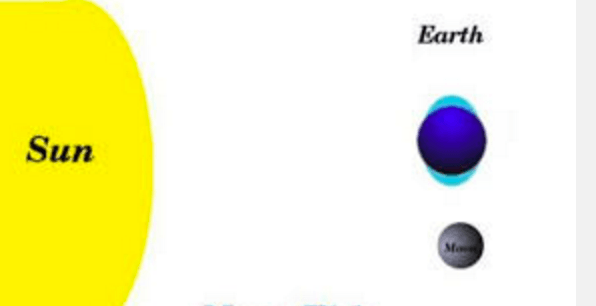
The beginning of autumn in North America is in September, but the beginning of autumn in South America is in March. The diagram shows the positions of Earth, the moon, and the sun on one day in September and one day in March. Why does autumn start in different months of the year in North America and South America?
Earth's orbit around the sun is not a perfect circle
North America has a larger landmass than South America
The moon has a greater pull on South America than on North America
Earth's axis has a 23.5o tilt

A student notices that the moon is full one evening. Which sequence of moon phases will the student observe over the next eight days?
Full, waning gibbous, third quarter
Full, waning gibbous, first quarter, waning crescent
Full, new, waning gibbous
Full, waxing gibbous, new, waning crescent

A student models convection currents in a laboratory activity. How are the convection currents in the student's model different from the convection currents in Earth's atmosphere and oceans?
The warm air in Earth's atmosphere and the warm water in Earth's oceans sink instead of rise
The heat source for Earth's atmosphere and oceans is the sun, which heats from above instead of below
Convection cells in Earth's atmosphere and oceans flow in the same direction instead of opposite directions
Cold air in Earth's atmosphere and cold water in Earth's oceans are less dense than warm air and warm water instead of being more dense.


A student cuts a piece of copper wire into the smallest possible pieces. Which statement best describes the smallest piece of copper wire?
The chemical properties of the copper change as the wire is cut.
The smallest piece of wire is no longer copper.
The copper changes properties and becomes a new element.
The wire is still copper and does not change by cutting.
Which group of lists best summarizes the subatomic particles and their electrical charge?
proton, negative
neutron, positive
electron, no charge
proton, positive
neutron, no charge
electron, negative
proton, positive
neutron, negative
electron, no charge
proton, no charge
neutron, positive
electron, negative
Which statement best describes the relationship between masses of subatomic particles?
proton equals electron
proton is greater than electron
proton is greater than neutron
neutron is less than electron

Which letter represents the protons?
Q
R
S
T

Which letter represents the neutrons?
Q
R
S
T

Which letter represents the electrons?
Q
R
S
T

Which letter represents the nucleus?
Q
R
S
T

What is the name of the element represented in the model?
Beryllium
Boron
Oxygen
Fluorine
Which statement best describes the location of subatomic particles?
The protons and electrons are in the nucleus, while the neutrons are in the cloud outside the nucleus.
The neutrons are in the nucleus, while the protons and electrons are in the cloud outside the nucleus.
The electrons and neutrons are in the nucleus, while the protons are in the cloud outside the nucleus.
The protons and neutrons are in the nucleus, while the electrons are in the cloud outside the nucleus.
An atom of an element contains 20 protons. What is the identity of the element?
Argon
Calcium
Neon
Potassium
An atom of an element contains 14 protons. What is the identity of this element?
Boron
Chlorine
Nitrogen
Silicon
Which of the following elements contains the greatest amount of protons?
Chlorine
Hydrogen
Oxygen
Sulfur
Which of the following elements contains the least amount of electrons?
Aluminum
Calcium
Fluorine
Neon
How many protons are in an atom of magnesium?
3
12
24
40
Which of the following below lists the correct number of protons, neutrons, and electrons for an atom of phosphorus?
protons 15
neutrons 15
electrons 15
protons 15
neutrons 16
electrons 15
protons 15
neutrons 16
electrons 16
protons 16
neutrons 15
electrons 15
What atom is represented by 35 protons, 45 neutrons, and 35 electrons?
Mercury
Bromine
Rhodium
Ytterbium

A
B
C
D

F
G
H
J


How many protons are in Zirconium (Zr) ?
40
91
30
65


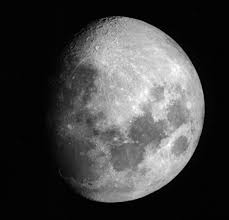
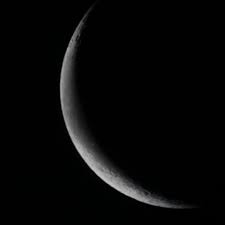
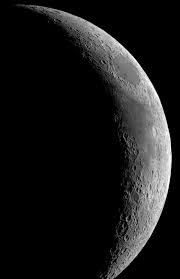
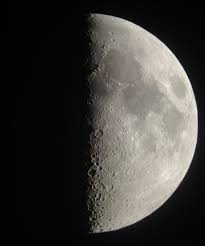
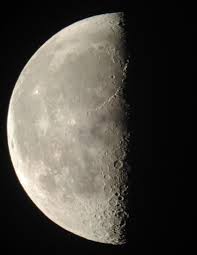
Name the moon phase
First Quarter
3rd/Last Quarter
New Moon
Full Moon