wayground logo

Free Printable Worksheets

NEW

Font size

S
M
L
XL
Worksheets

Physical Science 8th Grade Review

Total questions: 50

Worksheet time: 51mins

Name
Class
Date
1.
How many iron atoms are in 
Fe(NO3)2
a)
1
b)
2
c)
3
d)
6
2.
Can matter be created or destroyed?
a)
Yes, it can be created.
b)
Yes, it can be destroyed.
c)
No, matter is always conserved
d)
None of these
3.
The total amount of matter (atoms) before and after a chemical reaction (change), remains the same.
a)
True
b)
False
4.
What will weigh more when a chemical change is complete?  The reactants before the chemical reaction, or the product after the reaction is complete?
a)
They both will weigh the same
b)
The product always weighs more than the reactant
c)
The reactant will weigh more than the product
d)
They both will loose mass after the reaction
5.
Suppose a reaction were to happen in an open container in a lab.  During the reaction, the scientist observes the chemicals bubble, and produce a gas.   During the analysis the scientist notices that the reactants weighed 20 g when he started, and the product weighed 18 g.  Explain what happened.  
a)
His chemical reaction defied the law of conservation of mass
b)
The product destroyed mass during the reaction
c)
The reactants created matter during the reaction
d)
The gas that was produced was not able to be weighed since the container was open.  
6.
In a reaction A + B ----> C,  reactant A has 5g and product  C has 9g. How many grams does reactant B should have? 
a)
4g
b)
5g
c)
9g
d)
14g
7.
Bob puts 200 grams of ice into a pitcher with 900 grams of water. He gets distracted and comes back later to find that the ice has melted in the water. How many grams of water does Bob now have in the pitcher?
a)
200 g
b)
700 g
c)
1,100 g
8.
What is the law of conservation of mass?
a)
The amount of matter changes when reacted or changed.
b)
The mass of all reactants are changed during a physical or chemical change
c)
The mass of the reactants equals the mass of the products
d)
The mass of the products is different than the mass of the reactants.
9.
How much does a 5 gram Hershey's kiss weigh after it is melted in the microwave?
a)
5 grams
b)
3 grams
c)
7 grams
10.

Why does this picture demonstrate the Law of Conservation of Mass?

a)

the number of atoms of each element are the same on both sides

b)

they start out separate and end up combined

c)

the same elements are used

d)

it doesn't demonstrate the Law of Conservation of Mass

11.

What is the part of the chemical equation in green called?

Fe + S → FeS

a)

products

b)

reactants

c)

yield

d)

input

12.

What is the right part of a chemical equation called...

2H2 + O2 --> 2H2O

a)

Reactants

b)

Products

c)

Yields

d)

Output

13.
In a closed system, a chemical reaction takes place.  The mass of the reactants in the beginning of the reaction is 25g.  What does the mass have to be in the end of the reaction in order to follow the law of conservation of mass?
a)
25g
b)
You can't tell with the given information.
c)
30g
d)
15g
14.
If an atom has 3 electrons, how many protons does it have?
a)
1
b)
2
c)
4
d)
3
15.
The subatomic particle with a negative charge is the
a)
electron
b)
proton
c)
neutron
d)
nucleus 
16.
What is the atomic number?
a)
the number of protons
b)
the number of protons and neutrons
c)
the number of neutrons
d)
the number of protons and electrons
17.
What is the mass number?
a)
the number of protons
b)
the number of protons and neutrons
c)
the number of neutrons
d)
the number of protons and electrons
18.
How many protons does this isotope of titanium have?
a)
48
b)
22
c)
26
d)
70
19.
What is the mass number defined as?
a)
the number of protons
b)
the number of protons and neutrons
c)
the number of neutrons
d)
the number of protons and electrons
20.
If an atom has 10 electrons, how many protons does it have?
a)
0
b)
1
c)
10
d)
5
21.
An element has the mass number 12 and atomic number  6. The number of neutrons in it is:
a)
6
b)
10
c)
4
d)
8
22.

A solution is made up of

a)

Solvent

b)

Solute

c)

Both solvent and solute

23.

Which physical property is the same as a substance's freezing point?

a)

solubility

b)

boiling point

c)

specific heat

d)

melting point

24.

What energy transformation occurs in the chameleon as it quickly launches its tongue to catch an insect?

a)

Radiant --> Chemical

b)

Thermal --> Chemical

c)

Chemical --> Mechanical

d)

Mechanical --> Chemical

25.
What energy transformations take place when a battery-operated radio is in use?
a)
Electrical to chemical to light
b)
Sound to chemical to mechanical
c)
Chemical to electrical to sound
d)
Light to electrical to thermal
26.
Heat that is transferred because of touching is called...
a)
Radiation
b)
Conduction
c)
Convection
d)
Reflection
27.
Energy that does NOT need a medium to transfer heat is called...
a)
Radiation
b)
Conduction
c)
Convection
d)
Reflection
28.
Energy that does need a medium (usually air or water) to transfer heat is called...
a)
Radiation
b)
Conduction
c)
Convection
d)
Reflection
29.
Heat passes from...
a)
High to low
b)
Cold to hot
c)
Hot to cold
d)
Heat cannot be passed
30.
Why do objects cool down?
a)
All heat will slowly be destroyed.
b)
The cold attacks the heat.
c)
Heat is always transferring so the heat will always move to a cooler place.
d)
The heat disappears.
31.
Copper, Stainless Steel, Carbon Steel, and Zinc were all heated using the same thermal energy.  What material would be the coolest after being heated?
a)
Copper
b)
Carbon Steel
c)
Zinc
d)
Stainless Steel
32.
A solution with a pH of 8.6 would be...
a)
Acid
b)
Base
c)
Neutral
d)
Acid and Base
33.
According to the pH range which substance is more acidic than lemon juice
a)
Hydrochloric acid
b)
cabbage
c)
milk
34.
Feels slippery.
a)
Acids
b)
Bases
c)
All
35.
The electromagnetic spectrum is the entire range of
a)
colors of visible light
b)
ultraviolet light.
c)
gamma rays and X rays.
d)
EM waves.
36.
The entire electromagnetic spectrum is divided into regions by
a)
color
b)
speed
c)
wavelength
d)
the way they are used
37.
White light is the entire range of
a)
colors of visible light combined.
b)
ultraviolet light.
c)
gamma rays and X rays.
d)
EM waves.
38.

This type of wave does not need to travel through a medium. Instead, it travels through a vacuum.

a)

Transverse

b)

Electromagnetic

c)

Longitudinal

39.

As wavelength shrinks on the electromagnetic spectrum, the frequency...

a)

Increases

b)

Decreases

c)

Stays the same

d)

Disappears

40.

What is the color of visible light determined by?

a)

Amplitude

b)

Speed

c)

Frequency

d)

Sound

41.

Which electromagnetic radiation has the greatest frequency?

a)

Radio waves

b)

Visibile light

c)

Infrared

d)

X-rays

42.
At which point is potential energy greatest?
a)
W
b)
X
c)
Y
d)
Z
43.
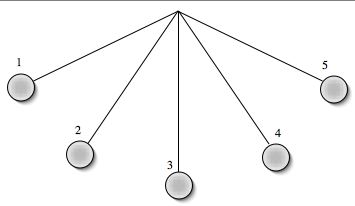
When a pendulum swings, at which point is kinetic energy highest?
a)
1
b)
2
c)
3
d)
4
44.
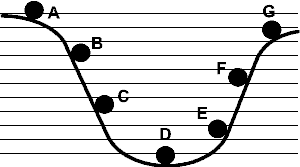
Which point has the most potential energy?
a)
G
b)
f
c)
b
d)
a
45.
Which would be greater at Position 2?
a)
Potential Energy
b)
Kinetic Energy
46.
Which would be greater at Position 1?
a)
Potential Energy
b)
Kinetic Energy
47.
At which position would potential energy be greatest?
a)
W
b)
X
c)
Y
d)
Z
48.
At which position would kinetic energy be greatest?
a)
W
b)
X
c)
Y
d)
Z
49.
At one point in time, many people thought disease was caused by fate or by incorrect behavior. Following the invention of the microscope, bacteria were discovered. After this, a new theory of what causes disease arose that was known as the germ theory.  Why was the original theory modified? 
a)
It quickly became obvious that germs cause disease.
b)
The person who invented the microscope became ill.
c)
New evidence prompted revision to the original ideas.
d)
The proponents of the germ theory had political power.
50.
The theory of plate tectonics states that Earth’s crust is made of sections that move. Which of the following is NOT evidence that can be used to support the theory of plate tectonics?
a)
The sea floor is spreading apart from mid-ocean rifts.
b)
Mountains push up where two plates bump into each other.
c)
The same species of bird is found in North America and South America.
d)
The continents look as if they fit together like pieces of a jigsaw puzzle.