wayground logo

Free Printable Worksheets

NEW

Font size

S
M
L
XL
Worksheets

Scientific Method & Maps

Total questions: 50

Worksheet time: 17mins
Name
Class
Date
1.
The summary at the end of an experiment that explains the results is... 
a)
conclusion
b)
procedures
c)
materials
d)
responding variable
2.
A testable prediction about a scientific investigation is a(n)
a)
Question
b)
Observation
c)
Hypothesis
d)
Experiment
3.
Stephen predicted that seeds would start to grow faster if an electric current traveled through the soil in which they were planted.
a)
recognize a problem
b)
test the hypothesis with an experiment
c)
form a hypothesis
d)
draw conclusions  
4.

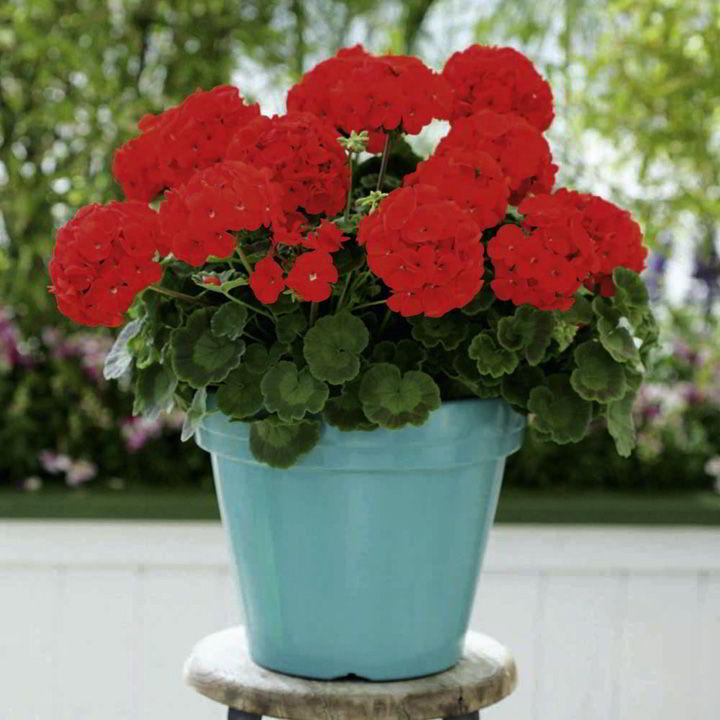
Susan said, “If I fertilize my geranium plants, then they will have more flowers.”

a)

recognize a problem

b)

test the hypothesis with an experiment

c)

form a hypothesis

d)

draw conclusions

5.

Bob read about growing plants in water. He wanted to know how plants could grow without soil.

a)

coming up with a question

b)

test the hypothesis with an experiment

c)

form a hypothesis

d)

draw conclusions

6.
Information you obtain through your senses, such as touch, sound and sight.
a)
observation
b)
hypothesis
c)
question
d)
conclusion
7.
A prediction or guess based on observations.
a)
data
b)
scientific process
c)
hypothesis
d)
question
8.
A series of steps used by scientists to solve a problem or answer a question. 
a)
scientific method
b)
recipe
c)
data collection
d)
metric system
9.

The information you collect while doing your experiment is called

a)

conclusions

b)

data

c)

hypotheses

d)

procedures

10.
The independent variable is the ONE thing you _____.
a)
change on purpose
b)
control or keep constant
c)
measure
11.
The independent variable is the ONE thing you _____.
a)
change on purpose
b)
control or keep constant
c)
measure
12.

How many independent variables should you have in an experiment?

a)

two

b)

as many as possible

c)

four

d)

one

13.
Why do we want to test one variable at a time?
a)
Because it is hard to setup a data table with more
b)
To know what is causing the changes. This helps us understand cause and effect.
c)
It is what has always been done
14.

The variable that is being measured or observed is called the _______________. Hint: this is the variable that is the result or effect

a)

independent variable

b)

dependent variable

c)

control variable

15.
If I ride my bike to school instead of walking, then I will get to school faster. What is the dependent variable?
a)
True
b)
How fast you get to school
c)
Riding a bike or walking
d)
False
16.
If I study for my scientific method test, then I will have a better test score. What is the dependent variable?
a)
Scientific Method
b)
Studying
c)
Independent variable
d)
Test score
17.
What is being changed in this experiment?
a)
ramp height
b)
the speed that the ball rolls
c)
type of ball
18.
What is being kept constant?
a)
ramp height
b)
speed of the ball rolling
c)
type of ball
19.
Why is it important for people to understand scientific principles and to think scientifically? 
a)
It allows people to make informed decisions.
b)
It helps people estimate costs of products
c)
It helps people choose where to live
d)
It allows people to explain sports like an expert
20.

A map that shows elevation on a flat piece of paper.

a)

general map

b)

topographic map

c)

navigation map

21.

What does the number 859 represent?

a)

river

b)

contour line

c)

top of hill

22.

What is the elevation at line C?

a)

800

b)

780

c)

760

23.

What is the contour interval on this map?

a)

50

b)

10

c)

100

24.

Which letter represents the highest point on the map?

a)

F

b)

B

c)

D

25.

Look at the contour image of the mountain range and pick the correct side view (profile)

a)
b)
26.

A contour interval is the

a)

difference in distance between one contact line and the next

b)

difference in color between one contour line and the next

c)

difference in elevation between one contour line and the next

27.

Look at the contour image of the mountain range and pick the correct side view (profile)

a)
b)
28.

What is the contour interval on this map?

a)

100

b)

10

c)

20

29.
a)
The map show the lines of longitude.
b)
The map shows the lines of latitude.
30.
a)
The map shows lines of longitude.
b)
The map shows lines of latitude.
31.
A _______________ is exactly half of the earth.
a)
Equator
b)
Hemisphere
c)
Tropic of Cancer
d)
Arctic Circle
32.
a)
Australia is located in the Eastern and Souther Hemispheres 
b)
Asia is located in the Southern and Eastern Hemispheres
c)
North America is located in the Southern and Western Hemispheres
d)
South America is located in the Northern and Eastern Hemispheres.
33.
Which of the following letter is at approximately 60 degrees S, 40 degrees W? 
a)
A
b)
D
c)
E
d)
H
34.
Which letter would you find at 15oS, 60oW?
a)
A
b)
C
c)
L
d)
H
35.
What is the name of this line at 0 degrees latitude?
a)

Equator

b)

Prime Meridian

c)

International Date Line

d)

North Pole

36.
Latitude and longitude are measured in ________.
a)

cups

b)

gallons

c)

degrees

d)

Fahrenheit

37.
What is the name of the line at zero degrees longitude?
a)

Equator

b)

Prime Meridian

c)

International Date Line

d)

North Pole

38.

The equator divides the Earth into what two hemispheres?

a)

Eastern and Southern

b)

Northern and Southern

c)

Western and Eastern

d)

Northern and Western

39.
Lines of ______ measure how far from the equator a place is located?
a)
Longitude
b)
Latitude
40.
Lines of longitude are also called  ____________.
a)
Hemispheres
b)
Meridians
c)
parallels
d)
International Date Lines
41.
To locate the exact places on Earth, one must look at: 
a)
latitude lines only
b)
the intersecting lines of latitude and longitude
c)
longitude lines only
d)
a neighboring area to describe the location
42.
The Prime Meridian separates the Earth into what two hemispheres?
a)
Northern and Southern
b)
Western and Eastern
c)
Northern and Eastern
d)
Southern and Western
43.
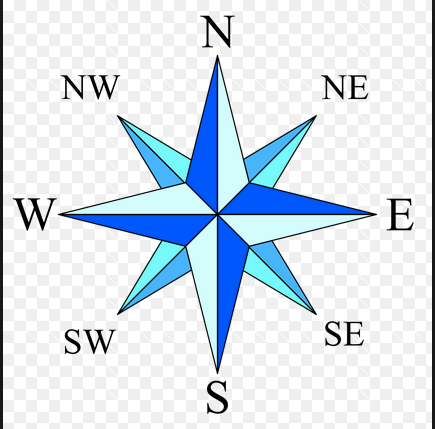
What is this object known as?
a)
map symbol
b)
map key
c)
map scale
d)
compass rose
44.

Approximately how wide is each time zone, in degrees?

a)

5o

b)

10o

c)

15o

d)

20o

45.
How many time zones are there in the world?
a)
24
b)
12
c)
6
d)
48
46.

When you are traveling East, do you add or subtract one hour for each time zone through which you travel?

a)

Add

b)

Subtract

47.

A map scale helps you figure out the _____________ between two places.

a)

Direction

b)

Size

c)

Distance

48.

What type of map is this?

a)

Political

b)

Physical

49.

What type of map is this?

a)

Political

b)

Physical

50.

What type of map is this?

a)

Political

b)

Physical