
 Worksheets
8.7ABC -- Causes of Day/Night/Seasons, Lunar Cycle, Ocean Tides
Total questions: 56
Worksheet time: 41mins
Name
Class
Date
1.

Why do globes lean sideways?
a)
To allow them to spin easier.
b)
To demonstrate the tilt of Earth's axis.
c)
To demonstrate the effects of gravity.
d)
To demonstrate day and night.
2.

What causes the seasons to change?
a)
The warming and cooling of Earth's core.
b)
The distance from the sun.
c)
Earth's tilt in relation to the sun.
d)
Earth's rotation on its axis.
3.

What happens when the area in which you live tilts away from the sun?
a)
It is summer.
b)
It is spring.
c)
It is winter.
d)
It is fall.
4.

Why does the area around the equator stay the same temperature all year?
a)
The equator rotates slower than the poles.
b)
The equator remains the same distance from the sun.
c)
The equator always receives direct sunlight.
d)
The equator has 18 hour days.
5.

Which season is taking place in the Southern Hemisphere in Position 1?
a)
Winter
b)
Spring
c)
Summer
d)
Fall
6.

Which season is taking place in the Northern Hemisphere in Position 2?
a)
Winter
b)
Spring
c)
Summer
d)
Fall
7.

Which season is taking place in the Northern Hemisphere in Position 3?
a)
Winter
b)
Spring
c)
Summer
d)
Fall
8.

Which season is taking place in the Southern Hemisphere in Position 4?
a)
Winter
b)
Spring
c)
Summer
d)
Fall
9.
What is Earth's annual motion around the sun called?
a)
Rotation
b)
Revolution
10.
One rotation of Earth is equal to
a)
a day.
b)
a year.
11.
How long does Earth take to make a complete rotation?
a)
365 days
b)
24 hours
12.
What would seasons be like if Earth's axis were straight up and down?
a)
Seasons would be the same.
b)
Seasons would be more extreme.
c)
There would be no seasons.
13.
If Earth rotated slower, we would have...
a)
shorter days.
b)
longer days.
c)
shorter years.
d)
longer years.
14.
Which seasons have an equal amount of daylight and darkness?
a)
Spring and Fall
b)
Winter and Summer
c)
Winter and Spring
d)
Summer and Fall
15.
The Northern Hemisphere gets __________ sunlight in the winter, which leads to _________ temperatures.
a)
less direct, hotter
b)
less direct, colder
c)
more direct, hotter
d)
more direct, colder
16.
A[n] ______________ tide occurs when the sun is at right angles to the line between Earth and the moon.
a)
high
b)
neap
c)
low
d)
spring
17.
A[n] ___________ tide occurs when the sun, Earth, and the moon are nearly in a line.
a)
spring
b)
high
c)
low
d)
neap
18.

What type of tides would this arrangement of earth-moon-sun create?
a)
neap tide
b)
spring tide
c)
new moon tide
d)
full moon tide
19.
Waning phases are when the light is being:
a)
Gained
b)
Lost
20.
Waxing phases are when the light is being:
a)
Gained
b)
Lost
c)
Staying the same
d)
Neither
21.

What is it called when you are able to see half the moon and the light on the moon is decreasing?
a)
New moon
b)
1st quarter
c)
Full Moon
d)
3rd quarter
22.

What is it called when more than half of the moon is lit on the right side and light is increasing?
a)
Waxing cresent
b)
Waxing gibbous
c)
Waning gibbous
d)
Waning cresent
23.

Does this picture represent a waxing or waning moon?
a)
waxing
b)
waning
24.

In winter, the axis of the earth is pointed away or toward the sun?
a)
towards
b)
up
c)
down
d)
away
25.

In summer, the axis of the earth is pointed away or toward the sun?
a)
towards
b)
up
c)
down
d)
away
26.

What is this phase?
a)
Waxing Crescent
b)
Waxing Gibbous
c)
Waning Crescent
d)
First Quarter
27.

Approximately how much time passes between the new moon and full moon?
a)
one month
b)
two weeks
c)
3 days
d)
24 hours�
28.

a)
1
b)
2
c)
3
d)
4
29.

Which phases are waxing?
a)
1 and 2
b)
2 and 3
c)
3 and 4
d)
4 and 5
30.

Which phases are waning?
a)
1 & 2
b)
2 & 4
c)
4 & 5
d)
5 & 1
31.

With this moon shining, which tide will be occurring?
a)
Spring Tide
b)
Neap Tide
32.
On thursday it was a full moon, now, it's Sunday, what is the lunar phase?
a)
Waning Gibbous
b)
New Moon
c)
Waning Crescent
d)
Waxing Gibbous
33.
New Moon, ______________, First Quarter
a)
Waning Gibbous
b)
Waxing Crescent
c)
Waxing Gibbous
d)
Waning Crescent
34.

What Moon phase is this?
a)
Waning Crescent
b)
Waxing Crescent
c)
Waxing Gibbous
d)
Waning Gibbous
35.
To spin on its own axis
a)
rotation
b)
revolution
36.
To go around another object
a)
rotation
b)
revolution
37.

What moon phase is this picture?
a)
This is the full moon phase.
b)
This is the waxing gibbous moon phase.
c)
This is the waning gibbous moon phase.
d)
This is the first quarter moon phase.
38.

If a New Moon occurred on April 1st, when would the moon be at position seven?
a)
in one week
b)
in two weeks
c)
in three weeks
d)
in four weeks
39.
If today was a full moon, what would be the moon phase in one week?
a)
New Moon
b)
First Quarter
c)
Third Quarter
d)
Full Moon
40.
Rising and falling of Earth's sea levels due to the gravitational pull of the moon and sun on earth as it rotates.
a)
Moon Phases
b)
Tides
c)
Seasons
41.
Strongest tides occurring during new and full moon
a)
Neap tides
b)
Spring tides
42.
Weakest tides occurring during 1st and last quarter
a)
Spring tide
b)
Neap tide
43.

Name the moon phase
a)
waning crescent
b)
waxing crescent
c)
waning gibbous
d)
waxing gibbous
44.
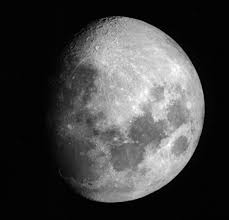
Name the moon phase
a)
waning crescent
b)
waxing crescent
c)
waning gibbous
d)
waxing gibbous
45.
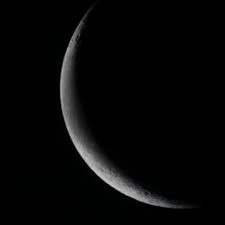
Name the moon phase
a)
waning crescent
b)
waxing crescent
c)
waning gibbous
d)
waxing gibbous
46.

Name the moon phase
a)
waning crescent
b)
waxing crescent
c)
waning gibbous
d)
waxing gibbous
47.
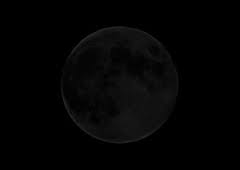
Name the moon phase
a)
First Quarter
b)
Last Quarter
c)
New Moon
d)
Full Moon
48.
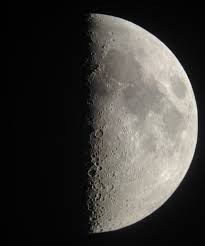
Name the moon phase
a)
First Quarter
b)
Last Quarter
c)
New Moon
d)
Full Moon
49.
How much of the moon is always lit?
a)
can't tell
b)
always changes
c)
half
d)
3/4
50.

What moon phase came right BEFORE this one?
a)
First Quarter
b)
Last Quarter
c)
New Moon
d)
Full Moon
51.
How many phases does the moon go through?
a)
4
b)
8
c)
10
d)
16
52.
As the moon's shape appears to get smaller, we say that the moon is _.
a)
swelling
b)
waxing
c)
waning
d)
disappearing
53.
Phases of the moon in which the moon appears to be getting larger are referred to as _.
a)
waxing
b)
waning
c)
new
d)
eclipse
54.
The cycle of the moon lasts about a _.
a)
day
b)
year
c)
week
d)
month
55.

Name the moon phase that would come AFTER this moon.
a)
waning crescent
b)
waxing crescent
c)
waning gibbous
d)
waxing gibbous
56.

At position A, which hemisphere would have summer?
a)
Northern hemisphere
b)
Southern hemisphere
100 %

