wayground logo

Free Printable Worksheets

NEW

Font size

S
M
L
XL
Worksheets

Unit 3 Earth

Total questions: 56

Worksheet time: 50mins

Name
Class
Date
1.
Sediments building up over time, creating layers
a)
igneous Rocks
b)
Deposition
c)
Lithification
d)
Index fossils
2.
What is the process that picks up and moves weathered rocks?
a)
deposition
b)
landslide
c)
weathering
d)
erosion
3.
Select the answer that shows the order of events a rock goes through.
a)
erosion, weathering, deposition
b)
weathering, erosion, deposition
c)
deposition, weathering erosion
d)
erosion, deposition, weathering
4.
A cliff formed near the ocean.  Which statement best describes how this cliff formed?
a)
Warm air melted the rock.
b)
Sun rays evaporated the rock.
c)
Ocean waves washed away rock.
d)
Plant roots pushed away the rock.
5.
Weathering causes rocks and minerals to break into smaller pieces.  Which event is the best example of weathering?
a)
a raindrop splashing in a lake
b)
a snowball rolling down a mountain
c)
a tree root growing into the crack of a rock
6.
Over long periods of time, deposition may change the Earth’s surface by _____.
a)
forming new land features
b)
breaking down large rocks into smaller ones
c)
washing away beaches
d)
severely draining topsoil
7.
What type of weathering is it when acid rain breaks down and changes the rock.
a)
chemical weathering 
b)
physical or mechanical weathering
c)
erosion
8.
What is sediment?
a)
a chemical reaction
b)
tiny pieces of weathered rock carried by wind or water
c)
pollution
9.
Ice wedging will
a)
wear down rocks as they bounce together 
b)
break up rocks when the water in cracks freezes and thaws
c)
peel away loosend material from the surface of rocks. 
10.
How do plants weather rocks?
a)
during photosynthesis
b)
when roots grow into cracks of rocks and expand the rock
c)
when the plant moves water from the roots to the leaves
11.
These rocks were made smooth by wind blowing smaller rock particles across their surface.  This is an example of:
a)
ice wedging
b)
chemical weathering
c)
acid rain
d)
abrasion
12.
This type of weathering occurs when rock is physically broken down into smaller pieces of rock.
a)
mechanical weathering
b)
chemical weathering
c)
erosion weathering
d)
deposition
13.
The natural chemical or physical processes that breaks down rock on Earth's surface.
a)
weathering
b)
erosion
c)
deposition
d)
jackhammering
14.
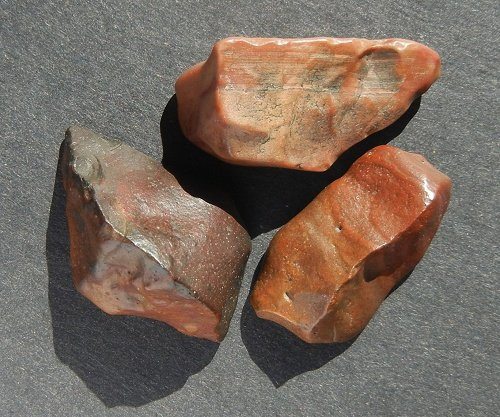
These rocks were broken apart from the continuous freeze/thaw of water in the cracks of the rocks. This is an example of:
a)
ice wedging
b)
acid rain
c)
permeability
d)
abrasion
15.
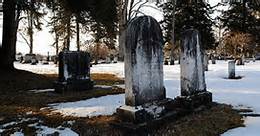
These gravestones have slowly broken down and turned a blackish color due to the action of:
a)
ice wedging
b)
abrasion
c)
acid rain
d)
mechanical weathering
16.
How is mechanical weathering different from chemical weathering?
a)
Chemical weathering happens over much shorter time frame than mechanical weathering.
b)
Chemical weathering changes the chemical composition of rocks; mechanical weathering does not.
c)
Chemical weathering occurs only in tropical climates; mechanical weathering occurs only in cool climates.
d)
Chemical weathering occurs only in the mountains; mechanical weathering occurs only on flat land.
17.
Weeds growing into the cracks in a sidewalk and the sidewalk begins to crumble is an example of:
a)
mechanical weathering
b)
chemical weathering
18.
A metal statue slowly turning green after years of being outside is an example of:
a)
mechanical weathering
b)
chemical weathering
19.
Potholes forming in the road after a cold winter is an example of:
a)
mechanical weathering
b)
chemical weathering
20.
Rocks along a riverbed that are smoothed from continuously moving water and sediment rubbing against them is an example of:
a)
mechanical weathering
b)
chemical weathering
21.
A piece of sandstone changing color (from brown to rusty red) from exposure to water and air is an example of:
a)
mechanical weathering
b)
chemical weathering
22.
The formation of stalactites and stalagmites in a cave as water mixed with carbon dioxide creates carbonic acid, which dissolves away the limestone, is an example of:
a)
mechanical weathering
b)
chemical weathering
23.
Exposure to rain and oxygen causes the metal minerals in rocks to rust and fall apart.  This is an example of:
a)
mechanical weathering
b)
chemical weathering
24.
Lichens (small green plants) growing on a large boulder release enzymes and other acids that slowly break the rock apart. This is an example of:
a)
mechanical weathering
b)
chemical weathering
25.
How does freezing water cause the weathering of rocks?  The freezing water—
a)
keeps the rocks in place
b)
makes the rocks last longer
c)
expands cracks and breaks rocks
d)
causes rocks to fall in landslides
26.
Which type of climate will have faster chemical weathering?
a)
Hot and Wet
b)
Cold and Dry
c)
Hot and Cold
d)
Cold and Wet
27.
What are the two factors that affect the rate at which weathering occurs?
a)
climate and mass of rock
b)
climate and size of rock
c)
type of rock and size of rock
d)
type of rock and climate
28.
Which of the following is an example of chemical weathering?
a)
Acid rain dissolving limestone
b)
roots breaking into concrete
c)
paper being ripped
d)
Water running over rocks
29.
Which of the following is the most important agent of chemical weathering to form this cave?
a)
Water - It can carry acid and dissolve rock
b)
Erosion - Moves the rocks from one place to another
c)
Wind - It displaces rocks
d)
Exfoliation - New cracks give chemical reactions the chance to operate
30.

Ground breaks away by animals burrowing

a)

Chemical

b)

Mechanical

31.

What is the process of moving sediments from location to another?

a)

Deposition

b)

Erosion

c)

Weathering

d)

Compaction

32.
Which agents  break down earth materials?
a)
wind only
b)
earthquakes and gravity
c)
ice and 007
d)
wind, water, and ice
33.
What is an enormous mass of ice moving over land?
a)
Ice wedging
b)
Glacier
c)
Iceberg
d)
Dune
34.

Rain washing away soil from a hillside

a)

Weathering

b)

Erosion

c)

Deposition

35.
Wind blowing sand from one location to another
a)
Weathering
b)
Erosion
c)
Deposition
36.

How do plants in the soil affect how fast erosion happens?

a)

It doesn't affect erosion.

b)

It slows down erosion.

c)

It speeds up erosion.

37.

Which of the following was formed through erosion?

a)

Eiffel Tower

b)

The Grand Canyon

c)

Mt. Rushmore

d)

The Pyramids of Giza

38.
What is groundwater?
a)
any form of liquid water
b)
water that is not moving
c)
water on Earth's surface
d)
water below Earth's surface
39.
What force is responsible for erosion and deposition in landslides?
a)
gravity
b)
ice
c)
wind
d)
temperature
40.

a winding curve or bend of a river

a)

Meander

b)

Maender

c)

Meeder

d)

Meandur

41.

New deposition seals off the ends and the cut-off becomes an ________________ that will eventually dry up.

a)

Oxbow Lake

b)

Kidney scar

c)

Flood Plain

d)

Meander

42.

What is a watershed?

a)

Watershed is when water runs down a hill

b)

watershed is when runoff and groundwater drain into a body of water.

c)

watershed is when water falls from the sky

43.

What is groundwater?

a)

Water that moves underground

b)

Water that runs downhill

44.

What do you call land where water runoff and ground water drain into a large body of water?

a)

Runoff

b)

Watershed

c)

condensation

45.

What is this?

a)

groundwater

b)

runoff

c)

watershed

46.

What is the cause of this?

a)

runoff

b)

groundwater

c)

pollution in watershed

47.

what is this showing?

a)

runoff

b)

pollution

c)

groundwater

48.
The water that fills lakes and rivers
a)
groundwater
b)
surface water
c)
water table
d)
saturated zone
49.
Water stored  in cracks and pores below the Earth's surface is called:
a)
Groundwater
b)
Bogs
c)
Water in the ground
d)
surface water
50.
A divide is 
a)
well in which water rises because of pressure
b)
Forms the boundaries of a watershed
c)
type of hot spring from which the water periodically erupts
d)
place where groundwater bubbles or flows out of cracks in the rock
51.
Sand is ___________, meaning that water can pass through easily.
a)
Permeable
b)
Impermeable
c)
Solid
d)
Soft
52.
Pollution has ___________
a)
a negative human impact
b)
positive human impact
c)
humans have no impact 
53.

If a person dumps oil down the drain by their home (even miles away), it can end up in far away places like a bay or ocean.

a)

True

b)

False

54.
The use of pesticides and fertilizers must be carefully monitored 
because of the effect they can have on the environment. 
Which of the following is a possible negative effect of the use 
of these chemicals on the environment?
a)
Runoff carries these chemicals into lakes and streams.
b)
Theses chemicals cannot be purchased in large bulk.
c)

These chemicals are expensive to produce.
d)
Storage space for these chemicals is limited.
55.

All bodies of fresh water, salt water, ice, and snow that are found above ground

a)

Groundwater

b)

Surface water

c)

Runoff

d)

Swimming pool

56.

Rivers or streams that flow into larger bodies

a)

lakes

b)

tributaries

c)

gulfs and bays

d)

rivers